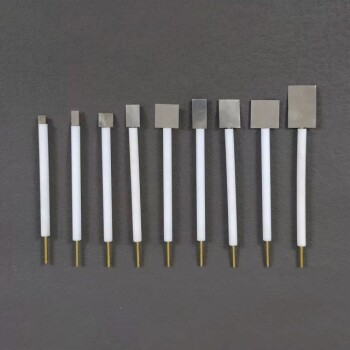
The primary function of sacrificial iron electrodes in electrocoagulation is to act as a replenishable source of coagulant agents, generated directly within the water treatment system. Through electrolysis, these electrodes release iron ions ($Fe^{2+}$ and $Fe^{3+}$) which serve as the fundamental building blocks for contaminant removal.
Core Takeaway Sacrificial iron electrodes replace external chemical storage by generating flocculants in-situ. By releasing metal ions that hydrolyze into high-capacity metal oxides, they effectively adsorb dissolved organic carbon and micropollutants, offering a streamlined alternative to traditional chemical dosing.
The Mechanism of In-Situ Generation
Electrolysis and Ion Release
The process begins when an electric current is applied to the system, triggering electrolysis. This causes the iron electrodes to dissolve effectively "sacrificing" their material to treat the water.
As the metal dissolves, it releases $Fe^{2+}$ and $Fe^{3+}$ ions directly into the aqueous solution. These ions are the precursors necessary for the coagulation process.
Hydrolysis and Floc Formation
Once the iron ions enter the water, they undergo a chemical reaction known as hydrolysis.
This reaction transforms the raw metal ions into insoluble metal oxide flocculants. These newly formed structures are critical because they possess high adsorption capacities, allowing them to trap impurities.
Pollutant Removal Efficiency
Adsorbing Contaminants
The metal oxide flocculants generated by the electrodes act as powerful adsorbents.
They specifically target and bind to dissolved organic carbon (DOC) and various micropollutants present in the water. This adsorption physically removes the contaminants from the solution, incorporating them into the floc structure.
Operational Advantages
This approach offers a significant operational shift from traditional methods.
Instead of managing the logistics of chemical dosing (transporting and storing liquid coagulants), the system generates the necessary chemicals automatically. This makes the process easier to operate and often more efficient than conventional alternatives.
Understanding the Operational Trade-offs
The "Sacrificial" Nature
The term "sacrificial" is literal; the electrodes are a consumable resource.
Because the process relies on the physical dissolution of iron to create ions, the electrodes will degrade over time. This depletion is the necessary trade-off for the in-situ generation of flocculants, requiring that the electrodes eventually be replaced to maintain treatment efficacy.
Making the Right Choice for Your Goal
Based on the capabilities of sacrificial iron electrodes, here is how they align with specific project objectives:
- If your primary focus is operational simplicity: Rely on the in-situ generation of ions to reduce the complexity and safety risks associated with handling bulk chemical coagulants.
- If your primary focus is removal efficiency: Leverage the high adsorption capacity of hydrolyzed metal oxides to effectively target and remove dissolved organic carbon and micropollutants.
By automating the production of coagulants, sacrificial iron electrodes provide a robust, self-contained solution for effective water purification.
Summary Table:
| Feature | Description |
|---|---|
| Primary Ion Release | Releases $Fe^{2+}$ and $Fe^{3+}$ ions via electrolysis |
| Mechanism | Hydrolysis of ions into insoluble metal oxide flocculants |
| Target Pollutants | Dissolved Organic Carbon (DOC) and various micropollutants |
| Operational Benefit | Eliminates external chemical dosing and storage needs |
| Consumable Status | Requires periodic replacement due to material dissolution |
Revolutionize Your Water Treatment with KINTEK
Take control of your electrocoagulation processes with high-quality sacrificial electrodes and advanced electrochemical solutions from KINTEK. As specialists in laboratory equipment, we provide the precision tools necessary for superior material research and water purification, including specialized electrolytic cells and electrodes, high-performance reactors, and comprehensive battery research consumables.
Why choose KINTEK?
- Expertly Engineered Electrodes: Maximize ion release efficiency and pollutant adsorption.
- Comprehensive Lab Portfolio: From high-temperature furnaces to precision hydraulic presses, we support every stage of your scientific workflow.
- Reliable Support: Our team ensures you have the right consumables, from ceramics to PTFE products, to maintain peak operational performance.
Ready to enhance your lab’s efficiency and treatment results? Contact KINTEK today to discuss your custom equipment needs!
References
- Emily K. Maher, Patrick J. McNamara. Removal of Estrogenic Compounds from Water Via Energy Efficient Sequential Electrocoagulation-Electrooxidation. DOI: 10.1089/ees.2019.0335
This article is also based on technical information from Kintek Solution Knowledge Base .
Related Products
- Metal Disc Electrode Electrochemical Electrode
- High Purity Gold Platinum Copper Iron Metal Sheets
- Rotating Platinum Disk Electrode for Electrochemical Applications
- Gold Disc Electrode
- Reference Electrode Calomel Silver Chloride Mercury Sulfate for Laboratory Use
People Also Ask
- What are the recommended surface protection methods for different types of metal disk electrodes? Essential Guide for Longevity
- What precautions should be taken when using metal disk electrodes? Ensure Accuracy and Longevity
- What is the expected lifespan of a metal disk electrode? Extend Its Life with Proper Care
- How should a metal disk electrode and its corresponding electrolyte be prepared before an experiment? A Step-by-Step Guide
- What methods can be used to verify the performance of a metal disk electrode? Ensure Accurate Electrochemical Results