Knowledge What is the primary role of high-strength graphite molds? Master Hot Pressing for ZrB2-SiC Composites
Author avatar

Tech Team · Kintek Solution

Updated 1 day ago

What is the primary role of high-strength graphite molds? Master Hot Pressing for ZrB2-SiC Composites


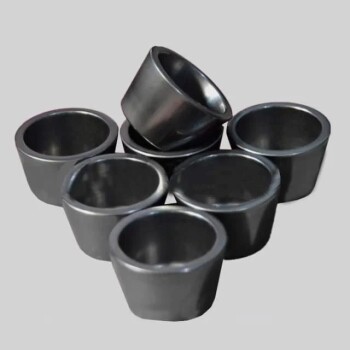
High-strength graphite molds function as the primary confinement and pressure-delivery system during the hot pressing of graphene-reinforced ZrB2-SiC composites.

Specifically, these molds must withstand extreme thermal environments up to 1850°C while simultaneously transmitting a uniaxial pressure of approximately 20 MPa. By restricting the lateral movement of the composite powders, the molds establish the final geometry of the sample and provide the mechanical force required to densify these difficult-to-sinter ceramic materials.

Core Insight For ultra-high-temperature ceramics like ZrB2-SiC, temperature alone is often insufficient for full densification. The graphite mold bridges this gap by acting not just as a container, but as a mechanical tool that translates external force into internal density, forcing the ceramic particles to fuse even when they resist sintering.

The Dual-Function of Graphite Molds

In the context of processing graphene-reinforced ZrB2-SiC composites, the mold operates on two distinct physical levels: geometric definition and mechanical transmission.

1. Geometric Confinement

At a fundamental level, the mold acts as a high-temperature resistant container. Its primary job is to hold the loose powder in place.

Without this containment, the application of vertical force would simply cause the powder to scatter or spread outwards. The graphite mold restricts this lateral displacement, forcing the powder to consolidate within a defined space. This confinement is what establishes the final shape and dimensions of the composite sample.

2. Mechanical Force Transmission

Beyond simple containment, the mold is an active participant in the sintering process. It serves as the medium through which force is applied to the powder.

For ZrB2-SiC composites, the mold must transmit a uniaxial pressure of 20 MPa. This pressure is critical for breaking down agglomerates and closing pores within the ceramic matrix. The mold must maintain its structural integrity while transferring this load, ensuring the pressure reaches the powder rather than being absorbed by the deformation of the mold itself.

3. Enabling Densification at Extremes

The processing environment for these composites is harsh, often reaching temperatures up to 1850°C.

Standard metal molds would melt or lose strength under these conditions. High-strength graphite is unique because it retains (and often increases) its strength at these elevated temperatures. This capability allows the mold to apply the necessary "squeeze" to the ceramic material exactly when it is hot enough to sinter, promoting high density in a material that is otherwise notoriously difficult to consolidate.

Critical Considerations and Trade-offs

While graphite is the standard for this application, understanding its limitations is vital for process reliability.

Mechanical Limits at High Temperature

The term "high-strength" is not a suggestion; it is a requirement. The mold is under significant stress (20 MPa) while at near-white-hot temperatures.

If the graphite density is too low or the mold design is structurally weak, the mold will deform or fracture before the ceramic fully densifies. This results in loss of dimensional accuracy or catastrophic failure of the pressing run.

Process Stability

The mold must remain stable throughout the heating and cooling cycle. It must withstand the thermal shock of ramping up to 1850°C without cracking.

Any failure in the mold's stability compromises the uniaxial pressure distribution. If the mold warps, the pressure applied to the ceramic becomes uneven, leading to density gradients, warping of the final part, or incomplete sintering in specific areas.

Making the Right Choice for Your Goal

To ensure the successful fabrication of graphene-reinforced ZrB2-SiC composites, select your tooling based on your specific processing priorities.

  • If your primary focus is Maximum Density: Prioritize high-density graphite grades with superior compressive strength to ensure the full 20 MPa load is transmitted without mold deformation.
  • If your primary focus is Dimensional Precision: Ensure the mold wall thickness is sufficient to prevent any lateral bulging under load at 1850°C, effectively restricting all powder displacement.

Summary: The success of hot pressing ZrB2-SiC relies entirely on the graphite mold's ability to remain rigid and transfer force under thermal conditions that would destroy most other materials.

Summary Table:

Feature Requirement for ZrB2-SiC Hot Pressing
Max Operating Temp Up to 1850°C
Uniaxial Pressure 20 MPa
Primary Function Geometric confinement & pressure delivery
Material Criticality High-strength graphite to prevent deformation
Key Outcome Full densification of ultra-high-temp ceramics

Elevate Your Material Research with KINTEK Precision

Fabricating graphene-reinforced ZrB2-SiC composites demands equipment that thrives under extreme stress. KINTEK specializes in high-performance laboratory solutions, providing the high-temperature furnaces, hydraulic hot presses, and precision-engineered graphite molds required for your most challenging sintering projects.

From high-temperature high-pressure reactors to specialized crushing and milling systems, our comprehensive portfolio is designed to ensure your lab achieves maximum density and dimensional precision every time.

Ready to optimize your ceramic fabrication? Contact our experts today to find the perfect solution for your lab!

Related Products

People Also Ask

Related Products

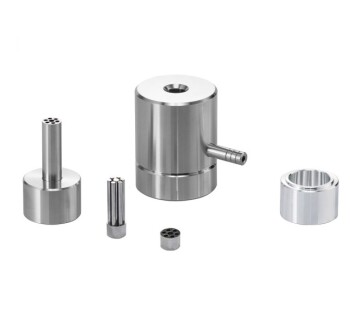
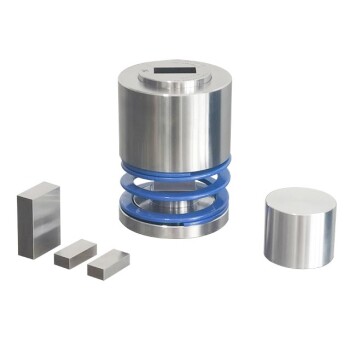
Special Shape Press Mold for Lab

Special Shape Press Mold for Lab

Discover high-pressure special shape press molds for diverse applications, from ceramics to automotive parts. Ideal for precise, efficient molding of various shapes and sizes.

Ultra-High Temperature Graphite Vacuum Graphitization Furnace

Ultra-High Temperature Graphite Vacuum Graphitization Furnace

The ultra-high temperature graphitization furnace utilizes medium frequency induction heating in a vacuum or inert gas environment. The induction coil generates an alternating magnetic field, inducing eddy currents in the graphite crucible, which heats up and radiates heat to the workpiece, bringing it to the desired temperature. This furnace is primarily used for graphitization and sintering of carbon materials, carbon fiber materials, and other composite materials.

Graphite Vacuum Continuous Graphitization Furnace

Graphite Vacuum Continuous Graphitization Furnace

High-temperature graphitization furnace is a professional equipment for graphitization treatment of carbon materials. It is a key equipment for the production of high-quality graphite products. It has high temperature, high efficiency and uniform heating. It is suitable for various high-temperature treatments and graphitization treatments. It is widely used in metallurgy, electronics, aerospace, etc. industry.

Custom PTFE Teflon Parts Manufacturer for PTFE Tweezers

Custom PTFE Teflon Parts Manufacturer for PTFE Tweezers

PTFE tweezers inherit the excellent physical and chemical properties of PTFE, such as high temperature resistance, cold resistance, acid and alkali resistance, and corrosion resistance to most organic solvents.

Graphite Vacuum Furnace Negative Material Graphitization Furnace

Graphite Vacuum Furnace Negative Material Graphitization Furnace

Graphitization furnace for battery production has uniform temperature and low energy consumption. Graphitization furnace for negative electrode materials: an efficient graphitization solution for battery production and advanced functions to enhance battery performance.

Vertical High Temperature Graphite Vacuum Graphitization Furnace

Vertical High Temperature Graphite Vacuum Graphitization Furnace

Vertical high temperature graphitization furnace for carbonization and graphitization of carbon materials up to 3100℃.Suitable for shaped graphitization of carbon fiber filaments and other materials sintered in a carbon environment.Applications in metallurgy, electronics, and aerospace for producing high-quality graphite products like electrodes and crucibles.

Twin Screw Extruder Plastic Granulation Machine

Twin Screw Extruder Plastic Granulation Machine

Twin screw extruder plastic granulation machine is designed for the mixing and processing experiments of engineering plastics, modified plastics, waste plastics and masterbatches.

High Pressure Laboratory Vacuum Tube Furnace Quartz Tubular Furnace

High Pressure Laboratory Vacuum Tube Furnace Quartz Tubular Furnace

KT-PTF High Pressure Tube Furnace: Compact split tube furnace with strong positive pressure resistance. Working temp up to 1100°C and pressure up to 15Mpa. Also works under controller atmosphere or high vacuum.

Dental Porcelain Zirconia Sintering Ceramic Vacuum Press Furnace

Dental Porcelain Zirconia Sintering Ceramic Vacuum Press Furnace

Get precise dental results with Dental Vacuum Press Furnace. Automatic temperature calibration, low noise tray, and touch screen operation. Order now!

Automatic Lab Cold Isostatic Press CIP Machine Cold Isostatic Pressing

Automatic Lab Cold Isostatic Press CIP Machine Cold Isostatic Pressing

Efficiently prepare samples with our Automatic Lab Cold Isostatic Press. Widely used in material research, pharmacy, and electronic industries. Provides greater flexibility and control compared to electric CIPs.

Engineering Advanced Fine Ceramics Head Tweezers with Pointed Elbow Zirconia Ceramic Tip

Engineering Advanced Fine Ceramics Head Tweezers with Pointed Elbow Zirconia Ceramic Tip

Zirconia ceramic tweezers are a high-precision tool made of advanced ceramic materials, especially suitable for operating environments that require high precision and corrosion resistance. This type of tweezers not only has excellent physical properties, but is also popular in the medical and laboratory fields because of its biocompatibility.

Engineering Advanced Fine Alumina (Al₂O₃) Ceramic Positioning Pin Straight Bevel for Precision Applications

Engineering Advanced Fine Alumina (Al₂O₃) Ceramic Positioning Pin Straight Bevel for Precision Applications

Alumina ceramic positioning pin has the characteristics of high hardness, wear resistance and high temperature resistance.

1200℃ Split Tube Furnace with Quartz Tube Laboratory Tubular Furnace

1200℃ Split Tube Furnace with Quartz Tube Laboratory Tubular Furnace

KT-TF12 split tube furnace: high-purity insulation, embedded heating wire coils, and max. 1200C. Widely used for new materials and chemical vapour deposition.

1400℃ Muffle Oven Furnace for Laboratory

1400℃ Muffle Oven Furnace for Laboratory

Get precise high-temperature control up to 1500℃ with KT-14M Muffle furnace. Equipped with a smart touch screen controller and advanced insulation materials.

Custom PTFE Teflon Parts Manufacturer for Conductive Glass Substrate Cleaning Rack

Custom PTFE Teflon Parts Manufacturer for Conductive Glass Substrate Cleaning Rack

The PTFE conductive glass substrate cleaning rack is used as the carrier of the square solar cell silicon wafer to ensure efficient and pollution-free handling during the cleaning process.

1400℃ Laboratory High Temperature Tube Furnace with Alumina Tube

1400℃ Laboratory High Temperature Tube Furnace with Alumina Tube

Looking for a tube furnace for high-temperature applications? Our 1400℃ Tube Furnace with Alumina Tube is perfect for research and industrial use.

1800℃ Muffle Oven Furnace for Laboratory

1800℃ Muffle Oven Furnace for Laboratory

KT-18 muffle furnace with Japan Al2O3 polycrystalline fibe and Silicon Molybdenum heating element, up to 1900℃, PID temperature control and 7" smart touch screen. Compact design, low heat loss, and high energy efficiency. Safety interlock system and versatile functions.

Custom PTFE Teflon Parts Manufacturer for Centrifuge Tube Racks

Custom PTFE Teflon Parts Manufacturer for Centrifuge Tube Racks

The precision-made PTFE test tube racks are completely inert and, due to the high temperature properties of PTFE, these test tube racks can be sterilized (autoclaved) without any problems.

Molybdenum Vacuum Heat Treat Furnace

Molybdenum Vacuum Heat Treat Furnace

Discover the benefits of a high-configuration molybdenum vacuum furnace with heat shield insulation. Ideal for high-purity, vacuum environments like sapphire crystal growth and heat treatment.

Precision Machined Zirconia Ceramic Ball for Engineering Advanced Fine Ceramics

Precision Machined Zirconia Ceramic Ball for Engineering Advanced Fine Ceramics

zirconia ceramic ball have the characteristics of high strength, high hardness, PPM wear level, high fracture toughness, good wear resistance, and high specific gravity.


Leave Your Message