The primary role of wet grinding equipment in the pretreatment of sulfide solid-state electrolytes is the efficient de-agglomeration and refinement of initial powder materials. By leveraging shear forces generated by liquid and grinding media, this equipment reduces particle sizes to the sub-micron level, preparing the material for subsequent processing steps.
Wet grinding serves as a critical preparation step that refines particles to sub-micron sizes. This uniformity is essential for achieving a continuous coating during the subsequent dry coating process.
The Mechanics of Particle Refinement
Utilizing Shear Forces
The core mechanism of wet grinding involves the interaction between liquid and grinding media. This interaction generates significant shear forces that act directly on the material.
Breaking Down Agglomerates
These shear forces are responsible for de-agglomerating the initial powder. This ensures that clustered particles are separated effectively before further reduction occurs.
Achieving Sub-Micron Sizes
The ultimate physical goal of this phase is significant size reduction. The equipment drives the particle size down to the sub-micron level, creating a much finer baseline material.
Enhancing Downstream Process Efficiency
Creating Uniform Distribution
Refining the powder results in smaller, "guest" particles. Crucially, these particles are distributed more uniformly than in their raw state.
Facilitating Continuous Coating
This uniformity is not an end in itself; it is an enabler for the next phase. High-quality refinement allows for the achievement of a continuous coating in subsequent dry coating processes.
Pre-conditioning for Dry Coating
Without this wet grinding pretreatment, the material would lack the physical characteristics required for effective dry coating. The wet stage ensures the guest particles are primed for that specific application.
Understanding Process Dependencies
The Link Between Wet and Dry Stages
It is important to view wet grinding as a dependency for the dry coating phase rather than a standalone solution. The quality of the final coating is directly limited by the effectiveness of the initial wet refinement.
Potential Bottlenecks
If the shear forces during wet grinding are insufficient, the particles will not reach sub-micron levels. This failure will likely result in discontinuous or poor-quality coatings later in the process.
Optimizing the Pretreatment Phase
To ensure high-quality production of sulfide solid-state electrolytes, align your grinding parameters with your downstream requirements.
- If your primary focus is particle refinement: Prioritize equipment settings that maximize shear force generation to ensure effective de-agglomeration down to the sub-micron level.
- If your primary focus is coating continuity: Verify that the wet grinding process achieves high uniformity in guest particle distribution, as this is the prerequisite for a continuous dry coat.
Effective wet grinding lays the necessary groundwork for high-performance electrolyte materials by establishing the physical consistency required for advanced coating techniques.
Summary Table:
| Process Phase | Primary Mechanism | Physical Outcome | Downstream Benefit |
|---|---|---|---|
| De-agglomeration | Liquid-media shear forces | Breaking of powder clusters | Improved material consistency |
| Refinement | Continuous attrition | Sub-micron particle size | High-surface-area guest particles |
| Distribution | Homogeneous mixing | Uniform particle spread | Prerequisite for continuous dry coating |
| Pre-conditioning | Material priming | Optimized powder baseline | Enhanced coating adhesion and quality |
Elevate Your Solid-State Battery Research with KINTEK
Precision in the pretreatment phase is the foundation of high-performance sulfide solid-state electrolytes. KINTEK specializes in advanced crushing and milling systems designed to deliver the intense shear forces required for sub-micron refinement and uniform particle distribution.
Whether you are optimizing your dry coating processes or scaling production, our comprehensive portfolio—including hydraulic presses, high-temperature furnaces, and battery research consumables—ensures your lab has the tools to achieve superior results.
Ready to refine your material processing? Contact our experts today to find the perfect grinding solution!
Related Products
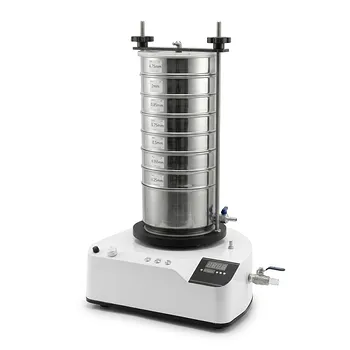
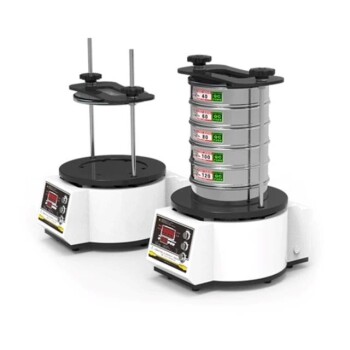
- Three-dimensional electromagnetic sieving instrument
- High Energy Vibratory Laboratory Ball Mill Grinding Mill Single Tank Type
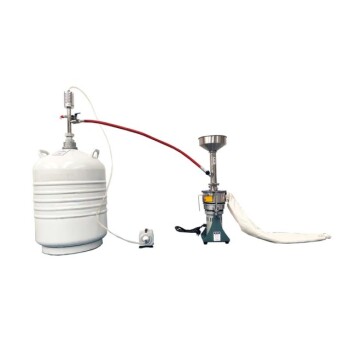
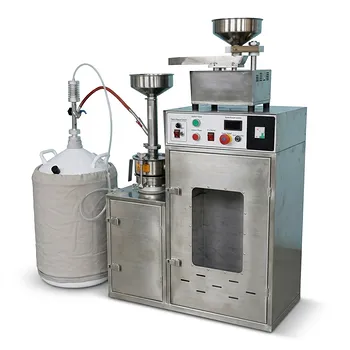
- Liquid Nitrogen Cryogenic Grinder Mill Cryomill Airflow Ultrafine Pulverizer
- Laboratory Vibratory Sieve Shaker Machine for Dry and Wet Three-Dimensional Sieving
- Liquid Nitrogen Cryogenic Grinder Mill Cryomill with Screw Feeder
People Also Ask
- Why is sieving equipment essential for the classification of processed bio-activated carbon? Optimize Performance
- What are the limitations of sieving? Understanding the Constraints of Particle Size Analysis
- What are advantages and disadvantages of sieving method? A Guide to Reliable & Cost-Effective Particle Sizing
- How is sieving important? The Critical Role of Particle Size Analysis in Quality Control
- What is sieving and how does it work? A Guide to Accurate Particle Size Analysis