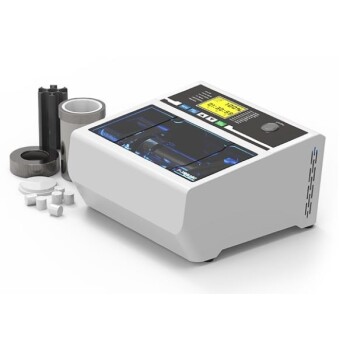
The process of creating pressed pellets for XRF analysis is a standard sample preparation method designed to produce a solid, homogeneous disk from loose powder. It involves grinding the sample to a fine particle size, mixing it with a binding agent, and compressing the mixture in a die at high pressure, typically between 15 and 35 tons.
Core Takeaway Pressed pellets offer a significant improvement in analytical accuracy over loose powders by eliminating surface irregularities and density variations. The goal is to create a physically stable, perfectly flat surface that allows the X-ray spectrometer to read a representative cross-section of your bulk material.
The Core Steps of Pellet Preparation
1. Grinding to a Fine Particle Size
The first and most critical step is pulverization. You must grind the sample material into a fine powder to ensure homogeneity.
Supplementary data suggests an ideal grain size is smaller than 75 micrometers (µm). This reduction minimizes "particle size effects," where large grains block X-rays from reaching elements behind them.
2. Homogenizing with a Binder
Once ground, the powder is mixed with a binder or grinding aid within a mixing vessel. This is particularly important for geological samples or brittle materials that do not adhere well on their own.
Common binders include cellulose, wax, or boric acid, which lubricate the particles and help them stick together. A typical mixture ratio involves adding 20% to 30% binder to the sample mass.
3. Compressing the Mixture
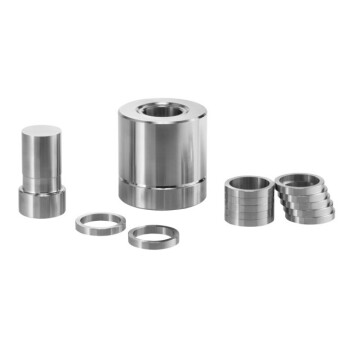
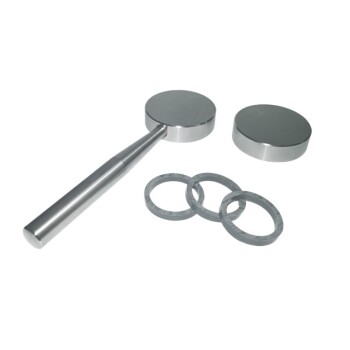
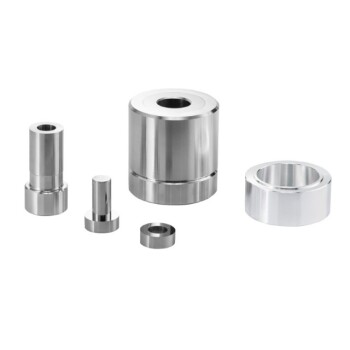
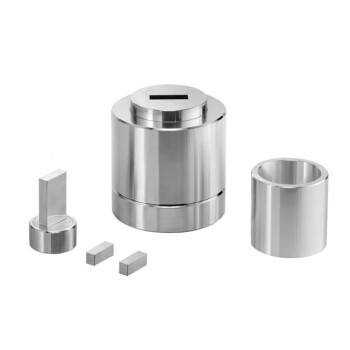
The homogenized mixture is poured into a pressing die, often utilizing an aluminum sample cup or a steel ring for support. Common pellet diameters are 32 mm or 40 mm to ensure the X-ray beam has sufficient surface area to analyze.
The die is then loaded into a press machine. The sample is compressed at a specific pressure, generally between 15 and 35 tons, to form a solid, durable tablet ready for analysis.
Understanding the Trade-offs
The Balance of Pressure
Applying the correct pressure is vital. While the general range is 15-35 tons, softer samples (like food products) may require significantly less force (2-4 tons), while hard ores may require up to 40 tons. Over-pressing can cause stress fractures in the pellet, while under-pressing results in a crumbling surface.
The Dilution Effect
Using a binder is often necessary for physical stability, but it introduces a trade-off. Because the binder is made of light elements (carbon, hydrogen, oxygen) that are not the target of analysis, it effectively dilutes your sample. You must account for this dilution when calculating the final concentration of elements in your bulk material.
Making the Right Choice for Your Goal
To ensure the best analytical results, tailor your approach to the material characteristics:
- If your primary focus is hard, brittle materials (e.g., minerals, ores): Ensure you grind to <75 µm and use a binding agent (20-30%) with higher pressure (near 35-40T) to prevent the pellet from crumbling.
- If your primary focus is soft or biological materials: Use lower pressure settings (2-4T) to avoid deforming the sample cup or creating internal stress fractures.
By controlling particle size and pressure consistently, you transform a chaotic powder into a reliable analytical standard.
Summary Table:
| Step | Process Detail | Key Parameters |
|---|---|---|
| 1. Grinding | Pulverization of sample material | Particle size < 75 µm |
| 2. Mixing | Homogenizing with a binding agent | 20% - 30% binder ratio |
| 3. Pressing | Compressing powder in a die set | 15 - 35 tons of pressure |
| Dimensions | Standard pellet diameters | 32 mm or 40 mm |
Optimize Your XRF Analysis with KINTEK Precision
Uniform sample preparation is the foundation of accurate X-ray spectrometry. At KINTEK, we specialize in the high-performance laboratory equipment you need to transform raw materials into analytical standards. Whether you require robust grinding and milling systems for fine pulverization or precision hydraulic pellet presses (manual, electric, or isostatic) to create durable pellets, we have the solution.
Our extensive portfolio also includes high-temperature furnaces, crushing systems, and specialized consumables like PTFE products and crucibles designed for the most demanding lab environments. Enhance your lab's throughput and data reliability today.
Contact KINTEK to find the perfect pressing solution for your application
Related Products
- XRF Boric Acid Lab Powder Pellet Pressing Mold for Laboratory Use
- XRF & KBR steel ring lab Powder Pellet Pressing Mold for FTIR
- Laboratory Hydraulic Pellet Press for XRF KBR FTIR Lab Applications
- XRF & KBR plastic ring lab Powder Pellet Pressing Mold for FTIR
- Automatic Laboratory Hydraulic Press for XRF & KBR Pellet Press
People Also Ask
- What is the purpose of using a mold for pellet pressing when preparing catalyst test samples? Ensure Data Consistency
- What is the XRF method of sampling? Achieve Accurate Elemental Analysis with Proper Sample Prep
- What is the XRF pressed pellet method? A Fast, Cost-Effective Sample Prep Guide
- How are samples prepared for XRF analysis? Achieve Accurate and Reliable Results
- How do you make XRF pellets? A 4-Step Guide to Flawless Sample Preparation