In short, ash content determination is a process used to measure the total amount of inorganic, noncombustible minerals in a sample. By completely burning off all the organic matter, the "ash" that remains represents the mineral content, which serves as a critical indicator of a product's quality, purity, and nutritional composition.
The core purpose of ash analysis extends beyond simply measuring minerals. It is a fundamental quality control metric that acts as a fingerprint for a material's inorganic composition, revealing everything from its nutritional value to potential contamination.
What Does "Ash" Truly Represent?
The term "ash" can be misleading. The residue left after analysis is not simply burnt material; it is a concentration of all the inorganic substances that were present in the original sample.
The Inorganic Fingerprint
When a sample is completely combusted under controlled conditions, all organic components (like proteins, fats, and carbohydrates) are destroyed. The remaining residue is the ash, which consists of the oxides, phosphates, silicates, and chlorides of the inorganic elements.
This residue is essentially a chemical fingerprint of the non-living components of the product, such as calcium, potassium, magnesium, and sodium, as well as trace elements.
A Proxy for Total Mineral Content
For many applications, particularly in the food industry, ash content is the most direct and widely accepted measure of the total mineral content. This figure is often a key data point for nutritional labeling and formulation.
A high ash value typically indicates a high concentration of various minerals, while a low value suggests a lower mineral content.
An Indicator of Quality and Purity
Deviations from a known or expected ash content are a powerful signal of a potential problem. For instance, an unusually high ash content in flour might indicate the presence of sand or dirt.
Conversely, an unusually low ash value in a fruit juice concentrate could suggest it has been diluted or overly processed, stripping it of its natural minerals.
Why the Method of Determination is Critical
The result of an ash test is meaningless without understanding how it was obtained. The chosen method directly impacts the final value and its interpretation. The specific reason for conducting the analysis dictates which method is appropriate.
Dry Ashing vs. Wet Ashing
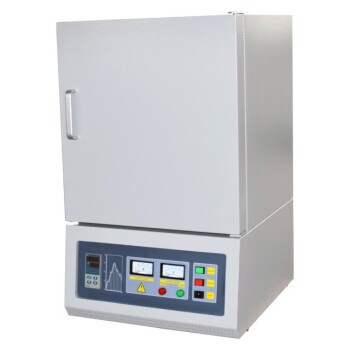
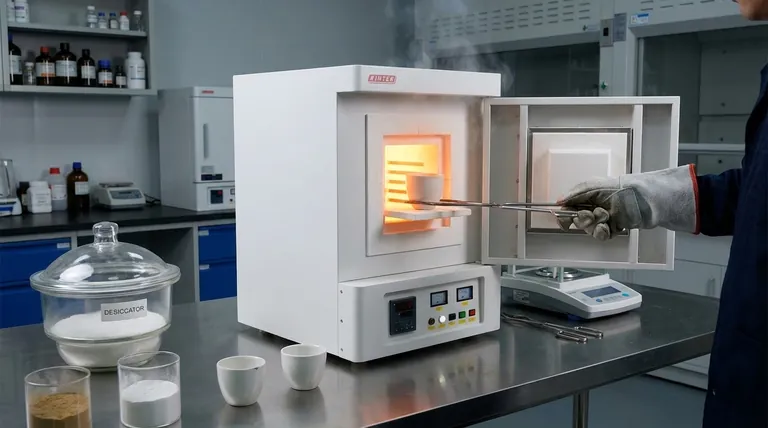
The two primary methods are dry ashing and wet ashing. Dry ashing involves heating the sample at high temperatures (typically 500-600°C) in a muffle furnace to burn away organic material.
Wet ashing involves using strong acids and heat to digest the organic material, leaving the minerals in a solution. This is often a precursor to analyzing for specific elemental content.
The Goal Dictates the Process
The choice between methods depends entirely on the analytical goal. If you simply need a quick, total ash percentage for a routine quality check, the simplicity of dry ashing is often sufficient.
However, if you intend to perform further analysis to identify specific minerals (like lead or iron), wet ashing is often required because it prepares the sample for techniques like atomic absorption spectroscopy.
Understanding the Trade-offs and Limitations
While powerful, ash content analysis is not without its limitations. An objective advisor must be aware of what the test can and cannot reveal.
It's a Total, Not a Specific, Measurement
The standard ash test provides a single figure: the total inorganic content. It does not distinguish between beneficial minerals like calcium and toxic heavy metals like cadmium.
Further analysis is required to determine the specific elemental composition of the ash.
Risk of Mineral Loss
The most common pitfall, especially in dry ashing, is the loss of volatile minerals. Elements like sodium, potassium, and chloride can vaporize and be lost if the furnace temperature is too high.
This leads to an artificially low and inaccurate ash reading, which is why standardized methods with precise temperature controls are essential.
Method-Dependent Results
Because different methods can yield slightly different results, it is crucial to use a consistent, validated method when comparing samples or checking against a specification. A result of "5% ash" is only meaningful in the context of the exact procedure used to obtain it.
Applying Ash Analysis to Your Objective
To use ash determination effectively, you must align your method with your primary goal.
- If your primary focus is nutritional labeling: Use a standardized dry ashing method to determine the total mineral content for reporting on a product's nutrition facts panel.
- If your primary focus is quality control and purity: Compare the ash content of your raw materials or finished products against an established internal or industry standard to quickly flag deviations.
- If your primary focus is specific elemental analysis: Use ash determination as the initial sample preparation step, often employing wet ashing to ensure minerals are preserved for subsequent, more specific tests.
Ultimately, understanding the purpose behind your ash analysis is the key to selecting the right method and interpreting the results correctly.
Summary Table:
| Purpose of Ash Analysis | Key Insight |
|---|---|
| Measure Mineral Content | Ash represents the total inorganic, noncombustible residue after burning organic matter. |
| Quality Control Indicator | Deviations from expected ash levels signal contamination, dilution, or processing issues. |
| Nutritional Assessment | Provides a proxy for total mineral content in food products for labeling and formulation. |
| Method Dependency | Results vary between dry ashing (furnace) and wet ashing (acid digestion) techniques. |
Need precise ash content determination for your lab? KINTEK specializes in high-quality lab equipment, including reliable muffle furnaces for dry ashing and consumables for wet ashing processes. Ensure accurate mineral analysis and consistent quality control in your food, pharmaceutical, or material testing workflows. Contact our experts today to find the perfect solution for your laboratory's needs!
Visual Guide

Related Products
- 1800℃ Muffle Oven Furnace for Laboratory
- 1700℃ Muffle Oven Furnace for Laboratory
- 1400℃ Muffle Oven Furnace for Laboratory
- Laboratory Muffle Oven Furnace Bottom Lifting Muffle Furnace
- High Temperature Muffle Oven Furnace for Laboratory Debinding and Pre Sintering
People Also Ask
- How accurate is the muffle furnace? Achieve ±1°C Control and ±2°C Uniformity
- How is the ash content determined in a muffle furnace? Master the Gravimetric Analysis Method
- What are the conditions for a muffle furnace? Ensure Safety, Performance, and Longevity
- What are the different types of laboratory furnaces? Find the Perfect Fit for Your Application
- What is the difference between a muffle furnace and a normal furnace? Ensuring Sample Purity with Indirect Heating