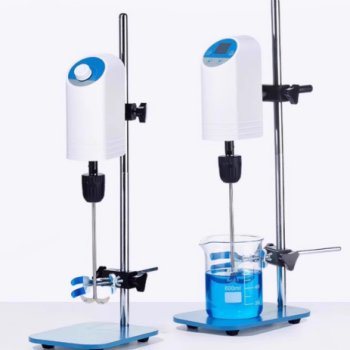
The primary purpose of a magnetic stirrer in a fuel cell electrolyte circulation system is to ensure the absolute uniformity of the electrolyte solution stored in the tank. By continuously agitating the fluid, the stirrer prevents stratification, ensuring that the fuel cell receives a consistent input for stable operation.
Core Takeaway Without active agitation, electrolyte solutions develop internal inconsistencies that compromise system performance. A magnetic stirrer eliminates these variables by maintaining a homogenous chemical and thermal state, which is the prerequisite for obtaining reliable output voltage and power density measurements.
Achieving Electrolyte Homogeneity
The fundamental role of the stirrer is to act as an equalizer within the storage tank.
Eliminating Chemical Concentration Gradients
In a static or passively circulating tank, chemicals can settle or separate, creating pockets of varying concentration.
A magnetic stirrer continuously mixes the solution to maintain a uniform chemical composition throughout the entire volume.
This ensures that the electrolyte entering the fuel cell stack has a constant concentration, preventing fluctuations in reaction rates caused by "rich" or "lean" pockets of fluid.
Maintaining Thermal Uniformity
Just as chemical composition can vary, temperature gradients can form within a storage tank.
The stirrer distributes heat evenly by circulating the fluid, ensuring the temperature remains consistent from the bottom to the top of the tank.
This thermal consistency is critical because electrochemical reactions are highly temperature-sensitive; even minor variances can alter performance data.
The Impact on System Reliability
The physical agitation of the fluid directly translates to the quality of the data the system produces.
Ensuring Consistent Ion Exchange
For a fuel cell to operate efficiently, the ion-exchange environment must be stable.
By eliminating gradients in the storage tank, the stirrer ensures that the fuel cell is supplied with an electrolyte that supports a predictable and steady ion exchange process.
Improving Measurement Accuracy
The ultimate goal of using a stirrer is to validate the system's output.
When the input variables (temperature and concentration) are controlled and constant, the output variables become reliable.
Specifically, the reference indicates that this consistency improves the reliability of output voltage and power density measurements, allowing for accurate characterization of the fuel cell.
Common Pitfalls to Avoid
While the stirrer is a simple component, neglecting its function leads to significant experimental errors.
The Risk of Passive Stagnation
A common mistake is assuming that the flow of the circulation pump alone is sufficient to mix the tank.
Circulation pumps often pull from a single point, which allows "dead zones" or gradients to persist in other parts of the storage tank.
Relying on passive circulation often leads to noisy data or drifting voltage readings as the fuel cell consumes electrolyte of varying quality over time.
Making the Right Choice for Your Goal
To get the most out of your electrolyte circulation system, consider how the stirrer supports your specific objectives.
- If your primary focus is Research Accuracy: Ensure continuous agitation to eliminate concentration gradients, as this is critical for publishing reliable voltage and power density data.
- If your primary focus is System Stability: Use the stirrer to maintain thermal uniformity, preventing temperature spikes or drops that could destabilize the ion-exchange environment.
Consistency in your storage tank is the only way to ensure credibility in your results.
Summary Table:
| Feature | Purpose in Electrolyte System | Impact on Fuel Cell Performance |
|---|---|---|
| Chemical Mixing | Eliminates concentration gradients and settling | Ensures constant reaction rates and prevents power fluctuations |
| Thermal Regulation | Distributes heat evenly throughout the tank | Maintains stable ion-exchange environment and reaction kinetics |
| Active Agitation | Prevents "dead zones" missed by circulation pumps | Provides high-quality, reliable data for voltage and power density |
| Homogeneity | Maintains a uniform chemical/thermal state | Enhances measurement accuracy and system characterization |
Optimize Your Fuel Cell Research with KINTEK Precision
Achieving reliable power density and voltage measurements requires more than just a fuel cell; it requires a perfectly controlled electrolyte environment. KINTEK specializes in high-performance laboratory equipment, providing the tools you need for absolute consistency in your research.
From advanced magnetic stirrers and homogenizers that ensure electrolyte homogeneity to electrolytic cells, electrodes, and comprehensive battery research tools, we offer the technical precision required for cutting-edge energy studies. Our portfolio also includes high-temperature furnaces, hydraulic presses, and specialized consumables like PTFE and ceramics to support every stage of your material testing.
Don't let inconsistent data stall your progress. Contact KINTEK today to discover how our expert solutions can enhance your laboratory’s efficiency and the accuracy of your results.
References
- Misgina Tilahun, Hemlata Sahu. Cogeneration of renewable energy from biomass (utilization of municipal solid waste as electricity production: gasification method). DOI: 10.1007/s40243-015-0044-y
This article is also based on technical information from Kintek Solution Knowledge Base .
Related Products
- Laboratory Small Constant Temperature Heated Magnetic Stirrer Heater and Stirrer
- Custom PTFE Teflon Parts Manufacturer for Magnetic Stirring Bar
- High Performance Laboratory Stirrers for Diverse Applications
- Three-dimensional electromagnetic sieving instrument
- Custom PTFE Teflon Parts Manufacturer for PTFE Stirring Bar Recovery Rod
People Also Ask
- What role does a magnetic stirrer with heating play in ZnO nanoparticle synthesis? Precision Control for Quality Results
- What role does a constant temperature heating magnetic stirrer play in MFC-HAp synthesis? Achieve Material Homogeneity
- What is the function of a laboratory magnetic stirrer in Ni–Cr–P electrodeposition? Optimize Ion Transport & Coating
- Why is a laboratory magnetic stirrer required for benzoic acid esters? Boost Reaction Speed & Yield with High RPM
- What role does a laboratory magnetic stirrer play in TiO2 and TiO2-Ag sol preparation? Master Chemical Kinetics