The simultaneous use of a stirring device and an ice bath creates the critical thermodynamic and kinetic conditions required to dissolve cellulose effectively. specifically, this setup maintains the solution at approximately 1°C while physically disrupting molecular bonds. This dual action is necessary because dissolving cellulose in a sodium hydroxide (NaOH)/urea system is an exothermic process that requires strict temperature control to prevent degradation and ensure complete homogenization.
Cellulose dissolution is an exothermic process that acts most stably at low temperatures. Combining constant agitation with an ice bath ensures the breakdown of hydrogen bonds and full solvent diffusion without thermal degradation, resulting in a high-quality solution base for composite films.
The Critical Role of Temperature Control
Counteracting Exothermic Reactions
The process of dissolving cellulose in a NaOH/urea solvent system is exothermic, meaning it generates heat as it proceeds.
If this heat is not removed, the temperature of the solution will rise naturally.
The ice bath acts as a thermal sink, aggressively absorbing this generated heat to clamp the system temperature at approximately 1 degree Celsius.
Preventing Degradation
Cellulose is sensitive to temperature during the dissolution phase.
At higher temperatures, or even room temperature, the polymer chains can suffer from degradation.
By maintaining a strict low-temperature environment, you preserve the structural integrity of the cellulose chains, which is vital for the mechanical strength of the final Ag2S composite film.
The Mechanism of Mechanical Agitation
Breaking Hydrogen Bonds
Cellulose is notoriously difficult to dissolve because of its strong intramolecular and intermolecular hydrogen bonds.
These bonds create a tight, crystalline structure that resists solvents.
Constant stirring provides the mechanical energy necessary to physically disrupt and break these hydrogen bonds, allowing the solvent to interact with the individual polymer chains.
Facilitating Full Diffusion
Chemical dissolution relies on the solvent penetrating the solute.
Stirring drives the diffusion of the NaOH/urea solvent into the dense cellulose fibers.
This ensures that the dissolution is uniform throughout the vessel, rather than occurring only on the surface of the clumps.
Common Pitfalls to Avoid
Incomplete Dissolution
Attempting this process at room temperature or without adequate stirring often leads to incomplete dissolution.
This results in a heterogeneous mixture containing undissolved cellulose particles.
These particles will create defects in the final composite film, disrupting the distribution of the silver sulfide (Ag2S) components.
Thermal Instability
Without the ice bath, the solution becomes thermally unstable.
The solvent system (NaOH/urea) functions optimally at low temperatures; as heat accumulates, the solubility of cellulose actually decreases in this specific system.
This can cause the cellulose to precipitate out of the solution or "gel" prematurely, rendering the batch unusable.
Making the Right Choice for Your Goal
To ensure a high-quality composite film, you must view the stirring and cooling not as separate steps, but as a single, coupled control mechanism.
- If your primary focus is Solution Clarity: Prioritize maintaining the 1°C temperature limit to prevent premature gelling or degradation of the polymer chains.
- If your primary focus is Film Homogeneity: Ensure the stirring speed is sufficient to fully diffuse the solvent, guaranteeing that no undissolved cellulose aggregates remain to weaken the final film structure.
Mastering the dissolution phase is the single most important step in creating a uniform and durable cellulose/Ag2S composite.
Summary Table:
| Factor | Mechanism | Benefit for Cellulose/Ag2S Synthesis |
|---|---|---|
| Ice Bath (1°C) | Manages exothermic heat | Prevents polymer degradation and ensures solution stability |
| Mechanical Stirring | Breaks hydrogen bonds | Facilitates full solvent diffusion and prevents undissolved clumps |
| NaOH/Urea System | Solvent interaction | Optimizes cellulose solubility at low temperatures |
| Resulting Film | Homogeneous matrix | Ensures uniform Ag2S distribution and high mechanical strength |
Elevate Your Composite Material Research with KINTEK
Precise control over thermodynamics and kinetics is the cornerstone of successful material synthesis. KINTEK specializes in providing the high-performance laboratory equipment necessary for delicate processes like cellulose dissolution. From advanced homogenizers and shakers that ensure perfect diffusion to reliable cooling solutions and freeze dryers for maintaining strict temperature limits, we provide the tools you need for excellence.
Whether you are developing Ag2S composite films or conducting advanced polymer research, KINTEK offers a comprehensive range of:
- High-Temperature High-Pressure Reactors & Autoclaves
- Crushing, Milling, and Sieving Systems
- Precision Hydraulic Presses and High-Temperature Furnaces
- Specialized Lab Consumables (PTFE, Ceramics, and Crucibles)
Achieve superior homogeneity and structural integrity in your lab today. Contact our technical experts now to find the perfect equipment solution for your specific research goals!
References
- Zahrah Ramadlan Mubarokah, Petrică Vizureanu. Near-Infrared (NIR) Silver Sulfide (Ag2S) Semiconductor Photocatalyst Film for Degradation of Methylene Blue Solution. DOI: 10.3390/ma16010437
This article is also based on technical information from Kintek Solution Knowledge Base .
Related Products
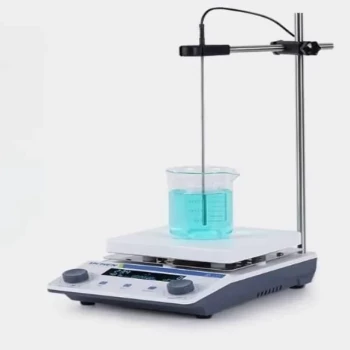
- Laboratory Small Constant Temperature Heated Magnetic Stirrer Heater and Stirrer
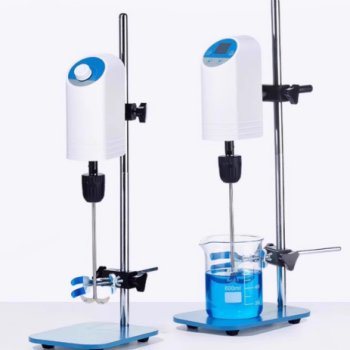
- High Performance Laboratory Stirrers for Diverse Applications
- Custom PTFE Teflon Parts Manufacturer for Magnetic Stirring Bar
- Laboratory Vibratory Sieve Shaker Machine Slap Vibrating Sieve
- Laboratory Sterilizer Lab Autoclave Pulsating Vacuum Desktop Steam Sterilizer
People Also Ask
- What role does a magnetic stirrer with heating play in ZnO nanoparticle synthesis? Precision Control for Quality Results
- What role does a constant temperature heating magnetic stirrer play in MFC-HAp synthesis? Achieve Material Homogeneity
- What is the function of a laboratory magnetic stirrer in Ni–Cr–P electrodeposition? Optimize Ion Transport & Coating
- Why is a laboratory magnetic stirrer required for benzoic acid esters? Boost Reaction Speed & Yield with High RPM
- What role does a laboratory magnetic stirrer play in TiO2 and TiO2-Ag sol preparation? Master Chemical Kinetics