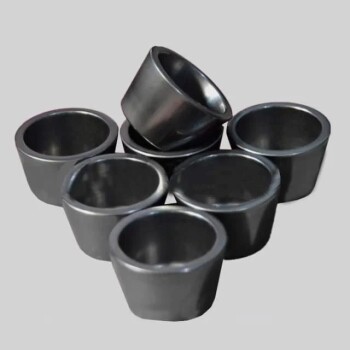
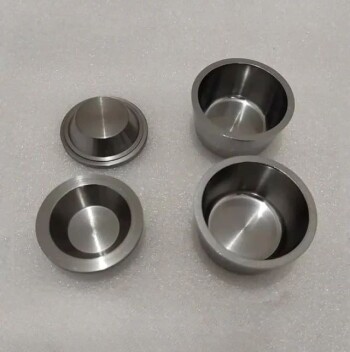
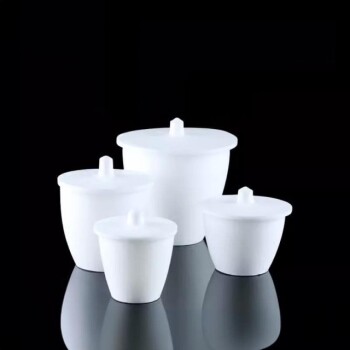
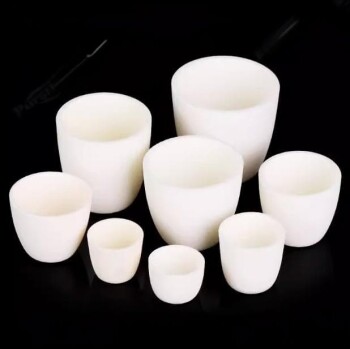
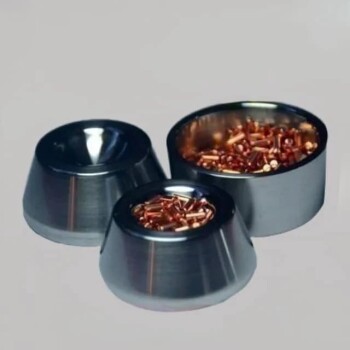
High-purity iron crucibles (exceeding 99.82% Fe) are used to serve the dual role of a physical containment vessel and a chemical oxygen buffer during fayalite slag synthesis. By maintaining the system within the iron-slag coexistence region, these crucibles prevent the oxidation of divalent (ferrous) iron into trivalent (ferric) iron, ensuring the synthetic slag accurately mimics the chemical characteristics of industrial copper slag.
The primary purpose of using high-purity iron crucibles is to provide a controlled redox environment that stabilizes the ferrous iron (Fe²⁺) state. This ensures that the experimental results remain relevant to industrial smelting processes by preventing unwanted chemical shifts during high-temperature synthesis.
The Functional Role of the Iron-Slag Buffer
Controlling the Oxidation State
The iron crucible acts as an oxygen buffer, which is essential for maintaining the equilibrium between the molten slag and the container. This buffering effect ensures that the oxidation state of the system remains stable throughout the melting process.
Without this buffer, the divalent iron (ferrous iron) within the slag would likely undergo further oxidation. This would result in a higher concentration of trivalent iron, fundamentally changing the slag's properties and mineralogical structure.
Achieving Industrial Consistency
Accurately simulating industrial copper slag requires the synthesis to maintain specific chemical characteristics. High-purity iron crucibles facilitate this by ensuring the degree of oxidation in the lab-grown slag remains consistent with large-scale industrial outputs.
By using a container that is chemically compatible with the iron-rich melt, researchers can ensure that the ferrous iron content remains at the levels required for realistic crystallization and kinetic studies.
Comparative Advantages of High-Purity Containers
Iron vs. Alumina and Molybdenum
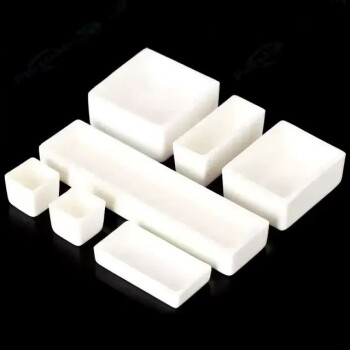
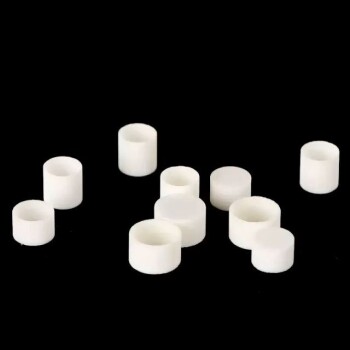
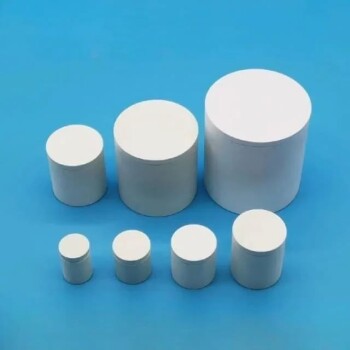
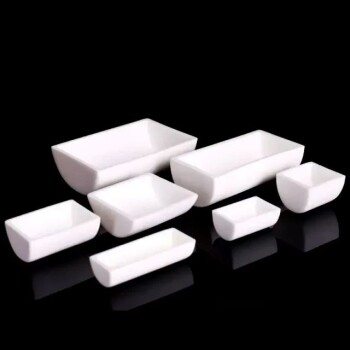
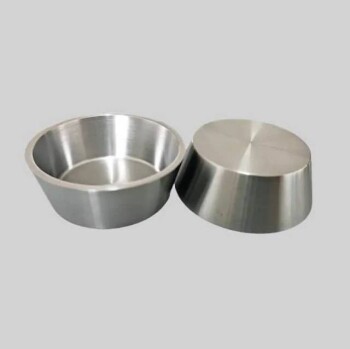
While materials like alumina and molybdenum are prized for their high melting points (up to 1550°C) and chemical inertness, they serve different experimental purposes. Alumina and molybdenum are chosen when the goal is to prevent any container material from infiltrating the melt.
In fayalite synthesis, however, the goal is not just inertness but active chemical stabilization. The iron crucible is specifically chosen because its interaction with the slag is a desired feature of the experimental design.
Maintaining Chemical Integrity
Using a crucible with a purity exceeding 99.82% Fe minimizes the risk of introducing foreign metallic impurities into the slag. This high level of purity ensures that the only material interacting with the slag is iron, which is already a primary component of the fayalite system.
This approach allows for a "clean" reaction where the container supports the chemical goals of the experiment rather than acting as a source of contamination.
Understanding the Trade-offs
The Risk of Material Interaction
The most significant trade-off in using iron crucibles is that the crucible itself is chemically active. Unlike inert alumina, which may experience only minor dissolution at high temperatures, the iron crucible is part of the chemical equilibrium.
Temperature and Structural Limits
Iron crucibles have a lower effective temperature range compared to molybdenum or specialized ceramics. While they are ideal for fayalite synthesis, they cannot be used in environments where the temperature exceeds the melting point of iron, which limits their utility in ultra-high-temperature slag research.
How to Apply This to Your Research Goal
Selecting the right crucible material depends entirely on whether your experiment requires an inert environment or a chemically buffered one.
- If your primary focus is synthesizing realistic industrial copper slag: Use high-purity iron crucibles to maintain the necessary iron-slag coexistence and stabilize the ferrous iron state.
- If your primary focus is preventing any container dissolution at ultra-high temperatures (1550°C+): Opt for high-purity molybdenum crucibles, provided the atmosphere is reducing or inert.
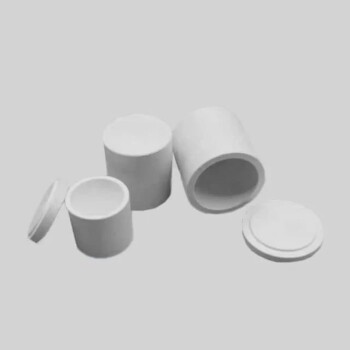
- If your primary focus is crystallization kinetics with zero iron-interaction: Use high-purity alumina crucibles to ensure the purity and accuracy of the sample composition without the influence of an iron buffer.
Choosing a high-purity iron crucible ensures that your synthetic fayalite slag remains chemically identical to the industrial materials you aim to study.
Summary Table:
| Feature | Function in Fayalite Synthesis | Key Benefit |
|---|---|---|
| High Purity (>99.82% Fe) | Minimizes foreign metallic impurities | Ensures chemical integrity of the slag |
| Redox Buffering | Prevents Fe²⁺ oxidation to Fe³⁺ | Maintains iron-slag coexistence region |
| Material Interaction | Acts as a chemically active vessel | Accurately mimics industrial smelting environments |
| Comparison | Better for buffering than Alumina/Moly | Superior for simulating realistic copper slag |
Optimize Your Slag Research with KINTEK Precision
Achieving accurate industrial simulations requires the right chemical environment. KINTEK specializes in high-quality laboratory consumables and equipment tailored for rigorous research. Whether you need high-purity iron crucibles for redox stabilization, or inert alumina, molybdenum, and ceramic crucibles for zero-interaction studies, we provide the materials that ensure your data's integrity.
Beyond consumables, KINTEK offers a comprehensive range of high-temperature muffle and vacuum furnaces, high-pressure reactors, and crushing systems to streamline your entire workflow.
Ready to elevate your lab’s performance? Contact our specialists today to find the perfect solution for your high-temperature applications.
References
- Anton Andersson, Fredrik Engström. A Method for Synthesizing Iron Silicate Slags to Evaluate Their Performance as Supplementary Cementitious Materials. DOI: 10.3390/app13148357
This article is also based on technical information from Kintek Solution Knowledge Base .
Related Products
- High Purity Pure Graphite Crucible for Evaporation
- High Purity Pure Graphite Crucible for Electron Beam Evaporation
- High Purity Gold Platinum Copper Iron Metal Sheets
- Electron Beam Evaporation Coating Tungsten Crucible and Molybdenum Crucible for High Temperature Applications
- Custom Machined and Molded PTFE Teflon Parts Manufacturer with PTFE Crucible and Lid
People Also Ask
- Why are high-purity graphite crucibles preferred for sulfide solid electrolytes? Achieve Superior Material Purity
- Why is a high-purity graphite crucible required for Chromel-TaC composites? Ensure Peak Purity at 1400°C
- What role do high-purity graphite crucibles play in molten salt corrosion research? Ensure Reactor-Grade Precision
- Why are high-purity graphite crucibles used for magnesium distillation? Ensure 3N8 Purity & Thermal Stability
- Why is a high-purity graphite crucible ideal for nitrogen-doped graphene at 1500 °C? Maximize Purity and Stability