The use of PTFE powder binder in a laboratory pellet press is essential for creating a mechanically cohesive and chemically resilient electrode structure. By acting as a physical anchor, PTFE binds active catalyst particles and conductive additives into a solid, stable form. This combination ensures the electrode maintains its integrity and electrochemical performance even when exposed to harsh alkaline electrolytes or rigorous cycling.
Core Takeaway: PTFE serves as a chemically inert, hydrophobic binder that, when compressed, forms a structural framework to prevent electrode degradation and manage fluid transport within the electrochemical cell.
Mechanical Integrity and Structural Bonding
The Role of Physical Anchoring
PTFE powder acts as the "glue" that holds the various components of an electrode together. During the pressing process, it physically anchors active catalyst particles to conductive additives, ensuring they remain in close contact. This contact is vital for maintaining the electrical pathways required for efficient electron transfer.
Fibrillation Under Pressure
When subjected to the shear forces of a laboratory pellet press, PTFE particles undergo a process called fibrillation. This creates a microscopic network of fine, elongated fibers that wrap around the powder particles. This fibrous matrix results in a flexible, self-supporting thin film or pellet that resists cracking and shedding.
Void Reduction and Gas-Tightness
Using a pellet press allows the PTFE to effectively fill the voids between powder particles under specific pressures (such as 0.3 MPa). This is critical for applications like hydrogen concentration cells, where a high-gas-tight electrolyte disc is required. By eliminating gaps, PTFE prevents gas crossover, ensuring that measurements accurately reflect the material's properties.
Chemical and Electrochemical Stability
Resistance to Alkaline Environments
PTFE is prized for its excellent chemical inertness, allowing it to remain stable in highly corrosive environments. It can withstand long-term cycling in strong alkaline electrolytes, such as 1 M to 6 M KOH, without undergoing chemical degradation. This stability ensures the electrode does not dissolve or lose its functional properties over time.
Preventing Physical Peeling and Shedding
In electrochemical systems, repeated charge-discharge cycles can cause active materials to expand and contract. The strong bond provided by the PTFE binder prevents the electrode from pulverizing or peeling away from the current collector. This structural endurance is a primary factor in extending the cycle life of supercapacitors and batteries.
Functional Interface Management
Hydrophobicity and Flooding Control
The naturally hydrophobic nature of PTFE is leveraged to create balanced channels within the electrode structure. These channels allow gaseous reactants to pass through easily while simultaneously preventing the liquid electrolyte from flooding the pores. This balance is crucial for maintaining a stable three-phase interface where the electrochemical reactions occur.
Maintaining Precision and Integrity
PTFE's non-stick properties also play a role during the assembly and curing phases of electrode fabrication. Its resistance to adhesion ensures that conductive resins do not stick to the work surfaces or press components. This maintains the structural integrity of the sensitive electrode materials and prevents waste during the manufacturing process.
Understanding the Trade-offs
Impact on Electrical Conductivity
While PTFE provides excellent structural benefits, it is an electrically insulating material. Using an excessive amount of binder can coat the active particles too heavily, increasing the internal resistance of the electrode. Finding the precise balance between mechanical strength and electrical conductivity is a common challenge in fabrication.
Pore Structure Obstruction
Applying too much pressure during the pellet-pressing process can overly densify the PTFE/catalyst mixture. This may clog the essential pore networks required for ion transport and gas diffusion. Users must carefully calibrate the press pressure to ensure the electrode remains permeable enough for the intended electrochemical reaction.
How to Apply This to Your Project
When selecting your PTFE content and pressing parameters, consider your specific performance requirements:
- If your primary focus is long-term cycling in alkaline media: Use PTFE for its chemical inertness to ensure the electrode remains physically intact over hundreds of cycles.
- If your primary focus is gas diffusion or preventing flooding: Leverage the hydrophobic properties of PTFE to create "dry" channels that facilitate gas transport to the catalyst sites.
- If your primary focus is gas-tightness for sensors: Utilize higher pressing forces to ensure the PTFE fully fills voids, preventing any gas crossover that could skew data.
- If your primary focus is maximizing power density: Minimize the PTFE-to-catalyst ratio to reduce the insulating effect while still providing enough fibrillation for structural support.
By strategically combining PTFE powder with the controlled force of a pellet press, you can engineer electrodes that bridge the gap between high electrochemical activity and long-term mechanical durability.
Summary Table:
| Key Feature | Role in Electrode Fabrication | Primary Benefit |
|---|---|---|
| Fibrillation | Creates a microscopic fibrous network | Enhances structural flexibility & prevents cracking |
| Chemical Inertness | Resists degradation in harsh electrolytes | Ensures stability in 1M to 6M KOH environments |
| Hydrophobicity | Creates balanced gas/liquid channels | Prevents electrode flooding and manages reactants |
| Physical Anchoring | Binds catalysts to conductive additives | Maintains electrical pathways for electron transfer |
| Pressure Control | Fills voids and reduces porosity | Ensures gas-tightness for precise sensor data |
Elevate Your Electrode Research with KINTEK Precision
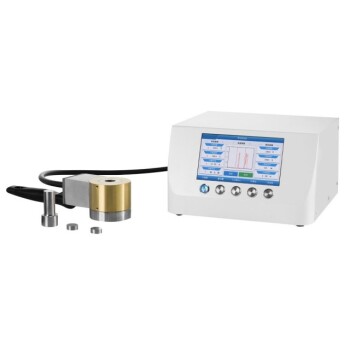
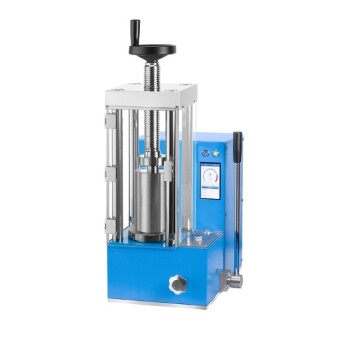
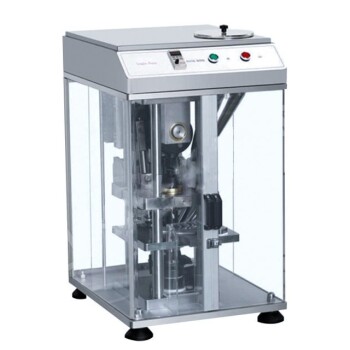
Achieving the perfect balance between mechanical strength and electrochemical activity requires high-performance tools. KINTEK specializes in professional laboratory equipment, offering high-pressure manual and automated hydraulic pellet presses specifically designed for consistent material density and fibrillation.
From PTFE consumables and ceramics to advanced crushing, milling, and sieving systems, our solutions ensure your research is backed by structural integrity and repeatable results. Whether you are developing next-generation batteries or high-performance supercapacitors, our team provides the technical expertise and reliable supply chain you need.
Ready to optimize your fabrication process? Contact our experts today to find the perfect equipment for your lab.
References
- Changwei Li, Honglei Chen. Effectively Controlled Structures of Si-C Composites from Rice Husk for Oxygen Evolution Catalyst. DOI: 10.3390/molecules28166117
This article is also based on technical information from Kintek Solution Knowledge Base .
Related Products
- XRF Boric Acid Lab Powder Pellet Pressing Mold for Laboratory Use
- Automatic Laboratory Hydraulic Press for XRF & KBR Pellet Press
- XRF & KBR steel ring lab Powder Pellet Pressing Mold for FTIR
- XRF & KBR plastic ring lab Powder Pellet Pressing Mold for FTIR
- Automatic Laboratory Hydraulic Pellet Press Machine for Lab Use
People Also Ask
- What is the purpose of using a mold for pellet pressing when preparing catalyst test samples? Ensure Data Consistency
- What is the XRF method of sampling? Achieve Accurate Elemental Analysis with Proper Sample Prep
- What is the XRF pressed pellet method? A Fast, Cost-Effective Sample Prep Guide
- How are samples prepared for XRF analysis? Achieve Accurate and Reliable Results
- How do you make XRF pellets? A 4-Step Guide to Flawless Sample Preparation