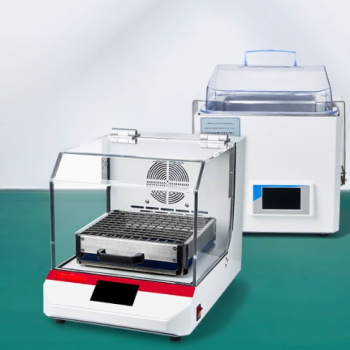
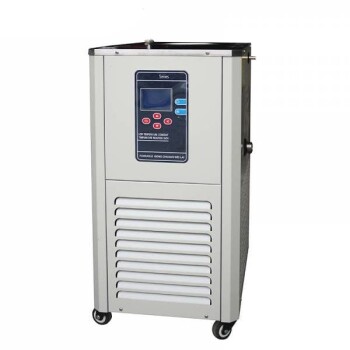
The constant temperature shaking incubator serves two critical functions: it maintains the precise thermal environment required for bacterial metabolism and provides the mechanical force necessary to drive the chemical reaction. By sustaining a stable temperature (commonly 30°C) and continuous oscillation (e.g., 160 r/min), the device ensures that Sulfate-Reducing Bacteria (SRB) remain biologically active and physically capable of interacting with cadmium ions.
Core Takeaway: Effective cadmium immobilization requires a balance of biological health and physical kinetics. The incubator acts as the central control unit, preserving enzymatic activity through heat stability while accelerating the detoxification rate through active mass transfer.
The Critical Role of Thermal Stability
Preserving Enzymatic Function
Sulfate-Reducing Bacteria rely on specific metabolic enzymes to drive the immobilization process. These biological catalysts are highly sensitive to their environment.
The incubator ensures the temperature remains constant, often at an optimal 30°C. This stability prevents thermal shock, allowing the bacterial enzymes to maintain maximum activity throughout the experiment.
Sustaining Metabolic Rates
When temperature fluctuates, bacterial metabolism can slow down or stall completely. Consistent heat allows the bacteria to process nutrients and interact with metals predictably.
By eliminating thermal variables, the incubator ensures that any changes in cadmium levels are due to the treatment, not environmental stress.
The Physics of Agitation
Maximizing Contact Surface
Immobilization is fundamentally a contact-dependent reaction. If the solution remains static, bacteria and heavy metals may become separated as solids settle.
Continuous oscillation keeps the mixture homogenous. This ensures that the bacteria, essential nutrients, and cadmium ions are in constant, thorough contact.
Accelerating Mass Transfer
Passive diffusion—where molecules move slowly from high to low concentration—is inefficient for this type of remediation.
Mechanical agitation increases the mass transfer efficiency. By physically moving the reactants, the incubator increases the frequency of collisions between the SRB and the cadmium, significantly speeding up the reaction rate.
Common Pitfalls in Incubation parameters
The Risk of Temperature Drift
Even minor deviations from the set point can compromise the experiment. If the temperature drops, enzyme activity decreases, leading to a false indication of poor immobilization efficiency.
It is vital to verify that the incubator's heating element provides uniform heat distribution without cold spots.
Inadequate Mixing Speeds
Setting the oscillation speed too low leads to stratification. This creates zones where bacteria are starved of nutrients or isolated from the cadmium.
Conversely, while speeds like 160 r/min are effective, it is important to maintain consistent RPMs to ensure the mass transfer rate remains linear and predictable.
Making the Right Choice for Your Goal
To maximize the efficiency of cadmium immobilization, you must tune your equipment to serve specific experimental needs.
- If your primary focus is Bacterial Viability: Prioritize the precision of the temperature control to ensure enzymes remain in their optimal active state.
- If your primary focus is Reaction Velocity: Optimize the oscillation speed to maximize mass transfer and ensure thorough reactant contact.
Ultimately, the incubator is not just a storage device, but an active participant that dictates the speed and success of the bioremediation process.
Summary Table:
| Parameter | Function in SRB Immobilization | Impact on Cadmium Detoxification |
|---|---|---|
| Temperature (e.g., 30°C) | Maintains metabolic enzyme activity | Prevents thermal shock; ensures stable bacterial growth. |
| Oscillation (e.g., 160 r/min) | Increases mass transfer efficiency | Maximizes contact between bacteria and cadmium ions. |
| Homogeneity | Prevents solid-liquid stratification | Ensures uniform nutrient distribution and reactant collision. |
| Environmental Control | Eliminates thermal & physical variables | Guarantees reproducible results and high reaction velocity. |
Elevate Your Bioremediation Research with KINTEK
Precision is the heartbeat of successful cadmium immobilization. At KINTEK, we understand that maintaining the delicate balance of enzymatic activity and physical kinetics is crucial for your laboratory's success. We specialize in high-performance shaking incubators and cooling solutions designed to deliver the thermal stability and consistent agitation required for your most sensitive bacterial cultures.
From high-temperature furnaces and high-pressure reactors to precision homogenizers and shakers, KINTEK provides the comprehensive laboratory equipment and consumables needed to accelerate your research. Whether you are scaling up bioremediation trials or refining battery research, our expert solutions ensure maximum efficiency and predictable results.
Ready to optimize your experimental parameters? Contact us today to discover how KINTEK’s advanced laboratory systems can empower your next breakthrough.
References
- Lang Liao, Yan Zhang. Immobilization Behavior and Mechanism of Cd2+ by Sulfate-Reducing Bacteria in Anoxic Environments. DOI: 10.3390/w16081086
This article is also based on technical information from Kintek Solution Knowledge Base .
Related Products
- Shaking Incubators for Diverse Laboratory Applications
- Laboratory Small Constant Temperature Heated Magnetic Stirrer Heater and Stirrer
- High Temperature Constant Temperature Heating Circulator Water Bath Chiller Circulator for Reaction Bath
- 50L Chiller Water Bath Cooling Circulator Low Temperature Constant Temperature Reaction Bath
- 10L Heating Chilling Circulator Cooling Water Bath Circulator for High and Low Temperature Constant Temperature Reaction
People Also Ask
- What physical conditions does a shaking incubator provide for bioethanol fermentation? Optimize Yeast Productivity
- Why is the mechanical agitation provided by a shaking incubator necessary for the enzymatic hydrolysis of biomass?
- What critical reaction conditions does a shaking incubator provide? Optimize Cassava Cellulose Enzymatic Hydrolysis
- What are the primary functions of a shaking incubator? Optimize Biomass Fenton Pretreatment Efficiency
- What function does a laboratory shaking incubator serve for halophilic archaea? Optimize Your Seed Cultivation Today