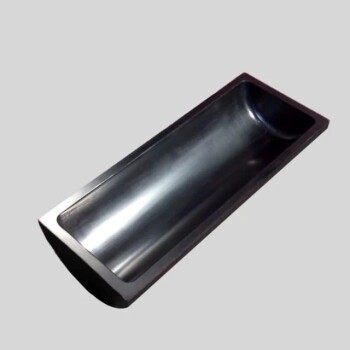
The high-temperature muffle furnace functions as the critical reactor for phase transformation. It provides the stable, isolated environment necessary to drive the thermal polycondensation of urea. By precisely regulating heating rates and dwell times, the furnace converts raw precursors into the stable, layered structure of bulk graphitic carbon nitride (bg-C3N4).
The muffle furnace is not merely a heat source; it is the instrument of control for thermal polycondensation. It ensures the complete transformation of urea into a stable, layered graphitic structure by maintaining precise thermal parameters.
Driving the Chemical Transformation
Facilitating Thermal Polycondensation
The primary role of the furnace is to initiate and sustain thermal polycondensation.
This process involves heating urea to specific high temperatures where it undergoes chemical dehydration and deamination.
Without this sustained high-energy environment, the precursors cannot overcome the activation energy barrier required to polymerize into graphitic carbon nitride.
Ensuring Reaction Completeness
The muffle furnace creates a controlled zone that ensures the raw materials react fully.
Incomplete reactions result in impurities or intermediate byproducts rather than the desired bulk material.
By maintaining the temperature for a set duration, the furnace guarantees the total conversion of urea into the final product.
Controlling Structural Integrity
Developing the Layered Architecture
The goal of this synthesis is not just chemical conversion, but specific structural arrangement.
The precise heating profile allows the material to organize into a stable layered structure.
This graphitic stacking is essential for the material's electronic and physical properties.
The Importance of Thermal Stability
A muffle furnace is designed to isolate the sample from external temperature fluctuations.
This stability is vital because even minor deviations during the dwell time can disrupt the crystallization process.
A consistent thermal environment results in a uniform bulk material with reliable characteristics.
Common Pitfalls and Process Variables
Sensitivity to Heating Rates
The primary reference emphasizes the need to "precisely control" the heating rate.
If the furnace heats the sample too quickly, the rapid release of gases (from deamination) can damage the forming structure.
Conversely, a heating rate that is too slow may lead to inefficient polymerization or unwanted phase variabilities.
Consequences of Inadequate Dwell Times
The duration of the constant temperature phase is just as critical as the temperature itself.
Shortcutting the dwell time often leads to a material that is amorphous rather than properly layered.
You must ensure the furnace maintains the target temperature long enough for the entire bulk mass to reach structural equilibrium.
Optimizing Your Synthesis Strategy
To ensure high-quality bg-C3N4 production, tailor your furnace settings to your specific research goals:
- If your primary focus is Structural Order: Prioritize a slow, controlled heating rate to allow the layered sheets to form without disruption from rapid gas evolution.
- If your primary focus is Chemical Purity: Ensure the constant temperature duration is sufficiently long to drive the polycondensation reaction to absolute completion.
Success in synthesizing bulk graphitic carbon nitride depends entirely on the precision of your thermal control.
Summary Table:
| Parameter | Role in bg-C3N4 Synthesis | Impact on Material Quality |
|---|---|---|
| Thermal Polycondensation | Initiates chemical dehydration and deamination of urea | Converts raw precursors into polymerized carbon nitride |
| Precise Heating Rate | Controls the evolution of gases during reaction | Prevents structural damage and ensures uniform crystallization |
| Dwell Time | Maintains target temperature for structural equilibrium | Guarantees complete reaction and stable layered architecture |
| Thermal Isolation | Minimizes external temperature fluctuations | Ensures phase purity and consistent electronic properties |
Elevate Your Materials Research with KINTEK Precision
Achieving the perfect layered structure of bulk graphitic carbon nitride (bg-C3N4) requires more than just heat—it requires absolute thermal control. KINTEK specializes in high-performance laboratory equipment designed for rigorous synthesis workflows. Our advanced high-temperature muffle furnaces and tube furnaces provide the stability and programmable precision essential for successful thermal polycondensation.
From high-temperature furnaces and crushing systems to specialized PTFE products, ceramics, and crucibles, KINTEK provides a comprehensive range of tools for battery research, chemical engineering, and advanced material science.
Ready to optimize your synthesis results? Contact our technical experts today to find the ideal furnace configuration for your laboratory and experience the KINTEK advantage in reliability and performance.
References
- Q. Chen, Shibiao Wu. Photodegradation of Norfloxacin on Ni0.5Cd0.5S/g-C3N4 Composites in Water. DOI: 10.52568/001643/jcsp/47.02.2025
This article is also based on technical information from Kintek Solution Knowledge Base .
Related Products
- 1200℃ Muffle Furnace Oven for Laboratory
- 1800℃ Muffle Oven Furnace for Laboratory
- Graphite Vacuum Furnace Bottom Discharge Graphitization Furnace for Carbon Materials
- 1700℃ Muffle Oven Furnace for Laboratory
- 2200 ℃ Graphite Vacuum Heat Treat Furnace
People Also Ask
- How does a muffle furnace ensure reliability in calcification roasting? Achieve Precision in Pellets Conversion
- Why is a laboratory high-temperature muffle furnace required for the post-annealing treatment of copper oxide?
- What role does a laboratory high-temperature muffle furnace play in iron-based composite phase structure development?
- How does a muffle furnace influence 8YSZ ceramic densification? Master Precision Sintering at 1500°C
- How is a laboratory high-temperature muffle furnace utilized in sol-gel synthesis for perovskite catalysts?