The role of a laboratory stirrer or homogenizer in the pretreatment of waste paper is to apply mechanical force to a mixture of solid paper and distilled water. This mechanical action breaks down the solid waste to create a uniform slurry, serving as the critical physical preparation step for chemical conversion.
By transforming solid waste into a consistent slurry, homogenization maximizes the contact surface area between cellulose fibers and the liquid medium. This physical accessibility is a prerequisite for the effective penetration of enzymes and catalysts during the hydrolysis reaction.
The Mechanics of Slurry Preparation
Creating a Uniform Mixture
The primary function of the stirrer is to mechanically disrupt the physical structure of the waste paper.
By mixing the solids with distilled water, the device eliminates the heterogeneity of the raw waste.
The result is a uniform slurry, ensuring that the material is evenly distributed throughout the liquid medium.
Maximizing Surface Area
The mechanical force applied during mixing serves to expose individual cellulose fibers.
This process significantly increases the contact surface area between the solid fibers and water molecules.
High surface area is essential for overcoming the physical barrier the paper structure presents to chemical reactions.
Optimizing for Hydrolysis
Facilitating Enzyme Penetration
The effectiveness of the subsequent phase—hydrolysis—depends entirely on accessibility.
Homogenization allows catalysts or microbial enzymes to penetrate deeply into the fiber structure.
Without this penetration, reagents would likely only interact with the surface of the paper clumps, leading to incomplete reactions.
Ensuring Reaction Consistency
The stirrer plays a vital role in standardizing the material before the chemical reaction begins.
A uniform slurry ensures that the hydrolysis reaction occurs at a consistent rate throughout the batch.
This consistency is essential for predicting and controlling the yield of fermented sugars.
Understanding the Risks of Inconsistency
The Impact of Poor Mixing
If the waste paper is not thoroughly homogenized, the subsequent hydrolysis reaction will be unstable.
Inconsistent mixing leaves clumps of solid waste that enzymes cannot effectively penetrate.
This lack of uniformity leads to unpredictable reaction kinetics and lower overall conversion efficiency.
Making the Right Choice for Your Goal
To optimize the conversion of waste paper into fermented sugars, consider the following based on your specific objectives:
- If your primary focus is maximum reaction efficiency: Prioritize high-shear homogenization to maximize the specific surface area available for enzyme attack.
- If your primary focus is experimental reproducibility: Ensure the slurry reaches a state of total uniformity to guarantee consistent hydrolysis results across different batches.
Mechanical homogenization is the bridge that transforms waste paper from a passive solid into a reactive substrate.
Summary Table:
| Feature | Role in Pretreatment | Impact on Hydrolysis |
|---|---|---|
| Mechanical Force | Breaks down solid waste structure | Creates a reactive substrate |
| Slurry Uniformity | Eliminates material heterogeneity | Ensures consistent reaction kinetics |
| Surface Area | Exposes individual cellulose fibers | Maximizes enzyme/catalyst contact |
| Fiber Penetration | Enables deep reagent access | Prevents incomplete surface-only reactions |
Elevate Your Biofuel Research with KINTEK Precision
Transitioning from waste paper to fermentable sugars requires more than just chemistry—it demands perfect physical preparation. KINTEK specializes in high-performance laboratory equipment designed to optimize your pretreatment workflows. Whether you need high-shear homogenizers and shakers for maximum surface area or advanced crushing and milling systems to standardize your raw materials, we provide the tools necessary for superior experimental reproducibility.
From high-pressure reactors and autoclaves for downstream hydrolysis to essential PTFE and ceramic consumables, KINTEK is your partner in sustainable energy research. Contact us today to find the perfect homogenization solution for your lab!
References
- M.A. Salam, M. A. Islam. Conversion of Cellulosic waste into fermentable sugar: Process optimization. DOI: 10.3329/jce.v28i1.18107
This article is also based on technical information from Kintek Solution Knowledge Base .
Related Products
- Lab Sterile Slapping Type Homogenizer for Tissue Mashing and Dispersing
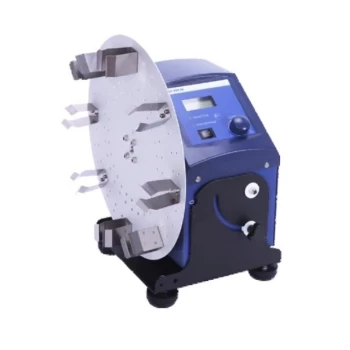
- Laboratory Disc Rotary Mixer for Efficient Sample Mixing and Homogenization
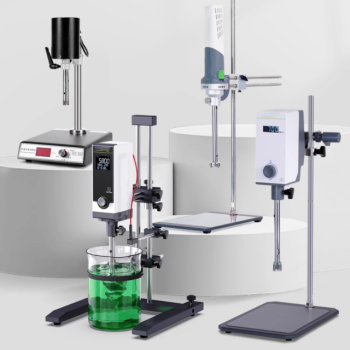
- High Performance Lab Homogenizer for Pharma Cosmetics and Food R&D
- High Shear Homogenizer for Pharmaceutical and Cosmetic Applications
- Laboratory High Throughput Tissue Grinding Mill Grinder
People Also Ask
- How does a laboratory automatic masticator or homogenizer facilitate the processing of biofilm samples? Optimize Accuracy
- How do lab stirrers & homogenizers ensure uniform distribution? Optimize Your Complex Multiphase Chemical Mixing
- What role does a laboratory homogenizer play in radioactive cesium detection? Ensure Accuracy in Wildlife Sampling
- How does a homogenizer affect the quality of electrode slurry? Master Battery Consistency with High-Shear Mixing
- Why is maintaining nanoparticle dispersion critical for photocatalytic reactors? Maximize Your Reaction Efficiency