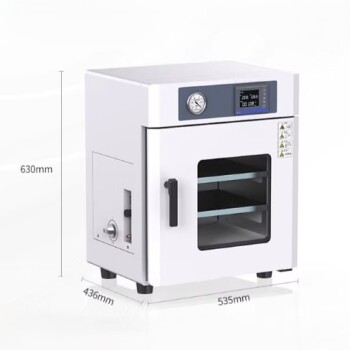
The role of a vacuum heating chamber is to act as a protective isolation vessel during the critical austenitization phase. It maintains a high-temperature environment (up to 1250 °C) specifically designed to prevent surface oxidation and decarburization while ensuring the steel’s alloying elements fully dissolve into a uniform solid solution.
By eliminating atmospheric interference, the vacuum chamber ensures that the steel maintains its precise chemical composition and achieves a homogeneous microstructure, setting the foundation for optimal mechanical properties in subsequent processing steps.
Preserving Material Integrity
Prevention of Surface Degradation
The primary function of the vacuum chamber is to shield the steel from the surrounding atmosphere.
At temperatures reaching 1250 °C, 12%Cr steel is highly susceptible to reacting with oxygen and carbon.
The vacuum environment effectively eliminates the risk of surface oxidation (scaling) and decarburization (the loss of carbon from the surface), ensuring the material retains its intended surface chemistry.
Protection of Reactive Alloying Elements
Ferritic/martensitic steels often contain active alloying elements such as Chromium (Cr), Vanadium (V), and Niobium (Nb).
These elements have a high affinity for oxygen and nitrogen.
A controlled vacuum prevents these expensive elements from oxidizing or forming unwanted impurities, ensuring they remain available to enhance the steel's radiation resistance and mechanical strength.
Exclusion of Harmful Impurities
Beyond oxidation, the vacuum chamber isolates the steel from atmospheric nitrogen.
For high-performance applications, maintaining ultra-low nitrogen content is essential to prevent the formation of brittle nitrides (such as boron nitride or aluminum nitride).
Eliminating these impurities prevents the embrittlement of the material, which is critical for maintaining ductility.
Establishing Microstructural Uniformity
Facilitating Complete Solid Solution
The vacuum chamber provides the stability required for a constant temperature hold.
This thermal stability is necessary for the complete solid solution of alloying elements into the matrix.
By holding the steel at a precise high temperature without fluctuation, the chamber ensures that carbides and other phases dissolve completely, preparing the steel for transformation.
Ensuring Microstructural Homogeneity
A uniform temperature profile creates a consistent microstructure throughout the cross-section of the steel.
This uniformity is vital for subsequent thermomechanical processing, as it ensures the steel responds predictably to deformation and cooling.
Without this homogeneity, the final product may exhibit inconsistent mechanical properties or weak points.
Controlling Grain Size
Precise temperature regulation within the chamber is critical for managing the growth of austenite grains.
The initial size of these grains directly dictates the final mechanical properties and the morphology of the phase transformation products after quenching.
The vacuum furnace allows for the exacting thermal control needed to optimize this grain structure.
Understanding the Trade-offs
Sensitivity to Operational Parameters
While vacuum heating offers superior protection, it requires rigorous management of the vacuum level and temperature gradients.
Any breach in the vacuum integrity at high temperatures can lead to rapid, catastrophic oxidation or nitrogen absorption, potentially ruining the batch.
Equipment Complexity vs. Material Purity
Achieving temperatures of 1250 °C in a high vacuum requires specialized, complex equipment compared to standard atmospheric furnaces.
However, for 12%Cr steels, this complexity is a necessary trade-off to avoid the formation of oxides and decarburized layers that would otherwise require extensive machining or result in part failure.
Making the Right Choice for Your Goal
To maximize the effectiveness of your heat treatment process, align your operational focus with your specific metallurgical objectives:
- If your primary focus is Surface Quality: Prioritize the vacuum integrity to prevent oxidation and decarburization, eliminating the need for post-treatment surface machining.
- If your primary focus is Mechanical Performance: Focus on the precision of the temperature hold to ensure complete solid solution and optimal austenite grain size control.
- If your primary focus is Compositional Purity: Ensure the vacuum level is sufficient to prevent nitrogen pickup and the formation of brittle nitride inclusions.
The vacuum heating chamber is not merely a furnace; it is a precision tool that locks in the chemical and structural potential of the steel before it undergoes final hardening.
Summary Table:
| Function | Benefit to 12%Cr Steel | Impact on Final Quality |
|---|---|---|
| Oxidation Prevention | Eliminates scaling and decarburization | Maintains surface chemistry & reduces machining |
| Impurity Exclusion | Prevents nitrogen/oxygen absorption | Avoids brittle nitrides & preserves ductility |
| Thermal Stability | Facilitates complete solid solution | Ensures homogeneous microstructure |
| Grain Control | Precise temperature regulation | Optimizes mechanical properties & transformation |
Elevate Your Metallurgical Precision with KINTEK
Achieving the perfect microstructure for 12%Cr ferritic/martensitic steel requires absolute environmental control. KINTEK specializes in high-performance laboratory equipment designed for the most demanding heat treatment protocols.
Our comprehensive range of high-temperature vacuum furnaces provides the thermal stability and vacuum integrity necessary to prevent oxidation and ensure alloying element purity. Whether you are conducting fundamental material research or optimizing industrial processes, our portfolio includes:
- High-Temperature Furnaces: Muffle, tube, vacuum, and atmosphere models.
- Material Processing: Crushing, milling, and hydraulic presses for pellet preparation.
- Advanced Research Tools: High-pressure reactors, autoclaves, and battery research consumables.
Ready to lock in the chemical and structural potential of your materials? Contact KINTEK today to discover how our precision solutions can enhance your lab's efficiency and results.
References
- I. F. Kislyak, V. А. Panov. EFFECT OF AUSFORMING ON MECHANICAL PROPERTIES OF 12%Cr FERRITIC/MARTENSITIC STEEL. DOI: 10.46813/2022-137-076
This article is also based on technical information from Kintek Solution Knowledge Base .
Related Products
- 56L Vertical Laboratory Vacuum Drying Oven
- 23L Laboratory Vacuum Drying Oven
- Electric Heated Hydraulic Vacuum Heat Press for Lab
- Vacuum Heat Treat Furnace with Ceramic Fiber Liner
- Multi Heating Zones CVD Tube Furnace Machine Chemical Vapor Deposition Chamber System Equipment
People Also Ask
- Why is a laboratory vacuum drying oven recommended for rice straw residues? Protect Your Biomass Integrity
- What role does a laboratory vacuum drying oven play in the preparation of modified multi-walled carbon nanotubes?
- What is the importance of using a laboratory vacuum drying oven? Preserving Slow-Release Microcapsule Integrity
- Why is a Laboratory Vacuum Drying Oven recommended for PBAT microspheres? Protect Sensitive Polymer Integrity
- What role does a laboratory vacuum drying oven play in processing nanoparticle powder samples? Protect Sample Integrity