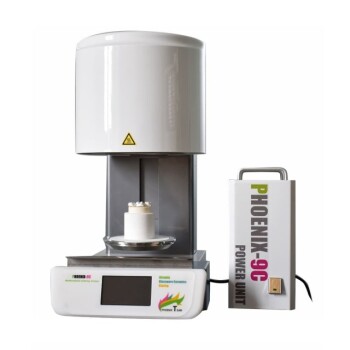
The atmosphere protection sintering furnace acts as a critical control vessel that maintains a strictly inert environment during the synthesis of Lithium Iron Phosphate (LiFePO4/C). Its primary function is to prevent the oxidation of iron while simultaneously enabling the formation of a conductive carbon coating.
The core value of this equipment lies in its ability to maintain a stable nitrogen or inert gas environment at high temperatures (typically around 700°C). By doing so, it preserves the chemical state of divalent iron (Fe2+) and ensures the proper carbonization of precursors, which is essential for the material's electronic conductivity.
Preserving Chemical Integrity
The synthesis of LiFePO4/C is a delicate chemical process where the internal atmosphere determines the success or failure of the final product.
Preventing Iron Oxidation
The most critical task of the furnace is to stop divalent iron (Fe2+) from oxidizing into trivalent iron (Fe3+). If oxygen is present during sintering, impurity phases form that significantly degrade the material's electrochemical performance.
Maintaining an Inert Environment
To achieve this, the furnace maintains a constant flow of inert gas, typically Nitrogen (N2) or Argon. This creates a protective shield around the material during the high-temperature calcination phase, which generally operates around 700°C.
Enhancing Material Performance
Beyond protection, the furnace plays an active role in modifying the physical properties of the battery material to ensure it functions effectively.
Facilitating Carbonization
The furnace environment is essential for processing carbon sources, such as glucose precursors. Under these controlled conditions, the glucose decomposes properly to form a coating on the LiFePO4 particles.
Creating Amorphous Carbon
This process results in an amorphous carbon layer. This layer significantly enhances the electronic conductivity of the final material, effectively solving the inherent low conductivity issues of raw LiFePO4.
Understanding the Trade-offs
While essential for synthesis, relying on atmosphere protection sintering introduces specific operational challenges that must be managed.
Sensitivity to Atmosphere Integrity
The quality of the final product is entirely dependent on the purity and stability of the gas flow. Even minor leaks or fluctuations in gas pressure can introduce oxygen, compromising the entire batch by oxidizing the iron.
Equipment Complexity
Whether using tube furnaces or box furnaces, precise control over both temperature gradients and gas flow adds complexity to the manufacturing process. The system must effectively purge air before heating and maintain positive pressure throughout the cooling phase to prevent re-oxidation.
Optimizing Your Synthesis Process
To achieve the best results in solid-phase reaction synthesis, align your equipment settings with your specific material goals.
- If your primary focus is chemical purity: Ensure your furnace maintains a strictly controlled positive pressure of Nitrogen (N2) to completely eliminate the risk of Fe2+ oxidizing into impurity phases.
- If your primary focus is electronic conductivity: Prioritize precise temperature stability around 700°C to optimize the conversion of glucose precursors into a uniform, high-quality amorphous carbon coating.
The atmosphere furnace is not just a heater; it is the chemical guardian that allows high-performance battery materials to exist.
Summary Table:
| Feature | Role in LiFePO4/C Synthesis | Impact on Material Performance |
|---|---|---|
| Inert Atmosphere | Prevents Fe2+ from oxidizing into Fe3+ | Eliminates impurities and ensures chemical integrity |
| High-Temp Stability | Maintains ~700°C calcination environment | Enables proper formation of the LiFePO4 crystalline structure |
| Carbonization Control | Facilitates decomposition of glucose precursors | Creates a conductive amorphous carbon layer |
| Gas Flow Management | Purges oxygen and maintains positive pressure | Ensures consistency and high purity across production batches |
Elevate Your Battery Material Research with KINTEK
Precision is the foundation of high-performance energy storage. KINTEK specializes in advanced laboratory equipment designed to meet the rigorous demands of battery research. From high-temperature atmosphere and vacuum furnaces that ensure the perfect inert environment for LiFePO4 synthesis to crushing systems, planetary ball mills, and hydraulic pellet presses for precursor preparation, we provide the tools you need for excellence.
Our comprehensive portfolio also includes:
- Electrolytic cells and electrodes for electrochemical testing.
- High-temperature high-pressure reactors and autoclaves for hydrothermal synthesis.
- Crucibles and ceramics specifically designed for chemical stability at 700°C+.
Ready to optimize your solid-phase reaction process? Contact KINTEK today to discover how our tailored heating and processing solutions can enhance your laboratory's efficiency and material purity.
Related Products
- Mesh belt controlled atmosphere furnace
- Controlled Nitrogen Inert Hydrogen Atmosphere Furnace
- 1200℃ Controlled Atmosphere Furnace Nitrogen Inert Atmosphere Furnace
- 1700℃ Controlled Atmosphere Furnace Nitrogen Inert Atmosphere Furnace
- 1400℃ Controlled Atmosphere Furnace with Nitrogen and Inert Atmosphere
People Also Ask
- What are some of the reasons why a controlled atmosphere furnace is desirable in sintering? Achieve Superior Sintering Results
- What role does a controlled atmosphere furnace with argon gas flow play in the production of reduced graphene oxide (rGO)?
- Why is a furnace equipped with a controlled atmosphere necessary for the preparation of active metal catalysts?
- What is the process of a mesh belt furnace? Achieve Consistent, High-Volume Heat Treatment
- How does a mesh belt furnace work? Achieve High-Volume, Repeatable Heat Treatment