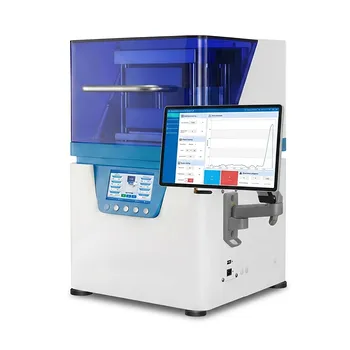
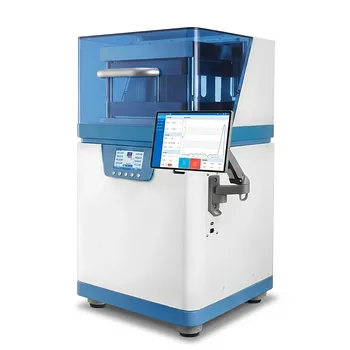
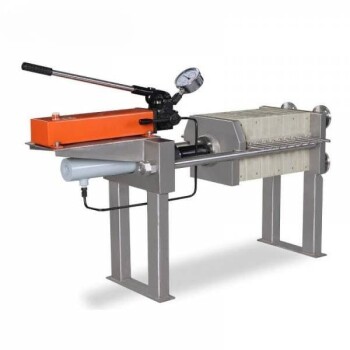
The role of laboratory hydraulic presses is to apply precise mechanical pressure and heat to transform brittle, torrefied powder into durable, high-density fuel pellets. These machines simulate industrial pelletizing processes by compressing loose biomass under high loads—often ranging from 100 kg/cm² to 555 MPa—while maintaining controlled temperatures. This process is essential for activating residual binders within the biomass, ensuring the resulting fuel can withstand the rigors of transportation and industrial use.
Laboratory hydraulic presses serve as the critical bridge between raw torrefied material and a viable industrial fuel by overcoming the material's inherent brittleness. They provide a controlled environment to establish the optimal pressure and temperature parameters required for high-strength densification and efficient energy storage.
Overcoming Material Limitations Through Thermal Activation
The Critical Role of Residual Lignin
Torrefaction removes some of the natural lignin components that typically act as binders in raw biomass. Because the material becomes more brittle, laboratory presses must provide higher compression forces than those used for non-torrefied wood.
Precision Temperature Control
To ensure structural integrity without adding external chemicals, molding equipment must reach temperatures typically around 230°C. This specific heat range allows the residual lignin to soften and flow, acting as a natural glue that bonds the torrefied particles together.
Achieving High-Strength Densification
High-performance molding equipment ensures that the finished pellets, briquettes, or rods maintain a consistent shape. This mechanical bonding is vital for producing high-strength pellets that do not crumble into dust during mechanical handling.
Simulating Industrial Production Parameters
Quantitative Process Modeling
Researchers use laboratory presses to simulate the single-hole molding process, allowing for the study of how variables like pressure and holding time affect density. By utilizing precise loads, often exceeding 160 MPa, engineers can determine the optimal pressure curves needed for industrial-scale die designs.
Specific Energy Consumption (SEC) Analysis
Modern laboratory presses integrate displacement and pressure monitoring systems to record ejection and compression curves. This data is critical for calculating the energy required to produce a ton of fuel, helping facilities evaluate the economic feasibility of a specific biomass source.
Optimizing Material Stability
By testing different dwell times—sometimes extending up to 300 seconds—researchers identify the material stability boundaries. This ensures that the pellets will not expand or crack after they are ejected from the molding equipment.
Enhancing Logistical and Operational Efficiency
Maximizing Bulk and Energy Density
Torrefied biomass naturally has a low bulk density, making it expensive to move; laboratory densification significantly increases the energy density per unit volume. This reduction in volume directly lowers logistical costs and storage requirements for end-users.
Improving Hydrophobicity and Storage
The pelletization process enhances the hydrophobic nature of torrefied biomass, making it resistant to moisture absorption. This property is essential for long-term storage and prevents the fuel from degrading when exposed to humid environments.
Boosting Combustion Performance
Uniform pellets produced by precision molding equipment improve feeding efficiency in industrial boilers and gasifiers. When co-firing with coal in power plants, these high-density pellets provide a more consistent and controllable energy output.
Understanding the Trade-offs and Pitfalls
Equipment Wear and Tear
Torrefied biomass is significantly more abrasive than raw wood powder. The high pressures required for densification can lead to accelerated wear on molds and pistons, necessitating the use of specialized, hardened materials for laboratory components.
The Risk of Over-Processing
If torrefaction is too aggressive, the lignin may be too degraded to act as a binder, regardless of the pressure applied. In these cases, even the most advanced hydraulic press may fail to produce a durable pellet without the costly addition of external binders.
Energy Intensive Requirements
The dual requirement of high heat and high pressure means the densification of torrefied material is more energy-intensive than standard pelletizing. Finding the "sweet spot" where durability meets energy efficiency is a constant challenge in process optimization.
How to Apply These Insights to Your Project
Making the Right Choice for Your Goal
- If your primary focus is industrial scale-up: Use a press with advanced data logging to calculate Specific Energy Consumption and determine the precise pressure curves required for large-scale die manufacturing.
- If your primary focus is fuel quality and durability: Prioritize equipment with high-precision temperature control (up to 230°C) to ensure maximum activation of residual lignin for binderless bonding.
- If your primary focus is logistical optimization: Focus on maximizing compression dwell times to achieve the highest possible bulk density and hydrophobicity for long-distance transport.
By utilizing laboratory hydraulic presses to master the variables of pressure, temperature, and time, you can transform brittle torrefied waste into a high-value, energy-dense commodity.
Summary Table:
| Key Feature | Function in Biomass Pelletization |
|---|---|
| Precise Heat Control | Softens residual lignin (up to 230°C) to act as a natural, binderless glue. |
| High Pressure Load | Applies forces (up to 555 MPa) to overcome brittleness and ensure high-strength bonding. |
| Process Simulation | Models single-hole molding to determine optimal industrial scale-up parameters. |
| Data Logging | Monitors compression/ejection curves to calculate Specific Energy Consumption (SEC). |
| Dwell Time Optimization | Manages holding times (up to 300s) to ensure material stability and prevent cracking. |
Optimize Your Biomass Research with KINTEK Precision
Transforming brittle torrefied material into high-value energy commodities requires equipment that can handle extreme pressures and precise thermal activation. KINTEK specializes in laboratory equipment and consumables, offering a robust range of laboratory hydraulic presses (pellet, hot, and isostatic) engineered for high-strength densification.
Beyond pelletization, our comprehensive portfolio includes crushing and milling systems for feedstock preparation, high-temperature furnaces for torrefaction research, and durable ceramic crucibles to support your entire workflow. Whether you are focused on industrial scale-up or maximizing energy density, KINTEK provides the reliability and technical support your project demands.
Ready to elevate your fuel quality? Contact KINTEK today to find your perfect laboratory solution!
References
- Milica Preradović, Aleksandra Kolundžija. Torrefaction: Process Review. DOI: 10.3311/ppch.20636
This article is also based on technical information from Kintek Solution Knowledge Base .
Related Products
- Laboratory Hydraulic Press Split Electric Lab Pellet Press
- Laboratory Hydraulic Press Lab Pellet Press Machine for Glove Box
- Laboratory Hydraulic Press Lab Pellet Press for Button Battery
- Automatic Laboratory Hydraulic Pellet Press Machine for Lab Use
- Fully Automatic Heated Hydraulic Lab Press for Materials Sintering and Sample Preparation
People Also Ask
- What are the roles of a laboratory hydraulic press and stainless steel molds in the preparation of graphite samples?
- What is the role of a laboratory hydraulic press in electrode prep? Maximize Energy Density & Sealing Precision
- How does a laboratory hydraulic press ensure the quality of alumina-forming alloy green bodies? Optimize CSP Research
- How is a laboratory hydraulic press used to evaluate the mechanical performance of nano-modified concrete? Expert Guide
- Why is a laboratory hydraulic press used for ASSB assembly? Achieving 392 MPa for Optimal Solid-State Battery Density