Knowledge What is the role of mechanical crushing and sieving systems in food waste pretreatment? Boost Fermentation Yields
Author avatar

Tech Team · Kintek Solution

Updated 20 hours ago

What is the role of mechanical crushing and sieving systems in food waste pretreatment? Boost Fermentation Yields


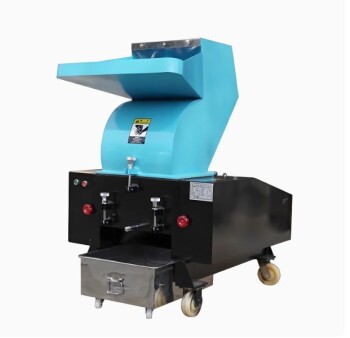
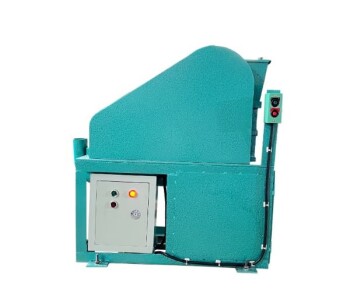
Mechanical crushing and sieving systems act as the foundational step in the physical pretreatment of food waste. Their primary function is to mechanically reduce particle size—typically to 2 mm or finer—while simultaneously separating non-biodegradable contaminants to prepare the substrate for efficient dark fermentation.

The core role of these systems is dual-purpose: they biologically optimize the feedstock by maximizing surface area for higher hydrogen yields, and they operationally secure the system by removing impurities that could damage downstream equipment.

Optimizing Biological Efficiency

Reduction of Particle Size

The primary objective of mechanical crushing is to reduce food waste into a consistent, fine particulate matter. Systems are calibrated to achieve a target particle size of 2 mm or finer.

Increasing Specific Surface Area

By pulverizing larger chunks of waste, the specific surface area of the material is significantly increased. This physical transformation is critical because it exposes more of the organic material to the surrounding environment.

Enhancing Biodegradability

A larger surface area provides a greater number of contact points for subsequent chemical and biological reactions. This reduces mass transfer resistance, allowing enzymes and bacteria to access the substrate more easily.

Improving Hydrogen Yields

The ultimate biological outcome of this physical processing is improved performance. By making the food waste more accessible to microorganisms, the overall biodegradability increases, leading to higher hydrogen production yields.

Ensuring Operational Stability

Removal of Non-Biodegradable Impurities

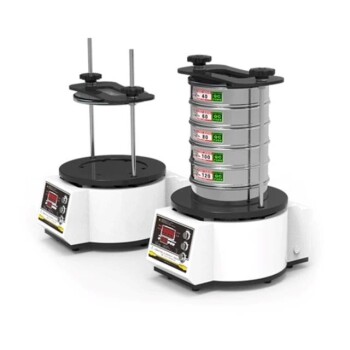
Raw food waste is rarely pure; it often contains contaminants like plastics, wooden chopsticks, and bones. Industrial-grade sieving systems are essential for physically removing these non-biodegradable materials before they enter the fermentation reactor.

Increasing Organic Purity

By filtering out inorganic debris, the process increases the proportion of Volatile Solids (VS) in the feedstock. This ensures that the material entering the reactor is organic-rich and suitable for conversion, rather than inert filler.

Equipment Protection

Removing hard or fibrous impurities is not just about chemistry; it is a mechanical necessity. Effective sieving prevents damage to precision mixing and detection equipment, ensuring the long-term, stable operation of the anaerobic digestion system.

Common Pitfalls to Avoid

The Risk of Inconsistent Sizing

Failing to achieve a standardized particle size leads to uneven reaction rates. If reactants cannot penetrate the substrate uniformly due to variable sizes, the efficiency of the chemical or enzymatic hydrolysis will suffer, leading to suboptimal conversion.

Ignoring Contaminant Damage

Overlooking the sieving stage poses a severe risk to infrastructure. Allowing hard impurities to pass through pretreatment can degrade mechanical components, leading to system instability and costly maintenance interruptions.

Making the Right Choice for Your Goal

To maximize the efficiency of your dark fermentation process, tailor your mechanical pretreatment based on your specific operational priorities:

  • If your primary focus is Maximum Hydrogen Yield: Prioritize crushing systems that consistently reduce particle size to 2 mm or finer to maximize the specific surface area available for biological reactions.
  • If your primary focus is System Longevity: Invest heavily in robust sieving technologies to rigorously remove non-biodegradable impurities like plastics and bones to protect precision downstream equipment.

Effective mechanical pretreatment transforms variable food waste into a consistent, high-purity substrate, laying the groundwork for maximum biological conversion.

Summary Table:

System Component Primary Function Impact on Dark Fermentation
Mechanical Crushing Reduces particle size to ≤ 2 mm Increases specific surface area and improves hydrogen yields
Industrial Sieving Removes plastics, wood, and bones Increases organic purity (VS) and protects downstream equipment
Pretreatment Outcome Homogenizes substrate Enhances biodegradability and reduces mass transfer resistance

Maximize Your Fermentation Efficiency with KINTEK

Ready to transform your food waste into high-yield hydrogen? KINTEK specializes in advanced laboratory equipment, offering high-performance crushing and milling systems and precision sieving equipment designed to achieve the perfect 2mm particle size for optimal substrate pretreatment.

Whether you are focusing on maximizing biological conversion or ensuring the longevity of your anaerobic digestion systems, our solutions protect your investment from damaging contaminants while boosting organic purity. Beyond pretreatment, KINTEK provides a comprehensive range of high-temperature furnaces, reactors, and cooling solutions to support your entire research workflow.

Partner with the experts in laboratory precision. Contact KINTEK today to discover how our tailored equipment can streamline your dark fermentation process and deliver superior results.

References

  1. Djangbadjoa Gbiete, Michael Nelles. Insights into Biohydrogen Production Through Dark Fermentation of Food Waste: Substrate Properties, Inocula, and Pretreatment Strategies. DOI: 10.3390/en17246350

This article is also based on technical information from Kintek Solution Knowledge Base .

Related Products

People Also Ask

Related Products

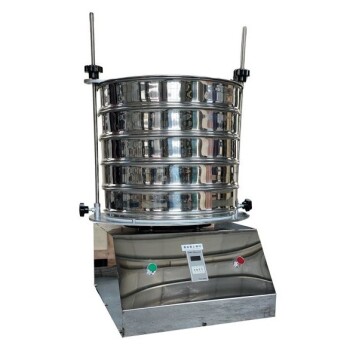
Laboratory Test Sieves and Sieving Machines

Laboratory Test Sieves and Sieving Machines

Precision lab test sieves & sieving machines for accurate particle analysis. Stainless steel, ISO-compliant, 20μm-125mm range. Request specs now!

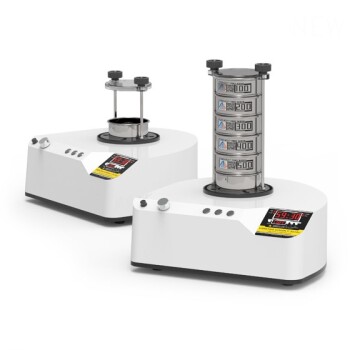
Laboratory Test Sieves and Vibratory Sieve Shaker Machine

Laboratory Test Sieves and Vibratory Sieve Shaker Machine

Efficiently process powders, granules, and small blocks with a high-frequency vibration sieve. Control vibration frequency, screen continuously or intermittently, and achieve accurate particle size determination, separation, and classification.

Laboratory Jaw Crusher

Laboratory Jaw Crusher

Discover the small jaw crusher for efficient, flexible, and affordable crushing in labs and small mines. Ideal for coal, ores, and rocks. Learn more now!

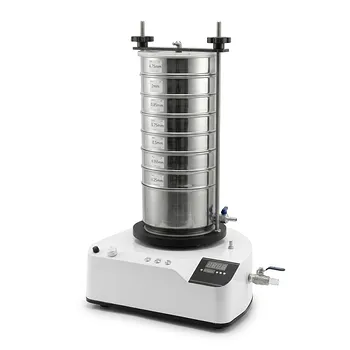
Vibratory Sieve Shaker Machine Dry Three-Dimensional Vibrating Sieve

Vibratory Sieve Shaker Machine Dry Three-Dimensional Vibrating Sieve

The KT-V200 product focuses on solving common sieving tasks in the laboratory. It is suitable for sieving 20g-3kg dry samples.

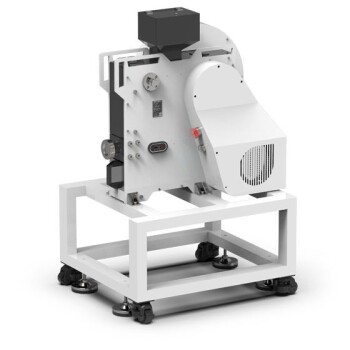
Laboratory Sealed Hammer Crusher for Efficient Sample Preparation

Laboratory Sealed Hammer Crusher for Efficient Sample Preparation

Discover the Laboratory Sealed Hammer Crusher for efficient sample preparation. Ideal for coal, metallurgy, and research, this crusher ensures high production efficiency and environmental friendliness.

Custom PTFE Teflon Parts Manufacturer for PTFE Mesh F4 Sieve

Custom PTFE Teflon Parts Manufacturer for PTFE Mesh F4 Sieve

PTFE mesh sieve is a specialized test sieve designed for particle analysis in various industries, featuring a non-metallic mesh woven from PTFE filament. This synthetic mesh is ideal for applications where metal contamination is a concern . PTFE sieves are crucial for maintaining the integrity of samples in sensitive environments, ensuring accurate and reliable results in particle size distribution analysis.

Custom PTFE Teflon Parts Manufacturer Grinding Bowl

Custom PTFE Teflon Parts Manufacturer Grinding Bowl

PTFE is renowned for its exceptional chemical resistance, thermal stability, and low friction properties, making it a versatile material in various industries. The PTFE grinding bowl, specifically, finds applications where these properties are crucial.

Laboratory Oscillating Orbital Shaker

Laboratory Oscillating Orbital Shaker

Mixer-OT orbital shaker uses brushless motor, which can run for a long time. It is suitable for vibration tasks of culture dishes, flasks and beakers.

Laboratory manual slicer

Laboratory manual slicer

Manual microtome is a high-precision cutting device designed for laboratories, industry and medical fields. It is suitable for the preparation of thin slices of various materials such as paraffin samples, biological tissues, battery materials, food, etc.

Automatic Laboratory Hydraulic Pellet Press Machine for Lab Use

Automatic Laboratory Hydraulic Pellet Press Machine for Lab Use

Experience efficient sample preparation with our Automatic Lab Press Machine. Ideal for material research, pharmacy, ceramics, and more. Features a compact size and hydraulic press functionality with heating plates. Available in various sizes.

Metallographic Specimen Mounting Machine for Laboratory Materials and Analysis

Metallographic Specimen Mounting Machine for Laboratory Materials and Analysis

Precision metallographic mounting machines for labs—automated, versatile, and efficient. Ideal for sample prep in research and quality control. Contact KINTEK today!

Square Lab Press Mold for Laboratory Applications

Square Lab Press Mold for Laboratory Applications

Create uniform samples easily with Square Lab Press Mold - available in various sizes. Ideal for battery, cement, ceramics, and more. Custom sizes available.

Electric Lab Cold Isostatic Press CIP Machine for Cold Isostatic Pressing

Electric Lab Cold Isostatic Press CIP Machine for Cold Isostatic Pressing

Produce dense, uniform parts with improved mechanical properties with our Electric Lab Cold Isostatic Press. Widely used in material research, pharmacy, and electronic industries. Efficient, compact, and vacuum-compatible.

Automatic Heated Hydraulic Press Machine with Heated Plates for Laboratory Hot Press 25T 30T 50T

Automatic Heated Hydraulic Press Machine with Heated Plates for Laboratory Hot Press 25T 30T 50T

Efficiently prepare your samples with our Automatic Heated Lab Press. With a pressure range up to 50T and precise control, it's perfect for various industries.

Automatic Lab Cold Isostatic Press CIP Machine Cold Isostatic Pressing

Automatic Lab Cold Isostatic Press CIP Machine Cold Isostatic Pressing

Efficiently prepare samples with our Automatic Lab Cold Isostatic Press. Widely used in material research, pharmacy, and electronic industries. Provides greater flexibility and control compared to electric CIPs.

Manual High Temperature Heated Hydraulic Press Machine with Heated Plates for Lab

Manual High Temperature Heated Hydraulic Press Machine with Heated Plates for Lab

The High Temperature Hot Press is a machine specifically designed for pressing, sintering and processing materials in a high temperature environment. It is capable of operating in the range of hundreds of degrees Celsius to thousands of degrees Celsius for a variety of high temperature process requirements.

Automatic High Temperature Heated Hydraulic Press Machine with Heated Plates for Lab

Automatic High Temperature Heated Hydraulic Press Machine with Heated Plates for Lab

The High Temperature Hot Press is a machine specifically designed for pressing, sintering and processing materials in a high temperature environment. It is capable of operating in the range of hundreds of degrees Celsius to thousands of degrees Celsius for a variety of high temperature process requirements.

Custom PTFE Teflon Parts Manufacturer for Culture Dish and Evaporation Dish

Custom PTFE Teflon Parts Manufacturer for Culture Dish and Evaporation Dish

The PTFE culture dish evaporating dish is a versatile laboratory tool known for its chemical resistance and high-temperature stability. PTFE, a fluoropolymer, offers exceptional non-stick properties and durability, making it ideal for various applications in research and industry, including filtration, pyrolysis, and membrane technology.

Lab Blown Film Extrusion Three Layer Co-Extrusion Film Blowing Machine

Lab Blown Film Extrusion Three Layer Co-Extrusion Film Blowing Machine

Lab blown film extrusion is mainly used to detect the feasibility of film blowing of polymer materials and the colloid condition in the materials, as well as the dispersion of colored dispersions, controlled mixtures, and extrudates;

Single Punch Electric Tablet Press Machine TDP Tablet Punching Machine

Single Punch Electric Tablet Press Machine TDP Tablet Punching Machine

The electric tablet punching machine is a laboratory equipment designed for pressing various granular and powdery raw materials into discs and other geometric shapes. It is commonly used in pharmaceutical, healthcare products, food, and other industries for small batch production and processing. The machine is compact, lightweight, and easy to operate, making it suitable for use in clinics, schools, laboratories, and research units.


Leave Your Message