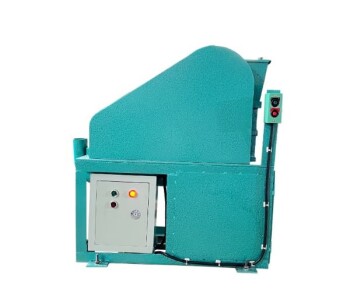
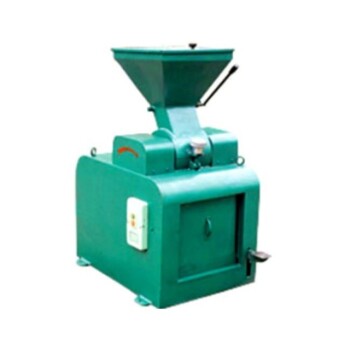
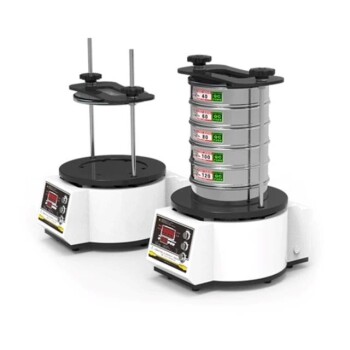
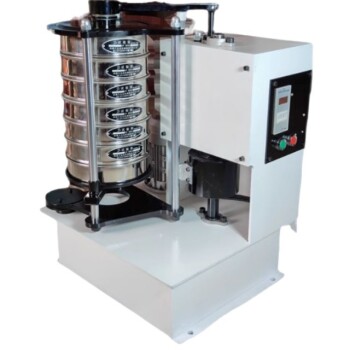
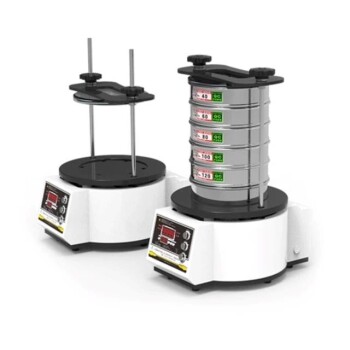
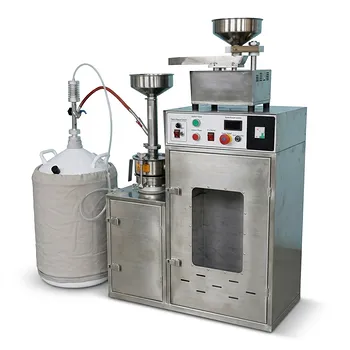
Mechanical crushing and sieving systems act as the foundational physical intervention in biomass conversion. By employing grinding or chopping mechanisms, these systems reduce raw lignocellulosic materials—such as sawdust and rice husks—into finer particles. This initial reduction is essential for breaking down the rigid structural integrity of the biomass, serving as a prerequisite for effective downstream processing.
The Core Objective While simple in operation, the critical function of mechanical crushing is to maximize the specific surface area of the biomass. This physical alteration directly correlates to improved hydrolysis efficiency by exposing more cellulose to the chemical reagents or enzymes required for glucose production.
Mechanisms of Structural Alteration
Increasing Specific Surface Area
The primary technical output of mechanical crushing is a significant increase in the material's specific surface area. By reducing the particle size, the system exposes a larger percentage of the biomass volume to the exterior environment.
Disrupting the Lignocellulosic Matrix
Lignocellulosic biomass possesses a naturally rigid, recalcitrant structure designed to resist degradation. Mechanical systems utilize shear and compressive forces to physically fracture this matrix. This disruption breaks open the fibrous structure, effectively unlocking the material for subsequent treatment steps.
Enhancing Hydrolysis Efficiency
Improving Reagent Accessibility
For glucose production to occur, hydrolysis agents (enzymes or chemicals) must physically contact the cellulose strands. Mechanical pretreatment removes physical barriers, allowing these agents to penetrate the biomass more easily. This increased accessibility directly enhances the rate and yield of sugar conversion.
Reducing Cellulose Crystallinity
Beyond simple size reduction, high-energy mechanical processing (such as ball milling) alters the microscopic structure of the material. It reduces the crystallinity and the degree of polymerization of the cellulose. Lower crystallinity makes the cellulose structure less ordered and more susceptible to enzymatic attack, thereby shortening reaction times.
Reducing Mass Transfer Resistance
By increasing the surface area-to-volume ratio, mechanical crushing reduces the resistance to heat and mass transfer. This ensures that during subsequent thermochemical deconstruction, heat and chemicals distribute more uniformly throughout the biomass particles.
Operational Considerations and Equipment
Equipment Selection
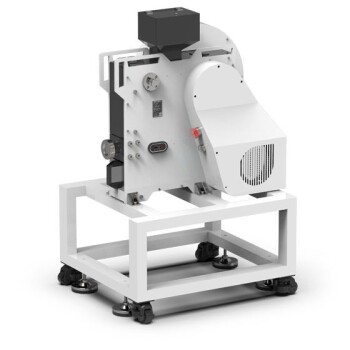
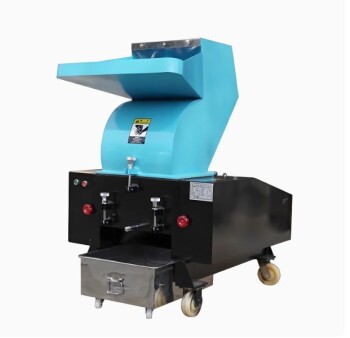
The choice of grinding system dictates the efficiency of the physical disruption. Common equipment includes vibratory mills, hammer mills, colloid mills, and two-roll mills. Each system applies different combinations of impact, shear, and compression forces to achieve the desired breakdown.
Particle Size Optimization
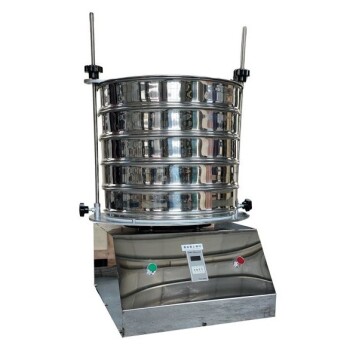
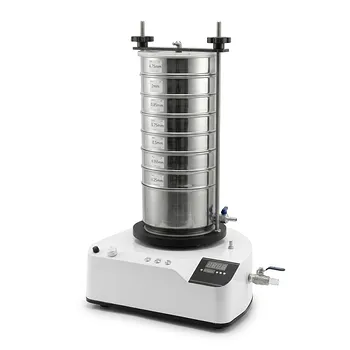
Sieving systems work in tandem with crushers to ensure a consistent particle size distribution. Experimental data suggests that achieving specific size ranges, typically between 0.2 mm and 2 mm (or even down to 90–300 μm for specific applications), is critical for stabilizing reaction kinetics.
Understanding the Trade-offs
Energy Consumption vs. Yield
While finer particle sizes generally lead to higher glucose yields, achieving extremely fine particles (e.g., <90 μm) requires exponentially more mechanical energy. There is a point of diminishing returns where the energy cost of milling outweighs the marginal gain in glucose conversion.
Consistency Challenges
Without effective sieving, mechanical crushing can produce an uneven distribution of particle sizes. Inconsistent sizes result in uneven hydrolysis rates, where smaller particles may over-react or degrade while larger particles remain under-processed.
Making the Right Choice for Your Goal
Mechanical pretreatment is a balance between physical disruption and energy input. Here is how to prioritize your approach based on your specific objectives:
- If your primary focus is maximum glucose yield: Prioritize high-energy milling (like ball milling) to reduce cellulose crystallinity, not just particle size.
- If your primary focus is process speed: Target a specific particle size range (e.g., 0.2–2 mm) using sieving to ensure rapid, uniform enzyme penetration.
- If your primary focus is energy efficiency: Utilize coarser grinding (chopping) to simply increase surface area without expending energy on altering crystallinity.
Ultimately, the success of glucose production relies on exposing the maximum amount of cellulose surface area to enzymes with the minimum necessary mechanical energy investment.
Summary Table:
| Mechanism | Impact on Biomass | Primary Benefit |
|---|---|---|
| Size Reduction | Increases specific surface area | Improves enzyme/reagent accessibility |
| Sieving & Grading | Ensures uniform particle distribution | Stabilizes reaction kinetics and heat transfer |
| Structural Disruption | Breaks the lignocellulosic matrix | Unlocks cellulose for chemical penetration |
| High-Energy Milling | Reduces cellulose crystallinity | Shortens hydrolysis time and increases yield |
Maximize Your Biomass Conversion Efficiency with KINTEK
Transitioning from raw biomass to high-yield glucose requires the right physical foundation. KINTEK specializes in precision crushing and milling systems and sieving equipment designed to optimize particle size and material accessibility for the most demanding laboratory and pilot-scale applications.
Whether you are focusing on reducing cellulose crystallinity for maximum yield or optimizing particle distribution for uniform hydrolysis, our high-performance equipment provides the reliability and control you need. Our portfolio also includes high-temperature high-pressure reactors, PTFE products, and crucibles to support your entire biochemical research workflow.
Ready to scale your glucose production? Contact our technical experts today to find the perfect milling and sieving solution for your research goals!
References
- Thlama Mainta Mperiju, Rezkallah Chafika. Renewable Carbohydrates: Advancements in Sustainable Glucose Production and Optimization. DOI: 10.56556/gssr.v2i4.621
This article is also based on technical information from Kintek Solution Knowledge Base .
Related Products
- Laboratory Test Sieves and Sieving Machines
- Laboratory Vibratory Sieve Shaker Machine for Dry and Wet Three-Dimensional Sieving
- Laboratory Jaw Crusher
- Three-dimensional electromagnetic sieving instrument
- Powerful Plastic Crusher Machine
People Also Ask
- What are laboratory test sieves used for? A Guide to Particle Size Analysis
- How do you calculate the sieve test? Master Particle Size Distribution for Quality Control
- How does a lab test sieve contribute to biomass charcoal powder preparation? Achieve Uniform Particle Size
- What are the specifications for test sieves? A Guide to ASTM & ISO Standards for Accurate Particle Analysis
- What materials are required for sieving? Achieve Accurate Particle Size Analysis