The primary role of the constant flow and constant pressure pump in deep granite chemical stimulation is to inject chemical stimulants or ultrapure water into the rock core at an exceptionally stable rate. This precision is the mechanical prerequisite for maintaining a simulated reservoir pressure environment and accurately measuring the rock's physical response to chemical treatment.
Core Takeaway: In deep granite experiments, scientific validity relies on distinguishing mechanical noise from actual physical changes. These pumps provide the rigorous flow control necessary to apply Darcy's Law, allowing researchers to quantify exactly how chemical reactions alter rock permeability under high pressure.
The Mechanics of Accurate Simulation
Precise Fluid Injection
The fundamental task of the pump is the delivery of fluids—specifically chemical stimulants or ultrapure water—into the rock core. In deep granite simulations, the system must overcome significant back-pressure to mimic deep underground conditions.
Maintaining Stability
Success in these experiments requires more than just high pressure; it demands high stability. The pump must maintain a flow rate that does not deviate, regardless of the resistance offered by the dense granite formation.
Enabling Scientific Measurement
The Foundation for Darcy's Law
Calculating "equivalent permeability" is the ultimate goal of these experiments. This calculation is derived directly from Darcy's Law.
Because Darcy's Law relies on the relationship between flow rate and pressure drop, precise flow control is non-negotiable. If the flow rate fluctuates efficiently, the mathematical foundation for calculating permeability collapses.
Capturing Minute Fluctuations
Granite is a tight, low-permeability rock, meaning changes in its structure can be subtle. Chemical stimulation induces mineral dissolution (opening pores) or precipitation (clogging pores).
These physical changes result in minute permeability fluctuations. A high-precision pump ensures that these tiny changes are captured in the data, rather than being lost in the noise of an unstable injection system.
Understanding the Trade-offs
Sensitivity vs. Robustness
While these pumps offer the high precision needed for deep granite work, they are sensitive instruments. To maintain the "highly stable flow rate" required, the system must be free of air bubbles and leaks. Even a minor mechanical variance can look like a geological change in the data.
The Cost of Precision
Achieving a truly pulse-free, constant flow at the high pressures required for deep granite simulation often requires complex dual-piston or syringe pump designs. This complexity increases the setup time and maintenance requirements compared to standard industrial pumps.
Making the Right Choice for Your Experiment
To ensure your core flooding experiments yield valid data, align your equipment use with your specific analytical goals:
- If your primary focus is Permeability Calculation: Ensure the pump's flow rate stability specification is high enough to eliminate flow noise from your Darcy's Law computations.
- If your primary focus is Chemical Reaction Analysis: Verify that the pump materials are compatible with the specific chemical stimulants used to prevent corrosion from altering the injection rate.
The integrity of your permeability data is directly proportional to the stability of your injection pump.
Summary Table:
| Feature | Function in Deep Granite Experiments | Scientific Impact |
|---|---|---|
| Precise Injection | Delivers stimulants/water at fixed rates against high back-pressure | Mimics deep reservoir environments accurately |
| Flow Stability | Eliminates pulse and mechanical noise during fluid delivery | Ensures the validity of Darcy’s Law calculations |
| Pressure Control | Maintains constant pressure to simulate underground conditions | Allows detection of minute permeability fluctuations |
| Material Integrity | Resists corrosion from chemical stimulants | Prevents system failure and maintains fluid purity |
Elevate Your Geotechnical Research with KINTEK Precision
High-stakes deep granite simulations demand more than just equipment; they require absolute stability and precision. KINTEK specializes in advanced laboratory solutions designed for the most rigorous testing environments. From high-pressure core flooding systems and high-temperature high-pressure reactors to precision crushing and milling systems, we provide the tools necessary to capture every minute fluctuation in your data.
Whether you are analyzing mineral dissolution or calculating complex equivalent permeability, our portfolio of high-performance pumps, autoclaves, and hydraulic presses ensures your scientific results are noise-free and reproducible.
Ready to optimize your lab’s stimulation experiments? Contact KINTEK today to consult with our experts on the ideal equipment configuration for your research goals.
References
- Zhenpeng Cui, Bo Feng. Experimental Study on the Effect and Mechanism of Chemical Stimulation on Deep High-Temperature Granite. DOI: 10.3389/feart.2022.893969
This article is also based on technical information from Kintek Solution Knowledge Base .
Related Products
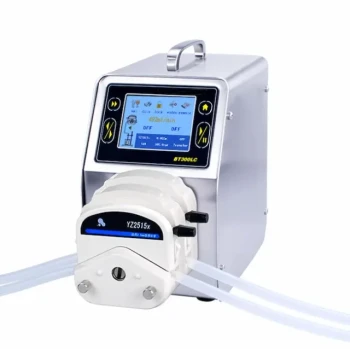
- Variable Speed Peristaltic Pump
- Automatic Laboratory Hydraulic Press for XRF & KBR Pellet Press
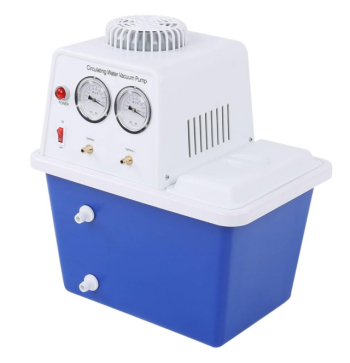
- Circulating Water Vacuum Pump for Laboratory and Industrial Use
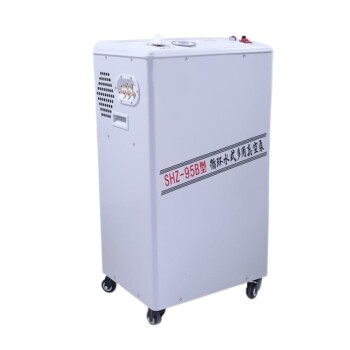
- Laboratory Vertical Water Circulating Vacuum Pump for Lab Use
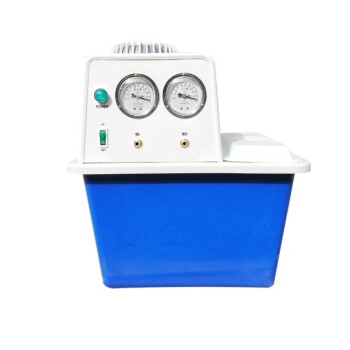
- Laboratory Benchtop Water Circulating Vacuum Pump for Lab Use
People Also Ask
- What is the core component of a peristaltic pump? The Flexible Tubing Explained
- How does a laboratory peristaltic pump contribute to the continuous operation of an electrochemical flow cell?
- What is sputtering rate? Master the Key to Controlling Thin Film Deposition Speed
- What is process monitoring in the context of a decontamination process? Ensure Safety and Compliance
- What chemicals are used in heat treatment? Master the Quenching Process for Optimal Metal Properties