In a laboratory setting, grinding is performed using a range of specialized equipment, most commonly vibratory mills, planetary mills, and ball mills for creating fine powders, and jaw crushers for coarse pre-crushing. The specific device used is determined by the sample's initial size, its material properties (hard, soft, fibrous), and the required final particle size for analysis.
The core challenge is not simply to grind a sample, but to select the correct mechanical action—crushing, vibrating, cutting, or impact—that properly homogenizes your specific material without introducing contamination or altering its composition.
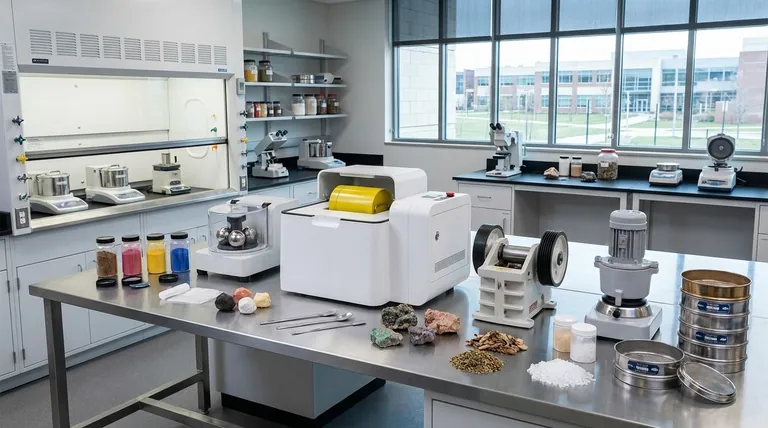
The Purpose of Grinding: Creating a Representative Sample
Before any analysis can occur, a sample must accurately represent the whole. Grinding is the critical step that ensures this by reducing particle size and increasing homogeneity.
Why Particle Size Reduction is Critical
Grinding a sample into a fine, uniform powder is essential for most analytical techniques. A smaller particle size ensures that any small subsample taken for analysis is statistically identical to the bulk material.
Achieving Homogeneity
This process eliminates variations within the sample material. For example, when analyzing rock or soil, different minerals are mixed together evenly, preventing an analysis from being skewed by a single, unrepresentative chunk.
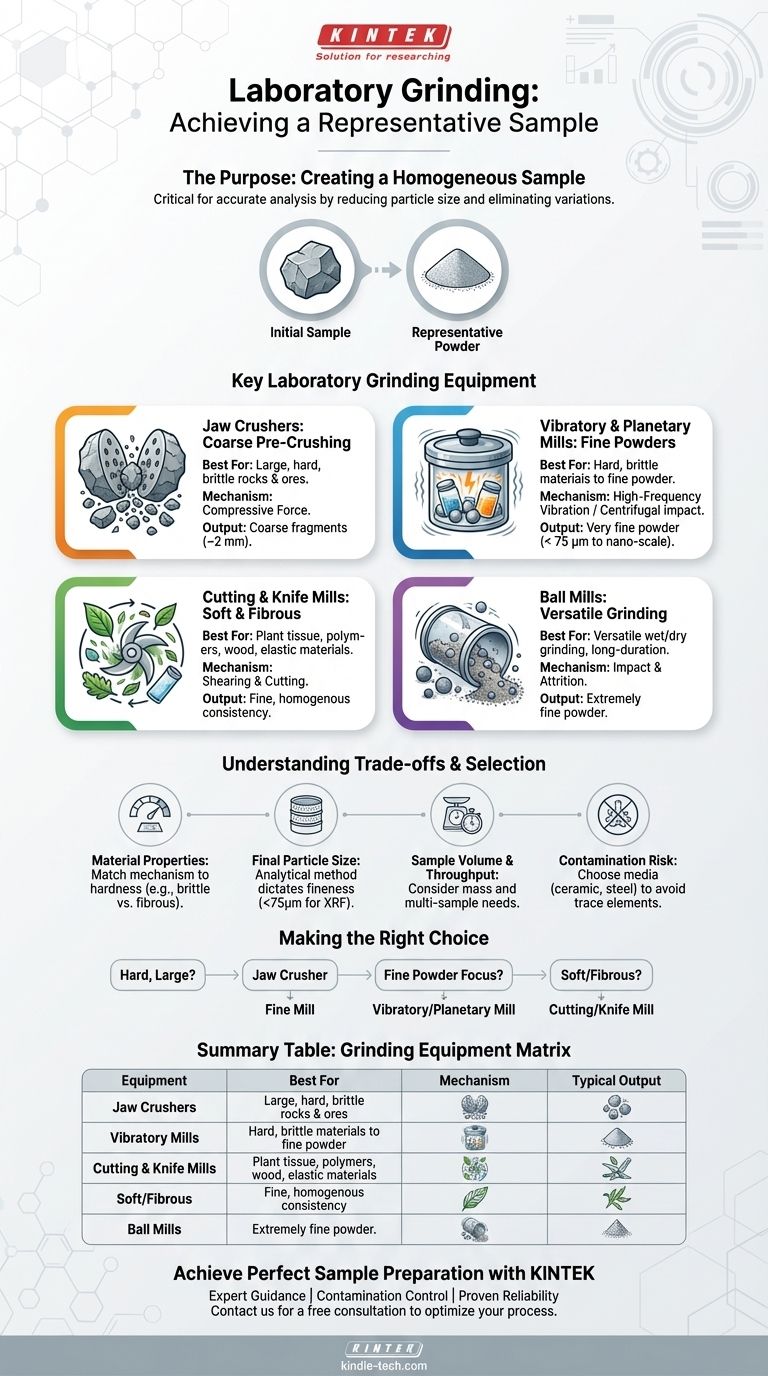
Key Types of Laboratory Grinding Equipment
Different materials respond to different forces. Laboratories therefore employ several types of mills, each with a distinct mechanical action suited to a particular kind of sample.
For Coarse Pre-Crushing: Jaw Crushers
Jaw crushers are used for the initial size reduction of large, hard, and brittle materials like rocks, minerals, and ores. They use compressive force between a fixed and a moving plate to break down large pieces into smaller fragments suitable for fine milling.
For Fine Powders: Vibratory and Planetary Mills
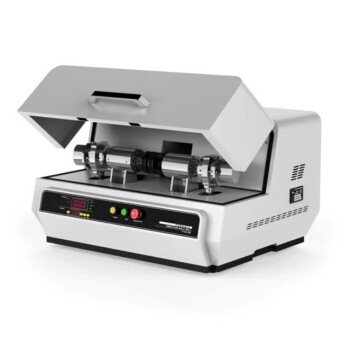
Vibratory mills (or "swing mills") are extremely common for sample preparation. They pulverize samples through high-frequency vibration, causing grinding media (like a puck and ring) inside a sealed bowl to create rapid impacts.
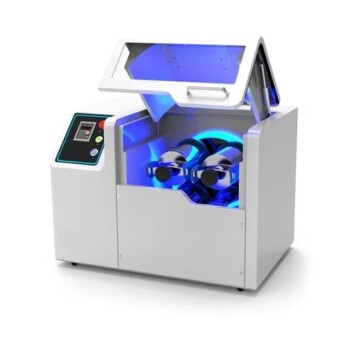
Planetary mills use high centrifugal forces. Grinding jars, which contain the sample and grinding balls, rotate on a sun wheel while also spinning on their own axis, creating the intense energy needed to grind materials to a very fine powder.
For Soft & Fibrous Materials: Cutting and Knife Mills
Samples like plant tissue, polymers, or wood cannot be effectively ground by impact or pressure, as they will just deform. Cutting and knife mills work like high-speed blenders, using rotating blades to shear and chop these materials into a fine, homogenous consistency.
For Versatile Grinding: Ball Mills
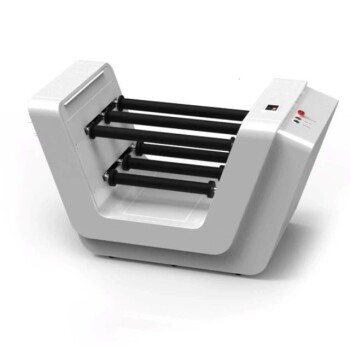
Ball mills use a rotating cylinder containing the sample and grinding media (typically ceramic or steel balls). As the cylinder tumbles, the balls cascade and grind the material through impact and attrition. They are highly versatile and can be used for wet or dry grinding over long periods to achieve extremely fine particle sizes.
Understanding the Trade-offs
Choosing the right equipment requires balancing the needs of your material against the goals of your analysis. An incorrect choice can ruin a sample or skew results.
Material Hardness and Brittleness
The most important factor is the nature of your sample. A hard, brittle mineral will shatter effectively in a vibratory mill, while a soft, elastic polymer will require a cutting mill.
Final Particle Size Requirement
The analytical method dictates the required fineness. A jaw crusher provides a coarse output (~2 mm), which is often just a preliminary step. For techniques like X-ray fluorescence (XRF), a vibratory or planetary mill is needed to produce a powder finer than 75 microns.
Sample Volume and Throughput
Vibratory mills are often categorized by the sample mass they can handle (e.g., 50g, 100g, 200g). Consider how much material you need to process and whether you need to run multiple samples simultaneously.
The Risk of Contamination
The grinding process can introduce contaminants. A steel grinding bowl can add trace amounts of iron and chromium to a sample, while a ceramic bowl can add alumina or zirconia. This is a critical consideration for trace element analysis, and the grinding media must be chosen carefully to avoid interfering with the results.
Making the Right Choice for Your Sample
Your selection should be a direct function of your material and your analytical goal.
- If your primary focus is breaking down large, hard materials (like rocks or concrete): Start with a jaw crusher for initial size reduction before moving to a fine mill.
- If your primary focus is preparing fine, homogeneous powders for instrumental analysis: A vibratory mill or planetary mill is the industry standard for most geological and material science applications.
- If your primary focus is processing soft, organic, or fibrous samples (like plant matter or plastic): You must use a cutting or knife mill to effectively shear the material.
Ultimately, matching the grinding mechanism to your sample's properties is the key to preparing accurate and reliable materials for analysis.
Summary Table:
| Grinding Equipment | Best For | Primary Mechanism | Typical Output |
|---|---|---|---|
| Jaw Crusher | Large, hard, brittle materials (rocks, ores) | Compressive Force | Coarse fragments (~2 mm) |
| Vibratory Mill | Hard, brittle materials for fine powders | Impact & Friction | Fine powder (< 75 µm) |
| Planetary Mill | High-energy fine grinding to nano-scale | Impact & Attrition | Very fine powder (< 1 µm) |
| Cutting/Knife Mill | Soft, fibrous, elastic materials (plants, polymers) | Shearing & Cutting | Fine, homogenous consistency |
| Ball Mill | Versatile wet/dry grinding for various materials | Impact & Attrition | Extremely fine powder |
Achieve Perfect Sample Preparation with KINTEK
Selecting the wrong grinding equipment can lead to inaccurate results, contamination, and wasted time. Let our experts help you match the perfect mill to your specific material and analytical requirements.
KINTEK specializes in high-quality laboratory grinding equipment and consumables. We provide:
- Expert Guidance: Get personalized recommendations for jaw crushers, vibratory mills, planetary mills, and more based on your sample type and desired particle size.
- Contamination Control: Choose from a range of grinding media and bowls (including ceramic, chrome-steel, and tungsten carbide) to ensure the purity of your sample for trace element analysis.
- Proven Reliability: Our equipment is trusted by labs worldwide for consistent performance and durability, ensuring your sample prep is efficient and reproducible.
Ready to optimize your grinding process? Contact our team today for a free consultation and let us help you achieve superior homogenization and reliable analytical results.
Visual Guide
Related Products
- Laboratory Single Horizontal Jar Mill
- High Energy Vibratory Laboratory Ball Mill Double Tank Type
- High Energy Planetary Ball Mill Milling Machine for Laboratory
- High-Energy Omnidirectional Planetary Ball Mill Milling Machine for Laboratory
- High-Energy Omnidirectional Planetary Ball Mill Machine for Laboratory
People Also Ask
- What is the ball mill based on the principle of? Impact and Attrition for Efficient Grinding
- What size is a ball mill? A Guide from Benchtop to Industrial Scale
- What is the procedure of a ball mill experiment? Master Particle Size Reduction for Your Lab
- What is the working capacity of a ball mill? Optimize Volume, Speed, and Grinding Media for Maximum Output
- What is the particle size of a ball mill? Control Your Grind from Microns to Nanometers