When preparing stainless steel corrosion specimens using hydraulic equipment, the priority is preserving the substrate's original state. You must rigorously control the process to minimize heat-affected zones and work-hardening layers that alter the metal's properties. Additionally, ensuring the specimen has exact dimensions and absolutely burr-free edges is critical to prevent leakage and artificial crevice corrosion during testing.
Core Takeaway The validity of your corrosion test depends entirely on preventing preparation artifacts. Failing to eliminate work-hardened layers or edge burrs will create artificial crevices and alter the material's surface chemistry, compromising the accuracy of your electrochemical data.
Preserving Material Integrity
Minimizing Microstructural Damage
When using hydraulic forming or cutting tools, significant force and friction are applied to the stainless steel.
It is critical to minimize the creation of a heat-affected zone (HAZ) during this process. Excessive heat can alter the local grain structure, changing the corrosion resistance of the sample before the test even begins.
Preventing Work Hardening
Hydraulic equipment can induce plastic deformation on the cut edges.
You must take precautions to minimize the work hardening layer on the stainless steel substrate. If left unchecked, this hardened layer presents a different electrochemical profile than the bulk material, leading to skewed test results.
Ensuring Geometric Precision
The Necessity of Burr-Free Edges
A clean cut is not just an aesthetic requirement; it is a functional necessity.
Specimens must be inspected and treated to ensure burr-free edges. Even microscopic burrs can prevent a proper seal, leading to localized corrosion sites that do not reflect the material's true performance.
Achieving Regular Dimensions
Hydraulic forming must produce specimens with strict geometric regularity.
This precision is essential for achieving a tight fit in flat electrochemical cells. Irregular dimensions will compromise the assembly of the test cell, leading to potential leaks or uneven current distribution.
The Impact on Test Validity
Avoiding Artificial Crevices
The ultimate goal of precise preparation is to prevent unintended artificial crevices.
If the specimen edges are deformed or burred, gaps form between the sample and the sample holder. These gaps create artificial crevice environments that accelerate corrosion, interfering with the accuracy of the behavior test results.
Common Pitfalls to Avoid
Neglecting the Edge Condition
A common error is focusing solely on the surface finish while neglecting the cut edges.
If the edges retain work-hardened layers or thermal damage, the specimen may fail at the edge first. This results in data that reflects the preparation method rather than the inherent corrosion resistance of the stainless steel.
Poor Cell Fitment
Forcing an irregularly shaped specimen into a flat electrochemical cell is a critical mistake.
This creates mechanical stress and gaps. These conditions invariably lead to crevice corrosion that is an artifact of the setup, rendering the experiment invalid.
Making the Right Choice for Your Goal
To ensure your corrosion testing provides actionable data, follow these guidelines:
- If your primary focus is material characterization: Minimize heat-affected zones and work hardening to ensure the test reflects the true substrate properties.
- If your primary focus is test reliability: Prioritize burr-free edges and regular dimensions to guarantee a tight, crevice-free fit in the electrochemical cell.
Precision in preparation is the only path to accuracy in results.
Summary Table:
| Key Factor | Precaution Needed | Impact on Testing |
|---|---|---|
| Microstructure | Minimize Heat-Affected Zones (HAZ) | Prevents grain structure changes and preserves resistance. |
| Mechanical State | Reduce Work-Hardening Layers | Avoids skewed electrochemical data from surface stress. |
| Edge Quality | Ensure Completely Burr-Free Edges | Eliminates artificial crevice corrosion and potential leaks. |
| Geometry | Maintain Strict Dimensional Regularity | Ensures a tight, flush fit in flat electrochemical cells. |
Precision Results Start with Superior Preparation
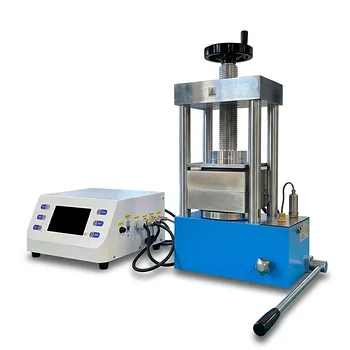
At KINTEK, we understand that the validity of your corrosion testing depends on perfect specimen preparation. Our specialized hydraulic presses (pellet, hot, isostatic) and crushing systems are engineered to minimize microstructural damage and ensure the geometric precision required for your stainless steel samples.
Beyond forming, KINTEK offers a comprehensive suite of laboratory tools including high-temperature furnaces, autoclaves, and electrolytic cells tailored for rigorous material research. Don't let preparation artifacts compromise your data—equip your lab with solutions designed for accuracy.
Ready to elevate your specimen preparation? Contact KINTEK today to find the perfect solution for your lab!
References
- M.J. Jiménez–Come, Jesús Daniel Mena Baladés. Corrosion Behaviour Modelling Using Artificial Neural Networks: A Case Study in Biogas Environment. DOI: 10.3390/met13111811
This article is also based on technical information from Kintek Solution Knowledge Base .
Related Products
- Vacuum Cold Mounting Machine for Sample Preparation
- Manual Lab Heat Press
- Automatic Laboratory Hydraulic Pellet Press Machine for Lab Use
- Laboratory Manual Hydraulic Pellet Press for Lab Use
- Laboratory Hydraulic Press Split Electric Lab Pellet Press
People Also Ask
- What is the purpose of sample preparation? Ensure Accurate & Reliable Analytical Results
- What sample preparation methods are used in labs? Master the Critical First Step for Reliable Analysis
- What is a vacuum press machine? Harness Atmospheric Pressure for Perfect Lamination
- What role does vacuum impregnation play with high-viscosity ionic liquids? Enhance Your Battery Performance Today
- What can you do with a vacuum press? Achieve Flawless Lamination and Clamping