Knowledge What process is used to extract essential oils? From Crude Plant to Pure Perfume
Author avatar

Tech Team · Kintek Solution

Updated 6 days ago

What process is used to extract essential oils? From Crude Plant to Pure Perfume


In short, essential oils are extracted through methods like steam distillation and cold pressing, but the process doesn't stop there. The initial "crude" oil then undergoes advanced refining and purification, such as molecular distillation, to achieve the final product's desired purity, aroma, and color. It is this second stage of refinement that often defines the quality and value of the oil you ultimately use.

The key distinction to understand is between extraction, which gets the raw oil out of the plant material, and purification, which refines that raw oil into a high-quality, stable, and valuable final product.
What process is used to extract essential oils? From Crude Plant to Pure Perfume

The Initial Extraction: Getting the Oil from the Plant

Before any refinement can occur, the essential oil must first be separated from its source botanical material. This initial step produces what is known as a "crude" essential oil.

Steam Distillation

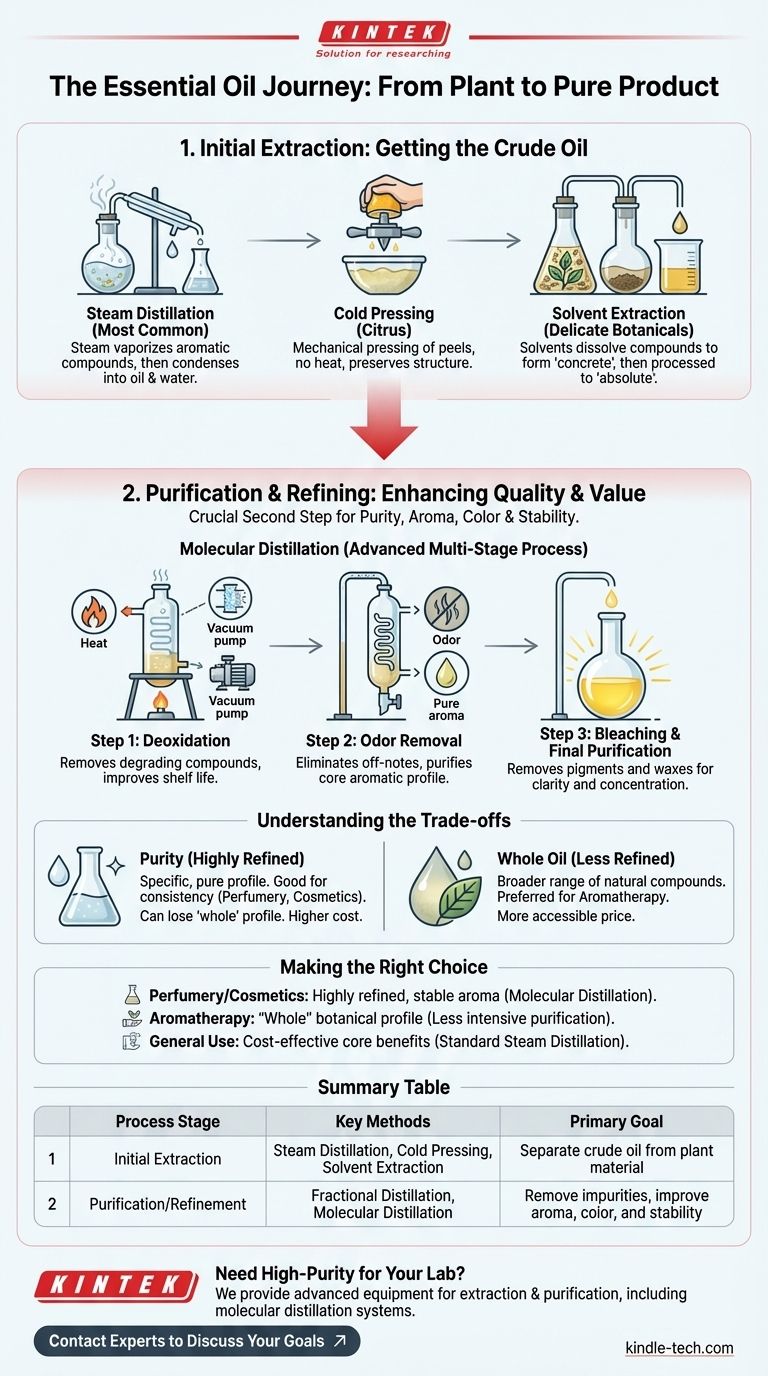
This is the most common method. Steam is passed through the plant material, causing the aromatic compounds to vaporize. This vapor is then cooled, which condenses it back into a liquid mixture of water and essential oil, which are then easily separated.

Cold Pressing

Used almost exclusively for citrus peels like lemon, orange, and bergamot, this mechanical process involves puncturing and pressing the peels to release the oil. No heat is used, which helps preserve the oil's delicate chemical structure.

Solvent Extraction

For delicate botanicals that cannot withstand the heat of steam distillation, solvents are used to dissolve the aromatic compounds from the plant. This creates a waxy substance called a "concrete," which is then further processed to yield an "absolute."

The Crucial Second Step: Refining the Crude Oil

The crude oil from initial extraction often contains undesirable elements like unpleasant smells, deep colors, or high wax content. Purification is necessary to remove these impurities and enhance the oil's quality and value.

Why Refinement is Necessary

Crude oils, like rose oil, can have issues that make them less appealing or useful. Refining addresses these problems, turning a raw extract into a polished product suitable for high-end applications like perfumery or therapeutics.

Key Refining Methods

The two primary methods for purifying crude essential oils are fractional distillation (also called rectification) and the more advanced molecular distillation. These techniques selectively separate components of the oil to achieve a purer result.

A Closer Look at Molecular Distillation

Molecular distillation is a highly effective, multi-stage process used to significantly improve the quality of an essential oil. It operates under a high vacuum, which allows for distillation at lower temperatures, protecting the oil's delicate compounds.

Step 1: Deoxidation

The first stage is designed to remove compounds that can cause the oil to degrade or spoil over time, improving its shelf life and stability.

Step 2: Odor Removal

In the second stage, the process targets and removes any off-notes or unpleasant smells from the crude oil, purifying and clarifying its core aromatic profile.

Step 3: Bleaching and Final Purification

The final stage is focused on improving the oil's appearance. It removes pigments to lighten the color and gets rid of any remaining waxes, resulting in a clean, clear final product with a higher concentration of desired aromatic molecules.

Understanding the Trade-offs

While purification creates a cleaner, more consistent product, it's important to recognize the implications of these advanced processes.

Purity vs. "Whole" Oil

Heavy refinement creates an oil with a very specific, pure aromatic profile. However, this process can also remove some of the heavier, more complex molecules present in the original plant, which some users may prefer for a more "full-spectrum" or "whole" oil.

Cost and Complexity

Multi-stage processes like molecular distillation require specialized equipment and expertise. This adds complexity and cost to the final product, which is why highly purified oils are often more expensive.

Making the Right Choice for Your Goal

Understanding the journey from plant to bottle empowers you to choose the right oil for your specific needs.

  • If your primary focus is a pure, stable aroma for perfumery or cosmetics: A highly refined oil that has undergone molecular distillation is often the best choice for its clarity and consistency.
  • If your primary focus is a "whole" botanical profile for aromatherapy: You may prefer an oil that has undergone less intensive purification to retain a broader range of the plant's natural compounds.
  • If your primary focus is cost-effectiveness for general use: A standard steam-distilled oil without extensive secondary refinement will provide the core benefits at a more accessible price point.

Ultimately, knowing the difference between extraction and purification allows you to select an essential oil based on its processing, not just its name.

Summary Table:

Process Stage Key Methods Primary Goal
Initial Extraction Steam Distillation, Cold Pressing, Solvent Extraction Separate crude oil from plant material
Purification/Refinement Fractional Distillation, Molecular Distillation Remove impurities, improve aroma, color, and stability

Need High-Purity Essential Oils for Your Laboratory or Production?

The journey from raw plant material to a high-quality essential oil requires precise control and reliable equipment. At KINTEK, we specialize in providing the advanced laboratory equipment and consumables necessary for both extraction and purification processes, including systems for molecular distillation.

Whether you are in R&D, quality control, or manufacturing, our solutions help you achieve the purity, stability, and consistency your products demand.

Contact our experts today to discuss how we can support your essential oil production goals.

Visual Guide
What process is used to extract essential oils? From Crude Plant to Pure Perfume Visual Guide

Related Products

People Also Ask

Related Products

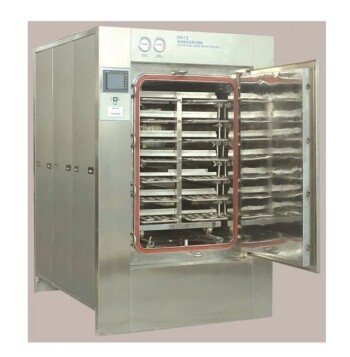
Laboratory Sterilizer Lab Autoclave Herbal Powder Sterilization Machine for Plant

Laboratory Sterilizer Lab Autoclave Herbal Powder Sterilization Machine for Plant

The herbal powder sterilization autoclave machine for Chinese medicine uses saturated steam for effective sterilization. It utilizes the heat and penetrative properties of steam, achieves sterilization after heat preservation, and maintains a good drying effect with a dedicated drying system.

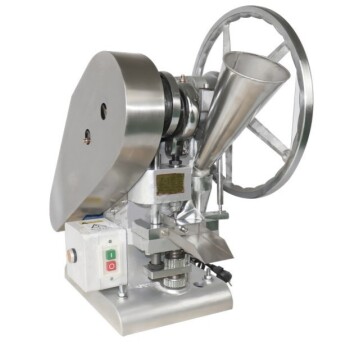
Single Punch Electric Tablet Press Machine TDP Tablet Punching Machine

Single Punch Electric Tablet Press Machine TDP Tablet Punching Machine

The electric tablet punching machine is a laboratory equipment designed for pressing various granular and powdery raw materials into discs and other geometric shapes. It is commonly used in pharmaceutical, healthcare products, food, and other industries for small batch production and processing. The machine is compact, lightweight, and easy to operate, making it suitable for use in clinics, schools, laboratories, and research units.

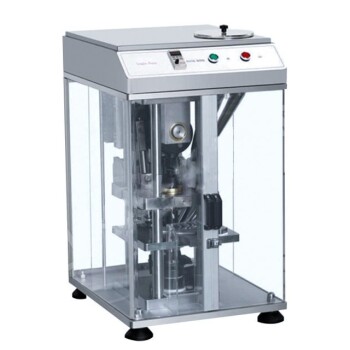
Single Punch Electric Tablet Press Machine Laboratory Powder Tablet Punching TDP Tablet Press

Single Punch Electric Tablet Press Machine Laboratory Powder Tablet Punching TDP Tablet Press

The single-punch electric tablet press is a laboratory-scale tablet press suitable for corporate laboratories in pharmaceutical, chemical, food, metallurgical and other industries.

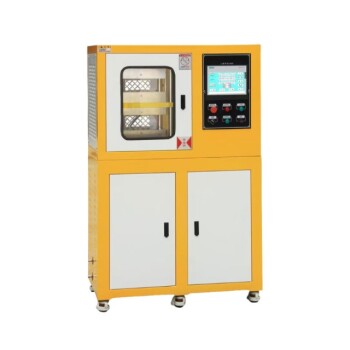
Automatic Heated Hydraulic Press Machine with Heated Plates for Laboratory Hot Press 25T 30T 50T

Automatic Heated Hydraulic Press Machine with Heated Plates for Laboratory Hot Press 25T 30T 50T

Efficiently prepare your samples with our Automatic Heated Lab Press. With a pressure range up to 50T and precise control, it's perfect for various industries.

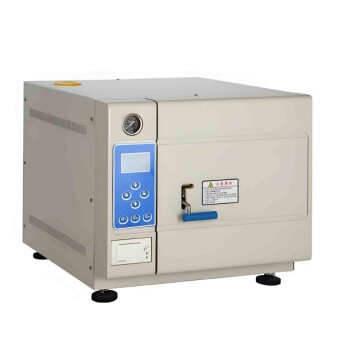
Desktop Fast Laboratory Autoclave Sterilizer 35L 50L 90L for Lab Use

Desktop Fast Laboratory Autoclave Sterilizer 35L 50L 90L for Lab Use

The desktop fast steam sterilizer is a compact and reliable device used for rapid sterilization of medical, pharmaceutical, and research items. It efficiently sterilizes surgical instruments, glassware, medicines, and resistant materials, making it suitable for various applications.

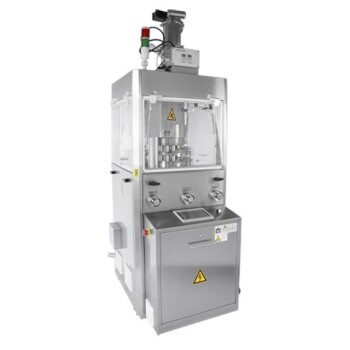
Single Punch Tablet Press Machine and Mass Production Rotary Tablet Punching Machine for TDP

Single Punch Tablet Press Machine and Mass Production Rotary Tablet Punching Machine for TDP

Rotary tablet punching machine is an automatic rotating and continuous tableting machine. It is mainly used for tablet manufacturing in the pharmaceutical industry, and is also suitable for industrial sectors such as food, chemicals, batteries, electronics, ceramics, etc. to compress granular raw materials into tablets.

Warm Isostatic Press WIP Workstation 300Mpa for High Pressure Applications

Warm Isostatic Press WIP Workstation 300Mpa for High Pressure Applications

Discover Warm Isostatic Pressing (WIP) - A cutting-edge technology that enables uniform pressure to shape and press powdered products at a precise temperature. Ideal for complex parts and components in manufacturing.

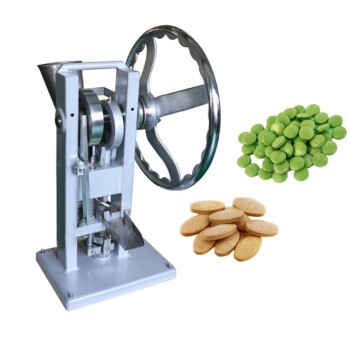
Single Punch Manual Tablet Press Machine TDP Tablet Punching Machine

Single Punch Manual Tablet Press Machine TDP Tablet Punching Machine

Single punch manual tablet punching machine can press various granular, crystal or powdery raw materials with good fluidity into disc-shaped, cylindrical, spherical, convex, concave and other various geometric shapes (such as square, triangle, ellipse, capsule shape, etc.), and can also press products with text and patterns.

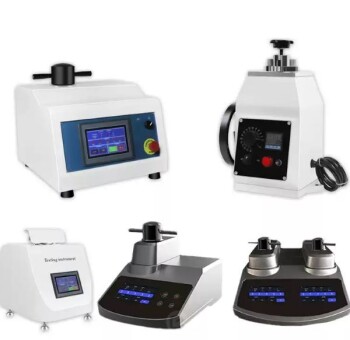
Metallographic Specimen Mounting Machine for Laboratory Materials and Analysis

Metallographic Specimen Mounting Machine for Laboratory Materials and Analysis

Precision metallographic mounting machines for labs—automated, versatile, and efficient. Ideal for sample prep in research and quality control. Contact KINTEK today!

Heated Hydraulic Press Machine with Integrated Manual Heated Plates for Lab Use

Heated Hydraulic Press Machine with Integrated Manual Heated Plates for Lab Use

Efficiently process heat-pressing samples with our Integrated Manual Heated Lab Press. With a heating range up to 500°C, it's perfect for various industries.

Rubber Vulcanizer Vulcanizing Machine Plate Vulcanizing Press for Lab

Rubber Vulcanizer Vulcanizing Machine Plate Vulcanizing Press for Lab

The Plate vulcanizing press is a kind of equipment used in the production of rubber products, mainly used for the vulcanization of rubber products. Vulcanization is a key step in rubber processing.

Manual Heated Hydraulic Press Machine with Heated Plates for Laboratory Hot Press

Manual Heated Hydraulic Press Machine with Heated Plates for Laboratory Hot Press

The Manual Heat Press is a versatile piece of equipment suitable for a variety of applications, operated by a manual hydraulic system that applies controlled pressure and heat to the material placed on the piston.

Touchscreen Automatic Vacuum Heat Press

Touchscreen Automatic Vacuum Heat Press

Precision vacuum heat press for labs: 800°C, 5-ton pressure, 0.1MPa vacuum. Ideal for composites, solar cells, aerospace.

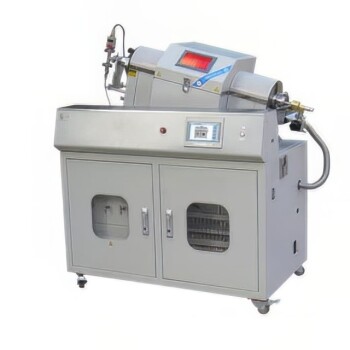
Inclined Rotary Plasma Enhanced Chemical Vapor Deposition PECVD Equipment Tube Furnace Machine

Inclined Rotary Plasma Enhanced Chemical Vapor Deposition PECVD Equipment Tube Furnace Machine

Introducing our inclined rotary PECVD furnace for precise thin film deposition. Enjoy automatic matching source, PID programmable temperature control, and high accuracy MFC mass flowmeter control. Built-in safety features for peace of mind.

Double Plate Heating Press Mold for Lab

Double Plate Heating Press Mold for Lab

Discover precision in heating with our Double Plate Heating Mold, featuring high-quality steel and uniform temperature control for efficient lab processes. Ideal for various thermal applications.

Manual High Temperature Heated Hydraulic Press Machine with Heated Plates for Lab

Manual High Temperature Heated Hydraulic Press Machine with Heated Plates for Lab

The High Temperature Hot Press is a machine specifically designed for pressing, sintering and processing materials in a high temperature environment. It is capable of operating in the range of hundreds of degrees Celsius to thousands of degrees Celsius for a variety of high temperature process requirements.

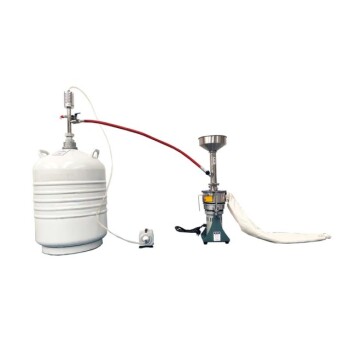
Liquid Nitrogen Cryogenic Grinder Mill Cryomill Airflow Ultrafine Pulverizer

Liquid Nitrogen Cryogenic Grinder Mill Cryomill Airflow Ultrafine Pulverizer

Discover the Liquid Nitrogen Cryogenic Grinding Machine, perfect for lab use, ultra-fine pulverization, and preserving material properties. Ideal for pharmaceuticals, cosmetics, and more.

Vacuum Hot Press Furnace Machine for Lamination and Heating

Vacuum Hot Press Furnace Machine for Lamination and Heating

Experience clean and precise lamination with Vacuum Lamination Press. Perfect for wafer bonding, thin-film transformations, and LCP lamination. Order now!

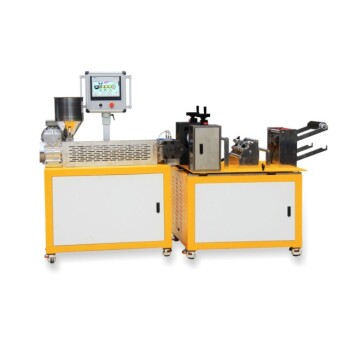
Lab Plastic PVC Calender Stretch Film Casting Machine for Film Testing

Lab Plastic PVC Calender Stretch Film Casting Machine for Film Testing

The cast film machine is designed for the molding of polymer cast film products and has multiple processing functions such as casting, extrusion, stretching, and compounding.

Laboratory Vibratory Sieve Shaker Machine for Dry and Wet Three-Dimensional Sieving

Laboratory Vibratory Sieve Shaker Machine for Dry and Wet Three-Dimensional Sieving

KT-VD200 can be used for sieving tasks of dry and wet samples in the laboratory. The screening quality is 20g-3kg. The product is designed with a unique mechanical structure and an electromagnetic vibrating body with a vibration frequency of 3000 times per minute.


Leave Your Message