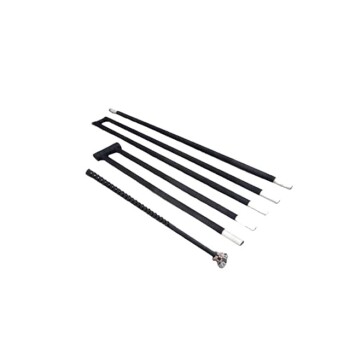
Carbon-Carbon (C/C) composite heaters function as the central heating elements within vacuum or controlled atmosphere densification units. Their primary role is to generate a highly uniform thermal field necessary for processing carbon fiber preforms, specifically in environments where extreme heat and stability are paramount.
Core Takeaway C/C heaters are essential because they maintain structural integrity and thermal uniformity at temperatures where metallic elements fail. Their ability to match the thermal expansion of carbon-based materials ensures a stable thermal gradient, which is critical for the successful densification of advanced composites.
The Engineering Behind the Application
Achieving Thermal Uniformity
The fundamental purpose of these heaters is to create a controlled environment for densification.
They leverage high-temperature resistance to provide a consistent thermal field.
This uniformity is vital for ensuring that carbon fiber preforms are densified evenly throughout their structure.
Ensuring Structural Integrity
Unlike many heating materials, C/C composite heaters are designed to resist deformation.
They maintain their shape and performance characteristics even under extreme thermal stress.
This stability prevents physical distortions that could alter the thermal gradient or damage the processing equipment.
Matching Thermal Expansion
A unique advantage of C/C heaters is their material compatibility with the workload.
Because they are carbon-based, their thermal expansion properties align closely with the carbon fiber preforms being processed.
This synchronization minimizes thermal stress mismatches between the heating element and the material, leading to a more controlled process.
Understanding the Operational Trade-offs
The Limitations of Metallic Elements
To understand the value of C/C heaters, one must recognize the failure points of the alternative: metallic heating elements.
Metallic elements often deform when exposed to the high temperatures required for densification.
This deformation leads to inconsistent heating and unstable thermal gradients, compromising the quality of the final material.
Environmental Constraints
The use of C/C heaters is strictly tied to specific environmental conditions.
The reference specifies their use in vacuum or controlled atmosphere units.
This implies that these heaters are specialized hardware designed for isolated environments, rather than open-air heating applications.
Making the Right Choice for Your Process
If your primary focus is process stability: Choose C/C heaters to eliminate the risk of heating element deformation and ensure consistent thermal gradients.
If your primary focus is material compatibility: Select C/C heaters to match the thermal expansion rates of your carbon fiber preforms, reducing thermal mismatch risks.
Carbon-Carbon composite heaters are critical hardware that transforms densification from a simple heating task into a precise, stable engineering process.
Summary Table:
| Feature | Carbon-Carbon (C/C) Heaters | Metallic Heating Elements |
|---|---|---|
| High-Temp Stability | Maintains shape and integrity | Prone to deformation and sagging |
| Thermal Uniformity | Exceptional for complex preforms | Inconsistent due to element distortion |
| Thermal Expansion | Matches carbon fiber preforms | High mismatch with carbon materials |
| Environment | Vacuum or Controlled Atmosphere | Limited by oxidation and melting points |
| Core Benefit | Stable thermal gradients | Reduced process reliability |
Optimize Your Advanced Material Processing with KINTEK
Precise densification requires more than just heat; it demands the structural stability and thermal synchronization that only high-quality Carbon-Carbon composite heaters can provide. At KINTEK, we specialize in the engineering of laboratory equipment and consumables designed for the most demanding environments.
Whether you are working with high-temperature furnaces (vacuum, CVD, or atmosphere), specialized high-pressure reactors, or precision milling and crushing systems, our technical experts are ready to help you achieve superior thermal uniformity.
Ready to enhance your lab's efficiency and material integrity?
Contact KINTEK today for a customized consultation
References
- Yu.A. Gribanov, В. В. Колосенко. INVESTIGATION ON CORROSION PROPERTIES OF CARBON-CARBON COMPOSITES. DOI: 10.46813/2020-125-154
This article is also based on technical information from Kintek Solution Knowledge Base .
Related Products
- Silicon Carbide SiC Thermal Heating Elements for Electric Furnace
- Multi Heating Zones CVD Tube Furnace Machine Chemical Vapor Deposition Chamber System Equipment
People Also Ask
- What is the function of the heating element in a furnace? The Engine of Your Thermal Process
- What is the best heating element for a furnace? A Guide to Selecting the Right Material for Your Temperature Needs
- What is SiC elements? The Ultimate High-Temperature Heating Solution
- How long does a heating element last on the furnace? Understand Lifespan & Safety for Your System
- What are silicon carbide heating elements used for? Reliable High-Temp Heating for Industrial Processes