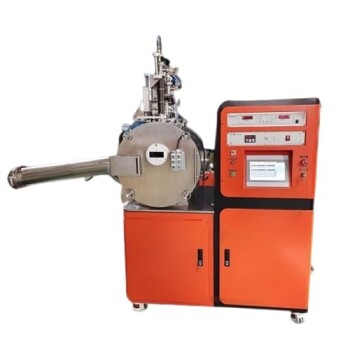
High-precision melting furnaces and digital temperature controllers serve as the stabilizing force in the stir casting of zinc-based composites. Their primary function is to maintain the alloy at a specific superheat temperature with minimal thermal fluctuation, which directly dictates the viscosity of the melt.
Ideally, these tools decouple the casting process from thermal instability. By locking in a precise temperature, they optimize the melt's physical state for particle acceptance while preventing defects caused by thermal drift.
Controlling the Rheology of the Melt
Maintaining Precise Superheat
The core function of digital controllers in this context is to hold the melt at a specific superheat temperature. This is the temperature range just above the alloy's melting point.
Unlike basic heating elements, high-precision furnaces prevent the temperature from oscillating. This stability is essential because even minor fluctuations can drastically alter how the metal behaves physically.
Managing Melt Viscosity
Temperature directly controls viscosity, which is the resistance of the fluid to flow.
If the temperature varies, the viscosity changes unpredictably. Precise thermal management ensures the melt remains at a consistent thickness, creating a stable environment for the mechanical stirring process.
Achieving Uniform Reinforcement
Facilitating Particle Addition
For a composite to be successful, reinforcement particles must be introduced into the matrix smoothly.
Accurate thermal control ensures the melt is receptive to these particles. If the viscosity is maintained correctly via temperature control, particles can be added without clumping or being rejected by surface tension.
Ensuring Homogeneous Mixing
Once particles are added, they must be distributed evenly throughout the zinc alloy.
Digital controllers enable the uniform mixing necessary to achieve this distribution. By keeping the viscosity constant, the stirrer can disperse particles effectively, resulting in a homogeneous composite material.
Avoiding Common Thermal Pitfalls
The Risks of Overheating
Without precise digital control, furnaces can easily overshoot the target temperature.
Excessively high temperatures lead to rapid alloy oxidation. This introduces impurities into the composite and degrades the mechanical properties of the final product.
The Risks of Underheating
Conversely, if the temperature dips too low due to poor regulation, the melt loses its casting fluidity.
Low fluidity makes mixing difficult and can cause the material to freeze prematurely during the casting phase. This results in incomplete fills or voids in the final composite structure.
Making the Right Choice for Your Goal
To optimize your stir casting process, you must tune your thermal management to your specific quality objectives.
- If your primary focus is Part Homogeneity: Prioritize temperature stability to maintain constant viscosity, ensuring particles remain suspended and evenly distributed during stirring.
- If your primary focus is Material Purity: Set strict upper-limit temperature alarms to prevent the melt from reaching oxidation thresholds.
- If your primary focus is Mold Filling: Maintain a slightly higher, consistent superheat to guarantee sufficient fluidity for complex mold geometries.
Precision thermal control is not just about heating the metal; it is about strictly governing the physical state of the alloy to allow for successful reinforcement.
Summary Table:
| Parameter | Role in Stir Casting | Impact on Composite Quality |
|---|---|---|
| Superheat Temperature | Maintains precise melt state | Prevents premature freezing or oxidation |
| Melt Viscosity | Controls resistance to flow | Ensures uniform particle distribution during stirring |
| Thermal Stability | Eliminates temperature drift | Avoids particle clumping and material defects |
| Digital Control | Automates thermal regulation | Guarantees consistency and repeatable casting results |
Elevate Your Composite Fabrication with KINTEK
Precision is the difference between a failed melt and a high-performance composite. KINTEK specializes in advanced laboratory equipment designed for rigorous material science applications. Our high-precision melting furnaces and integrated digital controllers provide the thermal stability necessary to master the rheology of zinc-based alloys.
Whether you are conducting advanced research or optimizing production, KINTEK offers a comprehensive range of:
- High-Temperature Furnaces: Muffle, tube, and induction melting systems for precise superheat control.
- Material Processing: Crushing, milling, and hydraulic presses for reinforcement preparation.
- Thermal Solutions: Cooling systems and specialized consumables like ceramic crucibles.
Ready to achieve perfect homogeneity in your next casting? Contact KINTEK today to consult with our experts on the ideal furnace configuration for your laboratory's needs.
References
- Victor Ekene Ogbonna, S. O. Adeosun. Evaluation of the Microstructural, Mechanical, Tribological, and Corrosion Properties of Zinc-Based Composites Reinforced Silica Beach Sand Particulates. DOI: 10.1007/s40735-025-00949-2
This article is also based on technical information from Kintek Solution Knowledge Base .
Related Products
- High Temperature Muffle Oven Furnace for Laboratory Debinding and Pre Sintering
- 600T Vacuum Induction Hot Press Furnace for Heat Treat and Sintering
- Vacuum Heat Treat and Pressure Sintering Furnace for High Temperature Applications
- Spark Plasma Sintering Furnace SPS Furnace
- Vacuum Arc Induction Melting Furnace
People Also Ask
- Why is the annealing treatment in a high-temperature muffle furnace critical for the preparation of an Sb-SnO2 interlayer?
- What is the role of a high-temperature muffle furnace in preparing Cs-aluminosilicate waste? Key Simulation Insights
- What is the significance of integrating a high-temperature muffle furnace into an impact wear testing system?
- Why is a high-temp muffle furnace essential for ZnO-WO3 & ZnO-BiOI? Optimize Heterojunction Catalyst Performance
- What role does a calcination furnace play in preparing hollow core-shell particles? Achieve Perfect Nano-Structures