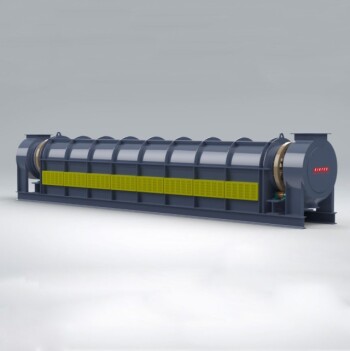
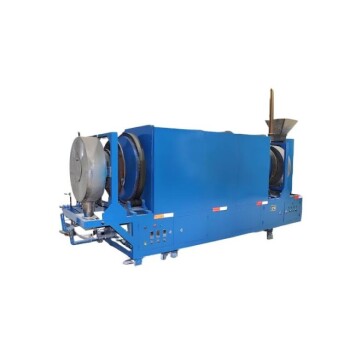
A high-temperature box furnace serves as the foundational tool for precision synthesis. It provides the stable, controlled thermal environment required to subject pressed precursor powders to prolonged calcination. This process is essential for initiating the solid-state reactions that transform raw materials into the necessary electrolyte structure.
The primary function of this equipment is to facilitate the creation of a specific dual-phase mixture—fast-sintering BCYYb and slow-sintering BZYYb—which is the technical prerequisite for successful low-temperature dual-phase reactive sintering.
The Role of Thermal Control in Synthesis
Achieving Solid-State Reactions
The core purpose of the furnace is to drive the initial solid-state reaction.
Pressed precursor powders must be heated to specific temperatures where chemical diffusion occurs between solid particles. The furnace ensures these reactions happen uniformly throughout the material.
The Necessity of Stability
Success depends on a stable and precisely controlled thermal environment.
Fluctuations in temperature can lead to incomplete reactions or inconsistent phase formation. The high-temperature box furnace maintains the rigorous conditions needed for prolonged calcination cycles.
Strategic Outcome: Dual-Phase Mixtures
Balancing Sintering Properties
The calcination process is specifically designed to synthesize a dual-phase mixture.
This mixture consists of two distinct components: fast-sintering BCYYb and slow-sintering BZYYb. Creating this specific combination is critical for controlling the material's behavior during later processing stages.
Enabling Downstream Efficiency
This furnace process is the technical foundation for low-temperature dual-phase reactive sintering strategies.
By properly synthesizing the dual-phase precursors in the box furnace first, you enable more efficient and effective sintering later. Without this specific thermal preparation, the subsequent reactive sintering strategy would likely fail.
Understanding Process Criticalities
The Requirement for Time
The process involves prolonged calcination, not rapid heating.
Users must account for significant processing time to allow the solid-state reactions to complete fully. Rushing this stage in the furnace will result in precursors that lack the necessary phase composition.
Sensitivity to Conditions
The definition of "precisely controlled" implies that the material is sensitive to thermal variances.
If the furnace cannot maintain a uniform "thermal envelope," the ratio of fast-sintering to slow-sintering phases may be incorrect. This imbalance would compromise the final electrolyte's performance.
Making the Right Choice for Your Goal
- If your primary focus is material synthesis: Ensure your furnace can maintain stability over long durations to guarantee the complete solid-state reaction of precursor powders.
- If your primary focus is sintering efficiency: Recognize that the quality of your final sintering depends entirely on the accuracy of the dual-phase mixture created during this initial calcination step.
Precision in the initial calcination stage is the single most important factor in enabling advanced low-temperature sintering strategies.
Summary Table:
| Feature | Role in BCZYYb Calcination | Impact on Material Performance |
|---|---|---|
| Thermal Stability | Maintains uniform environment for prolonged cycles | Ensures complete solid-state chemical diffusion |
| Precision Control | Regulates exact calcination temperatures | Facilitates correct BCYYb/BZYYb phase ratios |
| Solid-State Reaction | Drives chemical transformation of precursors | Creates the foundational dual-phase electrolyte structure |
| Process Duration | Supports long-term heat treatment | Prevents incomplete reactions in precursor powders |
Elevate Your Material Research with KINTEK Precision
Achieving the perfect dual-phase mixture for BCZYYb electrolytes requires more than just heat; it requires absolute thermal stability. KINTEK specializes in advanced laboratory equipment designed for the most demanding solid-state synthesis and sintering workflows.
From high-performance high-temperature box and tube furnaces to precision crushing and milling systems for powder preparation, we provide the tools needed to ensure your precursors meet exact technical specifications. Whether you are performing low-temperature reactive sintering or developing next-generation energy materials, our portfolio—including hydraulic presses, PTFE and ceramic consumables, and battery research tools—is engineered to deliver repeatable, high-quality results.
Ready to optimize your calcination process? Contact KINTEK today to find the perfect furnace solution for your laboratory!
Related Products
- 1400℃ Muffle Oven Furnace for Laboratory
- 1700℃ Muffle Oven Furnace for Laboratory
- High Temperature Muffle Oven Furnace for Laboratory Debinding and Pre Sintering
- 1700℃ Laboratory High Temperature Tube Furnace with Alumina Tube
- 1400℃ Laboratory High Temperature Tube Furnace with Alumina Tube
People Also Ask
- How does a muffle furnace ensure reliability in calcification roasting? Achieve Precision in Pellets Conversion
- Why is a laboratory high-temperature muffle furnace required for the post-annealing treatment of copper oxide?
- What role does a laboratory high-temperature muffle furnace play in iron-based composite phase structure development?
- How is a laboratory high-temperature muffle furnace utilized in sol-gel synthesis for perovskite catalysts?
- How does a muffle furnace influence 8YSZ ceramic densification? Master Precision Sintering at 1500°C