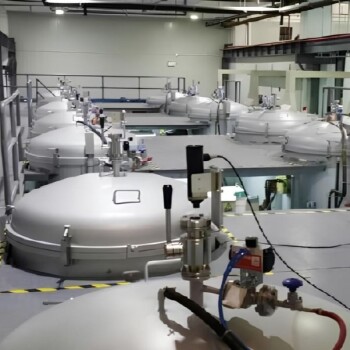
A high-temperature muffle furnace serves as the central reactor for the thermal activation of Layered Double Hydroxide (LDH) precursors. Its primary function is to drive a specific solid-phase reaction—known as topotactic transformation—by executing precise temperature rise curves and holding times. This process converts the raw precursor into stable mixed metal oxides (MMO) that possess the necessary crystal structure and surface properties for effective photocatalysis.
Core Takeaway The muffle furnace does not merely dry the material; it engineers the catalyst's atomic structure. By controlling the calcination environment, it transforms LDH precursors into mixed metal oxides with high specific surface areas and highly dispersed active sites, which are the fundamental requirements for high-performance photocatalytic activity.
Driving Topotactic Transformation
The most critical role of the muffle furnace in this context is facilitating a phenomenon called topotactic transformation.
From Precursor to Mixed Metal Oxide
LDH precursors are not photocatalytically active in their raw state. The muffle furnace applies thermal energy to dehydrate and dehydroxylate the LDH.
This transforms the layered structure into a mixed metal oxide (MMO). This new oxide phase retains a "structural memory" of the original precursor but offers significantly different chemical properties suited for catalysis.
Controlling the Reaction Pathway
The transformation requires a stable, oxygen-rich thermal environment. The furnace ensures that the solid-phase reaction occurs uniformly throughout the material.
By maintaining precise stoichiometry during this heating phase, the furnace prevents the collapse of the material's framework, ensuring the resulting oxide is chemically robust.
Optimizing Catalytic Surface Properties
Beyond changing the chemical composition, the muffle furnace defines the physical architecture of the catalyst.
Maximizing Specific Surface Area
Photocatalysis is a surface-dependent reaction. The calcination process within the furnace is responsible for generating a large specific surface area.
A properly executed thermal treatment creates a porous structure. This maximizes the contact area between the catalyst and the target pollutants, directly enhancing reaction rates.
Dispersing Active Sites
High activity requires that the metal sites responsible for the reaction are not clumped together. The controlled thermal environment ensures these active sites are highly dispersed across the catalyst surface.
This dispersion prevents agglomeration, ensuring that more active centers are available to participate in the photocatalytic process.
Understanding the Trade-offs
While the muffle furnace is essential, the "precise control" mentioned in technical literature highlights the inherent risks of the process.
The Risk of Thermal Overshoot
If the temperature exceeds the optimal window for the specific LDH composition, the material may suffer from over-sintering.
This leads to a collapse of the porous structure and a drastic reduction in specific surface area, rendering the catalyst inactive despite having the correct chemical composition.
Consequences of Under-Calcination
Conversely, if the temperature or holding time is insufficient, the topotactic transformation remains incomplete.
This leaves residual precursor material that lacks the semiconducting properties of the mixed metal oxide, resulting in poor charge separation and low photocatalytic efficiency.
Making the Right Choice for Your Goal
The operation of the muffle furnace should be tailored to the specific performance metrics you wish to prioritize.
- If your primary focus is Maximum Reaction Rate: Prioritize a temperature curve that maximizes specific surface area and site dispersion, even if it slightly compromises mechanical strength.
- If your primary focus is Long-Term Stability: Opt for a calcination protocol that ensures complete crystallization and strong phase formation, providing a more durable crystal structure.
Ultimately, the muffle furnace acts as a structural editor, permanently writing the physical and chemical characteristics into the catalyst that determine its final efficiency.
Summary Table:
| Process Phase | Furnace Function | Impact on Photocatalyst |
|---|---|---|
| Thermal Activation | Topotactic Transformation | Converts LDH precursors into active Mixed Metal Oxides (MMO). |
| Structural Engineering | Controlled Dehydroxylation | Creates porous architectures with high specific surface areas. |
| Site Management | Thermal Dispersion | Prevents agglomeration to ensure highly dispersed active metal sites. |
| Quality Control | Precise Temperature Curves | Prevents over-sintering or incomplete calcination for optimal efficiency. |
Elevate Your Material Research with KINTEK Precision
Unlock the full potential of your photocatalytic materials with KINTEK’s high-performance laboratory equipment. Whether you are executing complex topotactic transformations or synthesizing advanced semiconductors, our high-temperature muffle and tube furnaces provide the thermal stability and precision required to engineer perfect crystal structures.
From high-pressure reactors for precursor synthesis to crushing and milling systems for post-calcination processing, KINTEK offers a comprehensive ecosystem for researchers and industrial labs. Our range also includes specialized high-temperature high-pressure reactors, electrolytic cells, and vacuum furnaces designed to meet the rigorous demands of battery research and advanced chemical engineering.
Ready to optimize your calcination protocols and achieve superior surface properties?
Contact KINTEK Experts Today to find the ideal thermal solution for your lab!
References
- Yawei Huang, Jing Liu. Photocatalytic Degradation of Mycotoxins by Heterogeneous Photocatalysts. DOI: 10.3390/catal15020112
This article is also based on technical information from Kintek Solution Knowledge Base .
Related Products
- 1800℃ Muffle Oven Furnace for Laboratory
- 1200℃ Muffle Furnace Oven for Laboratory
- 1400℃ Muffle Oven Furnace for Laboratory
- 1700℃ Muffle Oven Furnace for Laboratory
- High Temperature Muffle Oven Furnace for Laboratory Debinding and Pre Sintering
People Also Ask
- Why is calcination in a Muffle Furnace necessary for niobate synthesis? Achieve Perfect Phase-Pure Solid Solutions
- What is the role of a high-temperature muffle furnace in YZAO synthesis? Master Nanocrystalline Phase Transformation
- What role do High-Temperature Muffle Furnaces play in metal oxide precursor pre-treatment? Ensure Structural Integrity
- What role does a high-temperature muffle furnace play in BZCY72 densification? Master Precision Sintering at 1500°C
- What is the role of a High-Temperature Muffle Furnace in the preparation of Ce-Mn catalysts? Boost Structural Reactivity