A pressure curing device acts as a critical quality control instrument during the polymerization of acrylic resin. Its primary function is to maintain a constant environment of elevated pressure, typically around 245 kPa, while the resin hardens against a metal substrate. This active compression forces the resin monomer to conform tightly to the surface—such as plasma-treated titanium—while simultaneously suppressing the formation of internal air voids.
By eliminating microscopic bubbles and increasing material density, pressure curing ensures that mechanical testing measures the actual bond strength between the metal and resin, rather than false failures caused by internal defects.
The Mechanics of Improved Bonding
Elimination of Internal Voids
During the chemical reaction of polymerization, air bubbles often become trapped within the resin matrix. These voids create structural weak points.
A pressure curing device applies significant, constant pressure to the curing resin. This suppresses the expansion of gas, effectively reducing internal air bubbles to a negligible size.
Enhancing Interfacial Contact
For a bond to be strong, the resin must have intimate contact with the metal surface. This is particularly important when the metal, such as pure titanium, has been plasma-treated to improve adhesion.
The pressure device physically forces the liquid resin monomer against the metal. This ensures the resin flows into the microscopic irregularities of the treated surface before it hardens.
Increasing Polymerization Density
The application of 245 kPa of pressure does more than just move air; it compacts the material.
This results in a resin layer with higher density and better polymerization quality. A denser material interface is less prone to cracking and degradation under stress.
Ensuring Data Validity
Accurate Shear Strength Testing
The ultimate goal of preparing these specimens is often to test shear strength.
If a specimen is cured without pressure, air pockets at the interface can cause the bond to fail prematurely during testing.
Standardizing Failure Modes
Using a pressure curing device ensures that when a bond fails during a test, it fails due to the limits of the adhesion itself.
It eliminates the variable of "preparation error" caused by porosity, ensuring the data reflects the true bonding performance.
Understanding the Process Constraints
The Necessity of Constant Pressure
The effectiveness of this method relies entirely on the stability of the pressure.
The reference highlights the need for constant pressure (e.g., 245 kPa). Fluctuations during the critical curing window can result in inconsistent density or the re-expansion of trapped gas.
Specificity of Application
This process is highly specific to the materials used.
While effective for acrylic resins and titanium, the parameters (such as pressure level) are tuned to the viscosity and curing characteristics of the specific resin monomer being used.
Making the Right Choice for Your Goal
To ensure your metal-resin bonding preparation yields reliable results, consider the following based on your objectives:
- If your primary focus is experimental accuracy: Utilize pressure curing to eliminate porosity as a variable, ensuring that your shear strength data is statistically valid.
- If your primary focus is interface durability: Rely on the pressure to maximize the physical density of the resin at the contact point with the plasma-treated metal.
Ultimately, the pressure curing device is the defining factor that transforms a standard resin application into a high-fidelity test specimen.
Summary Table:
| Feature | Impact on Specimen Preparation | Benefit for Testing |
|---|---|---|
| Constant Pressure (245 kPa) | Compresses resin against metal substrate | Maximizes interfacial contact & density |
| Void Suppression | Eliminates internal air bubbles and porosity | Prevents premature failure during shear tests |
| Enhanced Polymerization | Ensures uniform material hardening | Improves data repeatability and accuracy |
| Standardized Environment | Reduces preparation-induced variables | Isolates the true bonding performance |
Elevate Your Material Research with KINTEK Precision
Achieving scientifically valid results in metal-resin bonding requires equipment that delivers absolute consistency. At KINTEK, we provide the specialized laboratory tools necessary to ensure your specimens are free from defects and ready for high-precision analysis.
Whether you are refining bond strength with our high-pressure reactors and autoclaves, preparing samples with crushing and milling systems, or utilizing our isostatic and hydraulic presses, KINTEK ensures your lab is equipped for excellence.
Ready to eliminate variables and enhance your data integrity? Contact KINTEK today for a customized equipment solution
References
- Aljomar José Vechiato Filho, Valentim Adelino Ricardo Barão. Effect of nonthermal plasma treatment on surface chemistry of commercially-pure titanium and shear bond strength to autopolymerizing acrylic resin. DOI: 10.1016/j.msec.2015.11.008
This article is also based on technical information from Kintek Solution Knowledge Base .
Related Products
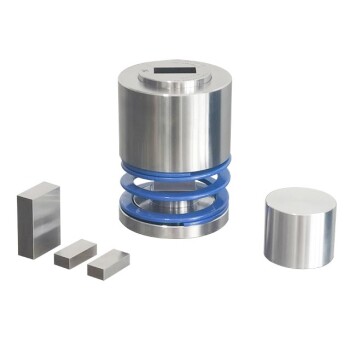
- Square Bidirectional Pressure Mold for Lab Use
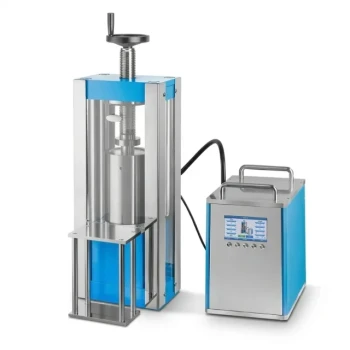
- Electric Split Lab Cold Isostatic Press CIP Machine for Cold Isostatic Pressing
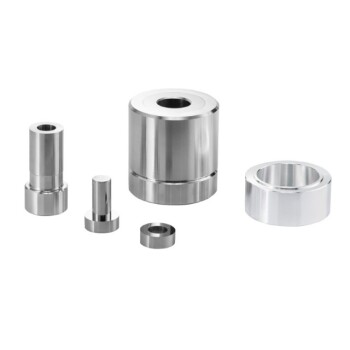
- Ring Press Mold for Lab Applications
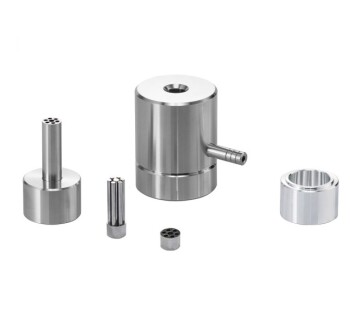
- Special Shape Press Mold for Lab
- Anti-Cracking Press Mold for Lab Use
People Also Ask
- Why are pressure molds with non-conductive resin inner walls required for battery testing? Ensure Data Accuracy
- What is the purpose of specialized pressure devices in sulfide solid-state batteries? Ensure Chemo-Mechanical Stability
- What role do high-pressure mold components play in the thermal pressing of nano-crystalline tungsten? Maximize Density
- How to use a press mould? Master the Art of Consistent Ceramic Forms
- Why must Li2S–GeSe2–P2S5 electrolytes be pressurized during EIS testing? Optimizing Solid-State Conductivity Analysis