A temperature-controlled heating reaction device acts as the central regulator in the synthesis of akaganeite nanorods. It provides a constant and precise source of thermal energy, typically maintaining the solution at approximately 80 °C, to ensure the hydrolysis of ferric chloride proceeds at a stable rate. Without this consistent thermal regulation, the chemical reaction would be uneven, leading to poor quality material formation.
The device functions as a geometry controller, not just a heater. by stabilizing the hydrolysis rate, it allows researchers to dictate the nanorods' aspect ratio and specific surface area, which is essential for optimizing their performance in toxic ion adsorption.
The Mechanism of Controlled Synthesis
Driving Stable Hydrolysis
The fundamental process for creating akaganeite is the controlled hydrolysis of ferric chloride solutions. This chemical transformation is highly sensitive to thermal fluctuations.
A temperature-controlled device ensures the reaction environment remains stable. This stability prevents rapid changes in reaction kinetics that could disrupt the uniform growth of the nanorods.
Maintaining Thermal Consistency
For successful synthesis, the system usually requires a steady temperature of approximately 80 °C. The heating device supplies constant thermal energy to maintain this specific set point.
This continuous energy supply is necessary to drive the reaction forward at a predictable pace. It eliminates thermal gradients that could lead to heterogeneous product formation.
Controlling Material Properties
Tuning the Aspect Ratio
The physical shape of the nanorods is determined by how the heat is applied. By adjusting the heating parameters, researchers can precisely control the aspect ratio of the akaganeite.
This allows for the customization of the nanorod's length relative to its width. Such structural control is vital for tailoring the material to specific applications.
Optimizing Specific Surface Area
Beyond simple shape, the heating device influences the specific surface area of the final product. This is a critical metric for nanomaterials used in filtration or remediation.
A higher specific surface area generally translates to better performance. The device allows you to tune the synthesis to maximize this surface area availability.
Enhancing Adsorption Capabilities
The ultimate goal of controlling these physical properties is to improve functionality. Akaganeite nanorods are often used to adsorb toxic ions.
By using the heating device to optimize the surface area and aspect ratio, you directly enhance the material's capacity to trap these harmful substances.
Key Operational Variables
Regulating Heating Intensity
The intensity of the heat applied is a major variable in the synthesis equation. The device allows for the modulation of this intensity to speed up or slow down the hydrolysis rate.
High intensity might drive faster formation but could compromise structural uniformity. Low intensity offers more control but extends the synthesis timeline.
The Impact of Heating Duration
Time is as critical as temperature in this process. The heating duration determines how long the crystal growth phase lasts.
Prolonged exposure to heat can alter the final dimensions of the nanorods. The device ensures that the thermal conditions remain constant throughout the entire duration of the experiment.
Optimizing Your Synthesis Strategy
To achieve high-quality akaganeite nanorods, you must align your thermal inputs with your specific material goals.
- If your primary focus is structural precision: rigorous control of heating intensity is required to define the exact aspect ratio of the nanorods.
- If your primary focus is filtration performance: prioritize adjusting the heating duration to maximize the specific surface area for optimal toxic ion adsorption.
Precise thermal management is the definitive factor that transforms a simple chemical solution into a high-performance nanomaterial.
Summary Table:
| Parameter | Role in Synthesis | Impact on Final Product |
|---|---|---|
| Temperature (80°C) | Regulates hydrolysis rate of ferric chloride | Ensures uniform crystal growth and material stability |
| Heating Intensity | Modulates reaction kinetics | Determines the aspect ratio (length-to-width) |
| Heating Duration | Controls the crystal growth phase | Optimizes specific surface area for better adsorption |
| Thermal Stability | Eliminates thermal gradients | Prevents heterogeneous formation and material defects |
Elevate Your Nanomaterial Research with KINTEK
Precision is the key to unlocking superior material performance. At KINTEK, we specialize in providing high-performance laboratory equipment designed for rigorous thermal management. Whether you are synthesizing akaganeite nanorods or developing advanced catalysts, our range of high-temperature reactors, autoclaves, and atmosphere furnaces ensures the stability your research demands.
Our value to your laboratory:
- Precision Control: Advanced heating devices to regulate aspect ratios and surface areas effectively.
- Comprehensive Solutions: From crushing and milling systems to PTFE consumables and ceramics, we provide everything needed for material synthesis.
- Industry Expertise: Trusted tools for battery research, chemical engineering, and environmental remediation.
Ready to optimize your synthesis strategy? Contact our technical experts today to find the perfect heating solution for your lab!
References
- Seyedeh-Masoumeh Taghizadeh, Alireza Ebrahiminezhad. New Perspectives on Iron-Based Nanostructures. DOI: 10.3390/pr8091128
This article is also based on technical information from Kintek Solution Knowledge Base .
Related Products
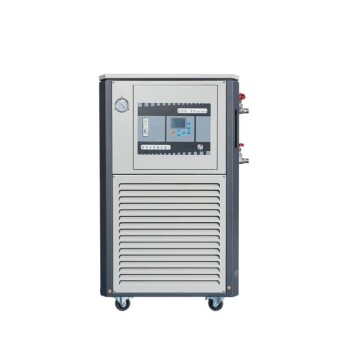
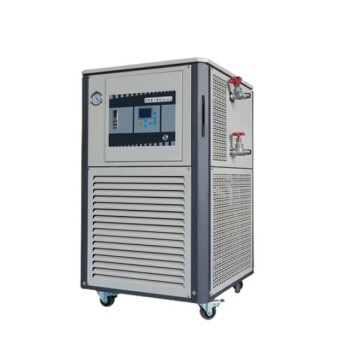
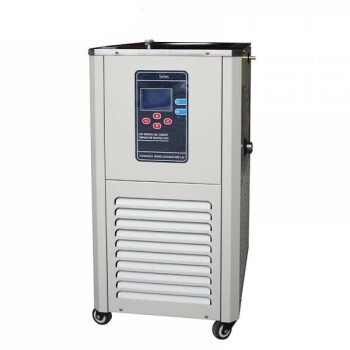
- 5L Heating Chilling Circulator Cooling Water Bath Circulator for High and Low Temperature Constant Temperature Reaction
- 10L Heating Chilling Circulator Cooling Water Bath Circulator for High and Low Temperature Constant Temperature Reaction
- 20L Heating Chilling Circulator Cooling Water Bath Circulator for High and Low Temperature Constant Temperature Reaction
- 100L Heating Chilling Circulator Cooling Water Bath Circulator for High and Low Temperature Constant Temperature Reaction
- 30L Heating Chilling Circulator Cooling Water Bath Circulator for High and Low Temperature Constant Temperature Reaction
People Also Ask
- What is the necessity of a circulating water bath in chlorate production? Optimize Yield & Purity with Precision
- How does a constant temperature circulator support the leaching reaction of gold scrap? Optimize Gold Recovery Results
- How do constant temperature circulators impact weight-loss immersion tests? Ensure Precision in Corrosion Analysis
- What is the importance of a circulating water cooling system? Key to Protecting Your High-Temperature Lab Equipment
- Why is a circulating water chiller required for Prussian Blue nanoparticles? Ensure Stability & Batch Reproducibility