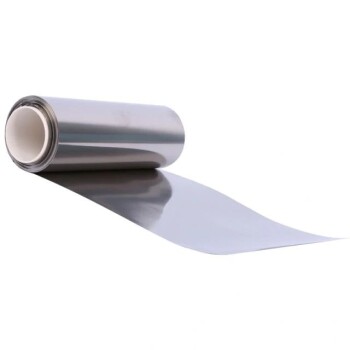
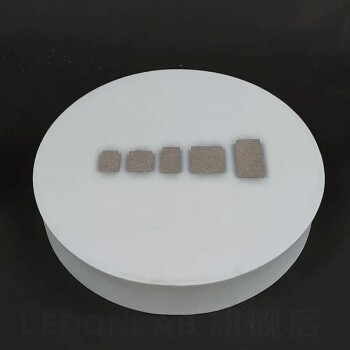
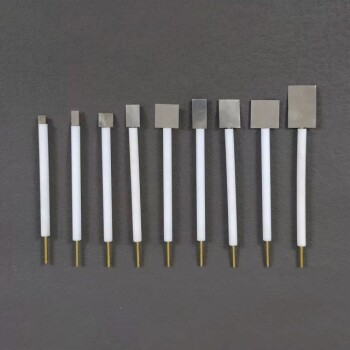
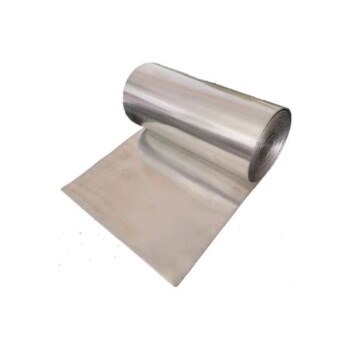
Precision in electrode preparation is the cornerstone of reliable electrocatalyst data. Precision pipettes are utilized to strictly control the volume of catalyst ink applied to the substrate, which is the only way to accurately quantify the platinum loading. Titanium foil serves as the foundational substrate, selected specifically for its high electrical conductivity and superior resistance to corrosion in acidic electrolytes.
The integrity of your electrochemical signal depends on two critical factors: knowing exactly how much catalyst is present and ensuring the substrate does not degrade. Precision pipettes solve the quantification challenge, while titanium foil eliminates background interference caused by corrosion.
The Critical Role of Precision Pipettes
Achieving Exact Volume Control
The primary function of precision pipettes in this context is the accurate delivery of catalyst ink. By controlling the dispensed volume down to the microliter, you ensure that the amount of material applied to the electrode is consistent across every test.
Quantifying Platinum Loading
Accurate volume delivery is directly linked to data analysis. Precision pipettes enable the precise quantification of platinum loading, a key metric in evaluating catalyst performance. Without this exact volume control, calculating the mass of the active catalyst becomes a matter of estimation rather than measurement.
The Critical Role of Titanium Foil
Ensuring Chemical Stability
Titanium foil is chosen primarily for its excellent corrosion resistance, particularly in acidic electrolytes. This prevents the substrate from reacting chemically with the test environment, which would otherwise degrade the electrode and contaminate the results.
Facilitating Signal Collection
Beyond chemical inertness, titanium foil possesses high electrical conductivity. It acts as an efficient current collector, ensuring that the electrochemical signals generated by the catalytic layer are transmitted without significant resistance losses.
Providing Physical Support
The foil acts as a robust physical scaffold for the experiment. It provides a stable surface for the catalytic layer to adhere to, ensuring the integrity of signal collection remains intact throughout the testing process.
Operational Dependencies and Risks
The Consequence of Volume Inaccuracy
If precision pipettes are not used or are calibrated incorrectly, the calculated platinum loading will be flawed. This introduces a significant error variable, making it impossible to determine if performance changes are due to the catalyst's intrinsic activity or simply a variance in the amount of material present.
The Risk of Substrate Degradation
Using a substrate with lower corrosion resistance than titanium can lead to "false" signals. If the substrate begins to corrode in the acidic electrolyte, the resulting current will be a mix of the catalyst's activity and the substrate's degradation, rendering the data invalid.
Making the Right Choice for Your Goal
To ensure your electrocatalyst testing yields publication-quality data, apply these principles:
- If your primary focus is Quantitative Accuracy: Prioritize the calibration and use of precision pipettes to ensure the platinum loading is an exact, known variable.
- If your primary focus is Signal Integrity: Utilize titanium foil to prevent substrate corrosion from interfering with the electrochemical data, especially in acidic media.
Mastering the preparation of the working electrode is the first step toward reproducible electrochemical analysis.
Summary Table:
| Component | Primary Function | Impact on Testing |
|---|---|---|
| Precision Pipettes | Microliter volume control | Accurate quantification of platinum loading |
| Titanium Foil | Conductive substrate | Prevents corrosion and ensures signal integrity |
| Catalyst Ink | Active material | Provides the electrochemical signal |
| Acidic Electrolyte | Testing environment | Requires chemically stable substrates like Ti foil |
Elevate Your Electrochemical Research with KINTEK
Precision is the foundation of breakthrough discoveries. KINTEK specializes in providing the high-performance laboratory equipment and consumables essential for advanced materials science. Whether you are quantifying catalysts or building complex test cells, our portfolio is designed to meet your most rigorous standards:
- Electrochemical Excellence: From high-purity titanium foil and electrolytic cells to specialized electrodes, we ensure your signals remain clean and reproducible.
- Sample Preparation: Achieve perfect ink consistency with our crushing and milling systems and homogenizers.
- Specialized Labware: Browse our extensive range of PTFE products, ceramics, and crucibles for superior chemical resistance.
Don't let equipment variance compromise your data. Contact KINTEK today to discover how our premium laboratory solutions can enhance your lab's efficiency and accuracy!
References
- Ruslan M. Mensharapov, S. V. Grigoriev. Screening of Carbon-Supported Platinum Electrocatalysts Using Frumkin Adsorption Isotherms. DOI: 10.3390/inorganics11030103
This article is also based on technical information from Kintek Solution Knowledge Base .
Related Products
- High-Purity Titanium Foil and Sheet for Industrial Applications
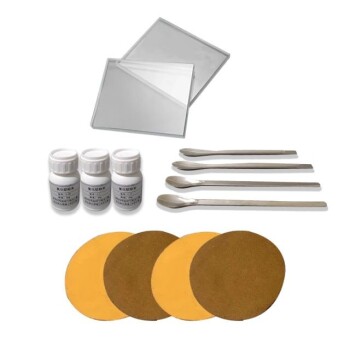
- Electrode Polishing Material for Electrochemical Experiments
- Copper Nickel Foam Metal Sheet
- Conductive Carbon Cloth Carbon Paper Carbon Felt for Electrodes and Batteries
- Platinum Sheet Electrode for Laboratory and Industrial Applications
People Also Ask
- What products are manufactured with titanium? The Ultimate Guide to High-Performance Materials
- What are the advantages of utilizing Polytetrafluoroethylene (PTFE) sheets as casting substrates? | KINTEK Solution
- In what way do portable laboratory consumables like PTFE sheets define a functional workspace? Transform Your Lab Bench
- What are the advantages of using titanium? Achieve Unmatched Strength and Corrosion Resistance
- What are the safety considerations for titanium? From Biocompatible Metal to Fire Hazard