Knowledge What specific parameters do sieving systems control? Optimize Particle Size for Solid-State Electrolytes
Author avatar

Tech Team · Kintek Solution

Updated 2 days ago

What specific parameters do sieving systems control? Optimize Particle Size for Solid-State Electrolytes


Sieving systems primarily control the upper limit of particle sizes within solid-state electrolyte powders. By physically separating and removing oversized particles and hard agglomerates that resisted pulverization, these systems ensure a consistent and uniform particle size distribution prior to further processing.

Core Takeaway Strict control over the maximum particle size is critical for the structural integrity of ceramic layers. By filtering out large agglomerates, sieving prevents internal stress concentrations and microscopic defects that would otherwise compromise the material during the sintering process.

The Mechanics of Particle Control

Defining the Upper Limit

The specific parameter targeted by sieving systems is the maximum allowable particle size.

While pulverization breaks down the bulk material, it does not guarantee uniformity. Sieving acts as a final quality gate, strictly enforcing a size cap to ensure no particles exceed the specified dimensions required for the application.

Removing Hard Agglomerates

A critical function of this parameter control is the isolation of hard agglomerates.

These are clusters of material that were not sufficiently pulverized during the grinding phase. If left in the powder, these dense formations disrupt the homogeneity of the mixture, making their removal essential for a high-quality baseline.

Why Consistency Matters for Sintering

Preventing Stress Concentration

The deep need for this strict control lies in the sintering process.

When particle sizes vary too drastically, the ceramic layer develops unevenly during heating. Uniform particle distribution ensures that shrinkage and densification occur evenly, preventing the buildup of internal stress that leads to cracking or mechanical failure.

Eliminating Microscopic Defects

Sieving is the primary defense against microscopic structural defects.

Oversized particles that slip through to the sintering stage create weak points within the ceramic structure. By ensuring the powder consists only of particles below the upper size limit, you protect the microscopic integrity of the final solid-state electrolyte layer.

Common Pitfalls to Avoid

The Risk of Incomplete Pulverization

A common failure in powder preparation is assuming grinding alone is sufficient.

Without the strict upper-limit control provided by sieving, oversized particles inevitably remain. These uncontrolled particles become the focal points for structural failure, rendering the subsequent sintering steps ineffective regardless of the thermal precision used.

Overlooking Agglomerate Impact

Failing to remove hard agglomerates is a direct path to internal stress.

These agglomerates do not sinter at the same rate as the surrounding fine powder. This discrepancy creates tension within the ceramic layer, leading to invisible weaknesses that compromise the electrolyte's performance and longevity.

Making the Right Choice for Your Goal

To ensure the reliability of your solid-state electrolyte manufacturing:

  • If your primary focus is Structural Integrity: strict adherence to the upper particle size limit is required to prevent stress concentrations during sintering.
  • If your primary focus is Material Homogeneity: prioritize the removal of hard agglomerates to ensure a uniform particle size distribution.

Consistency in the powder phase is the only way to guarantee stability in the final ceramic product.

Summary Table:

Controlled Parameter Primary Function Impact on Sintering
Upper Particle Size Limit Removes oversized particles Prevents internal stress and cracking
Hard Agglomerate Removal Eliminates unpulverized clusters Ensures material homogeneity and densification
Particle Distribution Standardizes powder baseline Minimizes microscopic structural defects

Elevate Your Battery Research with KINTEK Precision

Consistency at the powder phase is the foundation of high-performance solid-state electrolytes. KINTEK specializes in advanced laboratory equipment designed to ensure your materials meet the most rigorous standards. From high-precision sieving equipment and crushing and milling systems to state-of-the-art pellet and isostatic hydraulic presses, we provide the tools necessary to eliminate structural defects and enhance material homogeneity.

Whether you are scaling battery research or refining ceramic layers with our high-temperature furnaces, our expert team is ready to support your technical requirements. Contact KINTEK today to optimize your powder preparation workflow.

Related Products

People Also Ask

Related Products

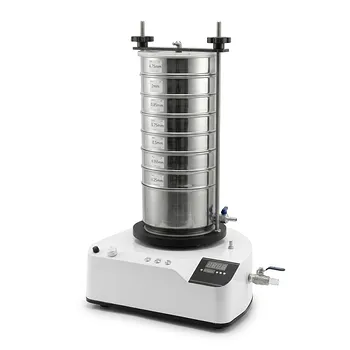
Laboratory Test Sieves and Vibratory Sieve Shaker Machine

Laboratory Test Sieves and Vibratory Sieve Shaker Machine

Efficiently process powders, granules, and small blocks with a high-frequency vibration sieve. Control vibration frequency, screen continuously or intermittently, and achieve accurate particle size determination, separation, and classification.

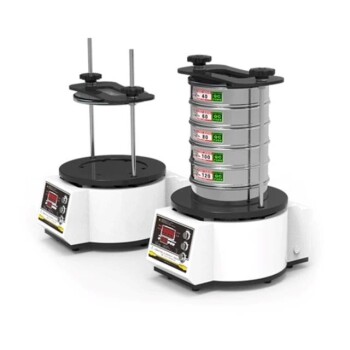
Laboratory Test Sieves and Sieving Machines

Laboratory Test Sieves and Sieving Machines

Precision lab test sieves & sieving machines for accurate particle analysis. Stainless steel, ISO-compliant, 20μm-125mm range. Request specs now!

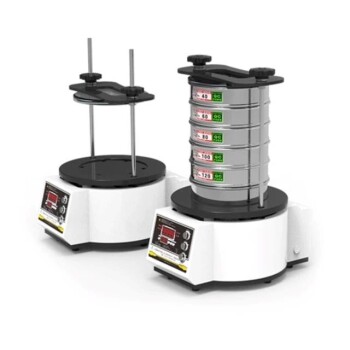
Vibratory Sieve Shaker Machine Dry Three-Dimensional Vibrating Sieve

Vibratory Sieve Shaker Machine Dry Three-Dimensional Vibrating Sieve

The KT-V200 product focuses on solving common sieving tasks in the laboratory. It is suitable for sieving 20g-3kg dry samples.

Custom PTFE Teflon Parts Manufacturer for PTFE Mesh F4 Sieve

Custom PTFE Teflon Parts Manufacturer for PTFE Mesh F4 Sieve

PTFE mesh sieve is a specialized test sieve designed for particle analysis in various industries, featuring a non-metallic mesh woven from PTFE filament. This synthetic mesh is ideal for applications where metal contamination is a concern . PTFE sieves are crucial for maintaining the integrity of samples in sensitive environments, ensuring accurate and reliable results in particle size distribution analysis.

Metallographic Specimen Mounting Machine for Laboratory Materials and Analysis

Metallographic Specimen Mounting Machine for Laboratory Materials and Analysis

Precision metallographic mounting machines for labs—automated, versatile, and efficient. Ideal for sample prep in research and quality control. Contact KINTEK today!

Benchtop Laboratory Freeze Dryer for Lab Use

Benchtop Laboratory Freeze Dryer for Lab Use

Premium benchtop laboratory freeze dryer for lyophilization, preserving samples with ≤ -60°C cooling. Ideal for pharmaceuticals & research.

Manual High Temperature Heated Hydraulic Press Machine with Heated Plates for Lab

Manual High Temperature Heated Hydraulic Press Machine with Heated Plates for Lab

The High Temperature Hot Press is a machine specifically designed for pressing, sintering and processing materials in a high temperature environment. It is capable of operating in the range of hundreds of degrees Celsius to thousands of degrees Celsius for a variety of high temperature process requirements.

Vacuum Hot Press Furnace Machine for Lamination and Heating

Vacuum Hot Press Furnace Machine for Lamination and Heating

Experience clean and precise lamination with Vacuum Lamination Press. Perfect for wafer bonding, thin-film transformations, and LCP lamination. Order now!

Laboratory Sealed Hammer Crusher for Efficient Sample Preparation

Laboratory Sealed Hammer Crusher for Efficient Sample Preparation

Discover the Laboratory Sealed Hammer Crusher for efficient sample preparation. Ideal for coal, metallurgy, and research, this crusher ensures high production efficiency and environmental friendliness.

Lab Blown Film Extrusion Three Layer Co-Extrusion Film Blowing Machine

Lab Blown Film Extrusion Three Layer Co-Extrusion Film Blowing Machine

Lab blown film extrusion is mainly used to detect the feasibility of film blowing of polymer materials and the colloid condition in the materials, as well as the dispersion of colored dispersions, controlled mixtures, and extrudates;

Laboratory manual slicer

Laboratory manual slicer

Manual microtome is a high-precision cutting device designed for laboratories, industry and medical fields. It is suitable for the preparation of thin slices of various materials such as paraffin samples, biological tissues, battery materials, food, etc.

Automatic Lab Cold Isostatic Press CIP Machine Cold Isostatic Pressing

Automatic Lab Cold Isostatic Press CIP Machine Cold Isostatic Pressing

Efficiently prepare samples with our Automatic Lab Cold Isostatic Press. Widely used in material research, pharmacy, and electronic industries. Provides greater flexibility and control compared to electric CIPs.

Custom PTFE Teflon Parts Manufacturer for PTFE Measuring Cylinder 10/50/100ml

Custom PTFE Teflon Parts Manufacturer for PTFE Measuring Cylinder 10/50/100ml

PTFE measuring cylinder are a rugged alternative to traditional glass cylinders. They are chemically inert over a wide temperature range (up to 260º C), have excellent corrosion resistance and maintain a low coefficient of friction, ensuring ease of use and cleaning.

Automatic Heated Hydraulic Press Machine with Heated Plates for Laboratory Hot Press 25T 30T 50T

Automatic Heated Hydraulic Press Machine with Heated Plates for Laboratory Hot Press 25T 30T 50T

Efficiently prepare your samples with our Automatic Heated Lab Press. With a pressure range up to 50T and precise control, it's perfect for various industries.

Custom PTFE Teflon Parts Manufacturer for Acid and Alkali Resistant Chemical Powder Material Scoops

Custom PTFE Teflon Parts Manufacturer for Acid and Alkali Resistant Chemical Powder Material Scoops

Known for its excellent thermal stability, chemical resistance and electrical insulating properties, PTFE is a versatile thermoplastic material.

Small Vacuum Heat Treat and Tungsten Wire Sintering Furnace

Small Vacuum Heat Treat and Tungsten Wire Sintering Furnace

The small vacuum tungsten wire sintering furnace is a compact experimental vacuum furnace specially designed for universities and scientific research institutes. The furnace features a CNC welded shell and vacuum piping to ensure leak-free operation. Quick-connect electrical connections facilitate relocation and debugging, and the standard electrical control cabinet is safe and convenient to operate.

Infrared Heating Quantitative Flat Plate Press Mold

Infrared Heating Quantitative Flat Plate Press Mold

Discover advanced infrared heating solutions with high-density insulation and precise PID control for uniform thermal performance in various applications.

Chemical Vapor Deposition CVD Equipment System Chamber Slide PECVD Tube Furnace with Liquid Gasifier PECVD Machine

Chemical Vapor Deposition CVD Equipment System Chamber Slide PECVD Tube Furnace with Liquid Gasifier PECVD Machine

KT-PE12 Slide PECVD System: Wide power range, programmable temp control, fast heating/cooling with sliding system, MFC mass flow control & vacuum pump.

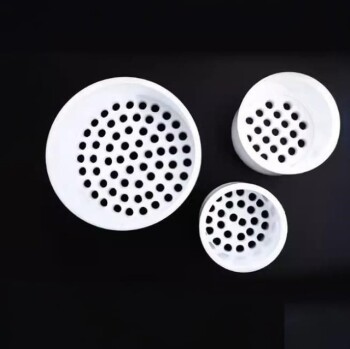
Custom PTFE Teflon Parts Manufacturer for Culture Dish and Evaporation Dish

Custom PTFE Teflon Parts Manufacturer for Culture Dish and Evaporation Dish

The PTFE culture dish evaporating dish is a versatile laboratory tool known for its chemical resistance and high-temperature stability. PTFE, a fluoropolymer, offers exceptional non-stick properties and durability, making it ideal for various applications in research and industry, including filtration, pyrolysis, and membrane technology.

Sub-Lance Probe for Molten Steel Temperature Carbon Content Oxygen Content Measurement and Steel Sample Collection

Sub-Lance Probe for Molten Steel Temperature Carbon Content Oxygen Content Measurement and Steel Sample Collection

Optimize steelmaking with sub-lance probes for precise temperature, carbon, and oxygen measurements. Enhance efficiency and quality in real-time.


Leave Your Message