Selecting the optimal reaction tube is a fundamental decision in designing biomass pyrolysis and reforming systems. The technical considerations for choosing quartz focus on three critical properties: excellent microwave permeability for efficient energy transfer, high-temperature resistance for structural safety, and optical transparency for real-time process monitoring.
The primary value of quartz in these applications is its ability to transmit microwave energy directly to internal materials without absorbing heat itself, ensuring high efficiency while providing the visual access needed for research and quality control.
Energy Transmission and Efficiency
Maximizing Microwave Permeability
For processes utilizing microwave heating, the reaction tube must act as a transparent window to the energy source. Quartz is selected specifically for its excellent microwave permeability.
Preventing Energy Loss
Because quartz does not absorb microwave energy, heat is generated solely within the internal materials and receptors. This ensures that energy is transmitted without loss to the tube walls, maximizing the efficiency of the pyrolysis or reforming process.
Thermal and Chemical Resilience
Withstanding High-Temperature Environments
Biomass pyrolysis occurs at extreme temperatures that degrade lesser materials. Quartz maintains its structural integrity even under the intense thermal stress required for these reactions.
Maintaining Chemical Stability
The reaction environment involves complex chemical changes and potential byproducts. Quartz offers high chemical stability, ensuring the tube does not react with the biomass or the resulting gases, preserving the purity of the experiment.
Process Monitoring and Control
Leveraging Optical Transparency
Unlike opaque ceramic or metal tubes, quartz provides a clear view of the reactor's interior. This transparency is technically vital for observing the physical distribution of materials inside the tube.
Observing Reaction States
Researchers rely on visual cues to determine the progress of pyrolysis. The physical properties of quartz allow operators to monitor reaction states in real-time, facilitating immediate adjustments to the process parameters.
Operational Trade-offs
The Necessity of Internal Heating
While quartz is thermally resistant, its low dielectric loss means it does not generate heat itself in a microwave field. The system relies entirely on the internal materials or "receptors" to generate heat. If the biomass or receptors are distributed poorly, the process may fail regardless of the tube's quality.
Structural Integrity Limits
Although quartz is robust against heat, it remains a glass material. While the primary reference highlights its integrity, operators must handle tubes with care to prevent mechanical stress, as structural failure at high temperatures poses significant safety risks.
Making the Right Choice for Your Goal
To ensure your equipment matches your specific technical requirements, consider the following:
- If your primary focus is Energy Efficiency: Prioritize quartz for its high microwave permeability, which ensures energy is targeted solely at the biomass and receptors.
- If your primary focus is Process Optimization (R&D): Leverage the optical transparency of quartz to visually monitor material distribution and reaction states during the experiment.
Ultimately, quartz provides the unique combination of thermal resilience and transparency required for precise, high-efficiency biomass conversion.
Summary Table:
| Technical Factor | Quartz Property | Benefit to Biomass Pyrolysis |
|---|---|---|
| Energy Transfer | High Microwave Permeability | Direct energy transmission to biomass; minimizes heat loss to tube walls. |
| Thermal Safety | High-Temperature Resistance | Maintains structural integrity under extreme heat required for reforming. |
| Process Control | Optical Transparency | Enables real-time visual monitoring of material states and distribution. |
| Chemical Purity | High Chemical Stability | Prevents contamination and reactions between the tube and processing byproducts. |
Elevate Your Research with Precision Quartz Solutions
At KINTEK, we understand that the success of your biomass pyrolysis and reforming processes depends on the quality of your reactor components. Our high-performance quartz reaction tubes are engineered to provide the superior microwave permeability and thermal resilience your laboratory demands.
Beyond quartz components, KINTEK specializes in a comprehensive range of laboratory equipment, including high-temperature furnaces (tube, muffle, vacuum), high-pressure reactors and autoclaves, and advanced crushing and milling systems. Whether you are focused on battery research, material synthesis, or chemical processing, our expert team is ready to provide the durable tools and consumables—like ceramic crucibles and PTFE products—you need to achieve reliable results.
Ready to optimize your high-temperature applications? Contact us today to find the perfect fit for your lab!
References
- Kaiqi Shi, Tao Wu. Production of H2-Rich Syngas From Lignocellulosic Biomass Using Microwave-Assisted Pyrolysis Coupled With Activated Carbon Enabled Reforming. DOI: 10.3389/fchem.2020.00003
This article is also based on technical information from Kintek Solution Knowledge Base .
Related Products
- Laboratory Rapid Thermal Processing (RTP) Quartz Tube Furnace
- 1200℃ Split Tube Furnace with Quartz Tube Laboratory Tubular Furnace
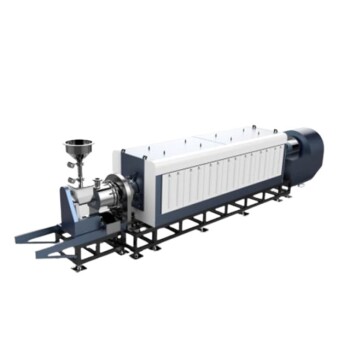
- Electric Rotary Kiln Small Rotary Furnace Biomass Pyrolysis Plant
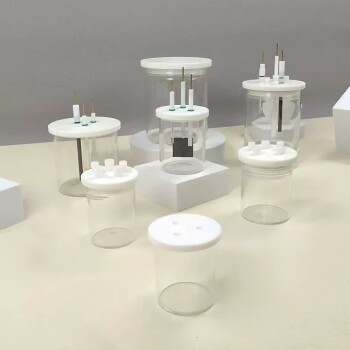
- Quartz Electrolytic Electrochemical Cell for Electrochemical Experiments
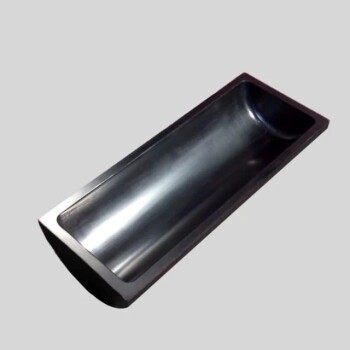
- Carbon Graphite Boat -Laboratory Tube Furnace with Cover
People Also Ask
- What technical advantages does an RTP tube furnace offer for photoelectrodes? Achieve Precision & High Phase Purity
- What is the temperature of a quartz tube furnace? Master the Limits for Safe, High-Temp Operation
- How does a quartz tube furnace facilitate the synthesis of rGO? Optimize Your Cathode Matrix with Precise Pyrolysis
- What are the advantages of using an electric heating furnace with a quartz tube for liquid bismuth corrosion control?
- What is the maximum temperature for a quartz tube furnace? Key Limits for Safe & Efficient Operation