Freeze dryers provide a distinct advantage in microalgae processing by combining gentle dehydration with structural modification. By utilizing sublimation under high vacuum and low temperature, this method preserves the chemical integrity of the biomass while simultaneously altering its physical architecture to improve downstream processing.
Core Takeaway: Freeze drying is not merely a water removal method; it is a pretreatment strategy that mechanically weakens cell walls through ice crystal formation while preventing the thermal degradation of high-value lipids and pigments.
The Mechanism of Preservation
Preventing Thermal Degradation
Standard drying methods often rely on heat, which can degrade the valuable compounds found in microalgae. Freeze drying operates at low temperatures, ensuring that heat-sensitive components remain chemically stable.
Protecting Lipids and Pigments
This gentle process is particularly effective for high-value biomass. It explicitly protects lipids and natural pigments from the breakdown that typically occurs during thermal dehydration.
Sublimation Over Evaporation
Instead of boiling off water, freeze drying utilizes sublimation. Ice transforms directly into vapor under vacuum, bypassing the liquid phase and minimizing chemical alteration of the biomass.
Structural Enhancement for Extraction
The Role of Ice Crystals
The physical state of the water is as important as its removal. During the initial freezing stage, ice crystals form inside the microalgae cells.
Creating a Porous Structure
As these ice crystals sublime, they leave behind voids. This process creates a highly porous structure within the dried biomass that is not achievable through standard evaporation.
Weakening Cell Walls
The formation and removal of ice crystals do more than dry the material; they physically disrupt cellular integrity. This structural change weakens the cell walls, which is a critical step for processing.
Facilitating Lipid Extraction
The compromised cell walls and porous structure lower the barrier to solvent penetration. This structural modification directly facilitates more efficient lipid extraction in subsequent processing stages.
Understanding the Trade-offs
Equipment Dependencies
Achieving the necessary state for sublimation requires specific conditions: high vacuum and controlled low temperatures. Unlike simple convective drying, this necessitates specialized laboratory or industrial equipment capable of maintaining these strict environmental parameters.
Processing Implications
While the outcome is superior in quality, the reliance on sublimation is inherently different from rapid heat evaporation. The process focuses on quality and structure preservation rather than speed, making it a strategic choice for high-value applications rather than bulk, low-grade commodities.
Making the Right Choice for Your Goal
Freeze drying serves as both a preservation technique and an extraction aid. Consider your specific processing targets:
- If your primary focus is preserving bioactivity: Choose freeze drying to prevent the thermal degradation of sensitive pigments and lipids.
- If your primary focus is extraction yield: Leverage the porous structure and weakened cell walls to maximize solvent penetration and lipid recovery.
By selecting freeze drying, you actively precondition your biomass for higher efficiency and superior quality in the final product.
Summary Table:
| Feature | Freeze Drying (Sublimation) | Standard Heat Drying |
|---|---|---|
| Temperature | Low (Cryogenic) | High (Heat-based) |
| Structural Impact | Creates porous, weakened cell walls | Hardens/compacts biomass |
| Compound Stability | Preserves heat-sensitive lipids/pigments | Risks thermal degradation |
| Extraction Prep | Facilitates solvent penetration | Higher barrier to extraction |
| Main Advantage | High-value bioactivity preservation | Low-cost bulk processing |
Maximize Your Research Potential with KINTEK
Ready to elevate your microalgae processing? KINTEK specializes in precision laboratory solutions that turn challenges into breakthroughs. From advanced freeze dryers and ULT freezers to our high-performance crushing and milling systems, we provide the tools necessary to preserve bioactivity and optimize extraction yields.
Our extensive portfolio supports your entire workflow, including centrifuges, homogenizers, and specialized PTFE and ceramic consumables. Whether you are focused on biofuel development or high-value nutraceuticals, our technical experts are here to match you with the perfect equipment for your specific biomass needs.
Contact us today to find your ideal laboratory solution!
References
- Worasaung Klinthong, Chung‐Sung Tan. A Review: Microalgae and Their Applications in CO2 Capture and Renewable Energy. DOI: 10.4209/aaqr.2014.11.0299
This article is also based on technical information from Kintek Solution Knowledge Base .
Related Products
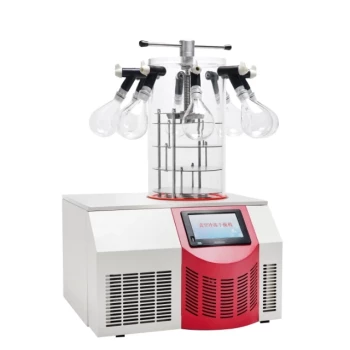
- Benchtop Laboratory Freeze Dryer for Lab Use
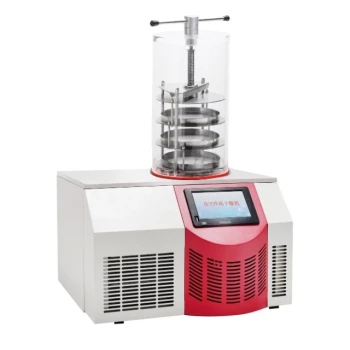
- High Performance Laboratory Freeze Dryer for Research and Development
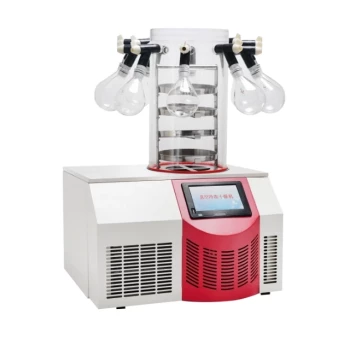
- High Performance Laboratory Freeze Dryer
- Benchtop Laboratory Vacuum Freeze Dryer
People Also Ask
- What precautions should be taken when using a laboratory freeze dryer? Essential Steps for Reliable Lyophilization
- What are the main advantages of laboratory freeze drying? Preserve Sensitive Materials with Gentle Lyophilization
- What are the advantages of a laboratory freeze dryer over a drying oven? Preserve Superior Gel Structure & Porosity
- Why is a laboratory freeze dryer used before biomass characterization? Preserve Structural Integrity for Accurate Data
- What is the function of a laboratory freeze dryer for Fe-C@C nanoparticles? Achieving the Flower-Like Morphology