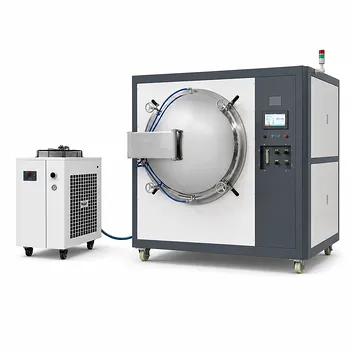
Muffle furnaces and tube furnaces are the primary laboratory instruments used to synthesize high-purity cubic-phase garnet-type LLZTO ceramic powders. These specific furnace types are required because they can generate the high temperatures and uniform thermal fields necessary to drive the solid-state reactions essential for this material.
Core Takeaway Achieving the highly conductive cubic-phase structure in LLZTO requires precise thermal management to ensure complete precursor reactions. Muffle and tube furnaces are the standard choice because they provide the consistent, prolonged high-temperature environment needed to stabilize this crystal structure and maximize ionic conductivity.
The Role of Furnace Selection in LLZTO Synthesis
Facilitating Solid-State Reactions
The synthesis of LLZTO (Lithium Lanthanum Zirconium Tantalum Oxide) relies on high-temperature solid-state reactions.
Muffle and tube furnaces are capable of reaching and sustaining the intense heat required for these precursors to react chemically.
Achieving the Cubic-Phase Structure
The specific goal of this heating process is to form a stable cubic-phase crystal structure.
This phase is critical because it serves as the foundation for high ionic conductivity in inorganic solid electrolytes.
Without the precise heat application provided by these furnaces, the material may fail to transform fully, leading to lower-performance phases.
Thermal Uniformity is Critical
For high-purity powders, temperature gradients must be minimized.
These furnaces are designed to provide a uniform thermal field, ensuring that the entire batch of precursor material undergoes the same thermal history.
This uniformity ensures the precursors react completely and homogeneously, preventing the formation of secondary phases that could impede performance.
Critical Considerations for Purity and Processing
Preventing Contamination via Crucibles
While the furnace provides the energy, the containment vessel ensures the "high-purity" aspect of your requirement.
It is standard practice to use alumina or zirconia crucibles inside these furnaces.
These materials are chemically stable and high-temperature resistant, preventing reaction between the container and the highly reactive lithium-based ceramics.
Using the wrong crucible material can introduce impurities and alter the stoichiometry of the synthesized powder.
Post-Synthesis Refinement
The furnace process typically yields coarse, polycrystalline materials.
To create usable ceramic powders, a planetary high-energy ball mill is often used after the furnace step.
This equipment uses high-frequency impact to refine the particle size from approximately 5 µm down to sub-micron levels (around 200 nm), which is necessary for constructing efficient ionic conduction paths.
Making the Right Choice for Your Goal
To ensure the successful synthesis of LLZTO powders, align your equipment selection with your specific technical requirements:
- If your primary focus is Phase Stability: Prioritize muffle or tube furnaces with verified thermal uniformity to ensure a complete transformation to the cubic phase.
- If your primary focus is Chemical Purity: Select the furnace strictly in conjunction with high-quality alumina or zirconia crucibles to prevent stoichiometry degradation.
- If your primary focus is Final Application: Plan for a post-sintering milling stage to refine the coarse furnace output into sub-micron powders suitable for composite electrolytes.
The successful creation of high-conductivity solid electrolytes depends not just on heating the material, but on controlling the thermal environment to guarantee phase purity.
Summary Table:
| Feature | Muffle Furnace | Tube Furnace |
|---|---|---|
| Primary Role | Bulk solid-state synthesis | Controlled atmosphere synthesis |
| Temperature Range | Up to 1800°C | Up to 1800°C |
| Thermal Uniformity | Excellent for batch processing | Superior for longitudinal profiles |
| Key Outcome | Stable cubic-phase structure | Optimized ionic conduction paths |
| Crucible Compatibility | Alumina / Zirconia | Alumina / Zirconia / Quartz |
Elevate Your Solid-State Battery Research with KINTEK
Precision is non-negotiable when synthesizing high-performance LLZTO ceramic powders. At KINTEK, we specialize in providing the high-temperature laboratory equipment necessary to achieve the stable cubic-phase structures your research demands.
Our comprehensive portfolio includes:
- Advanced High-Temperature Furnaces: Precision muffle, tube, and vacuum furnaces designed for optimal thermal uniformity.
- Processing Excellence: High-energy crushing and milling systems for sub-micron particle refinement.
- Specialized Consumables: Chemically stable alumina, zirconia, and ceramic crucibles to prevent contamination.
- Comprehensive Lab Solutions: From hydraulic pellet presses and electrolytic cells to battery research tools and cooling systems.
Ready to optimize your synthesis process and ensure maximum ionic conductivity? Contact our experts today to find the perfect equipment solution tailored to your laboratory's needs.
Related Products
- 1200℃ Muffle Furnace Oven for Laboratory
- 1800℃ Muffle Oven Furnace for Laboratory
- 1400℃ Muffle Oven Furnace for Laboratory
- 1700℃ Muffle Oven Furnace for Laboratory
- High Temperature Muffle Oven Furnace for Laboratory Debinding and Pre Sintering
People Also Ask
- How does a muffle furnace ensure reliability in calcification roasting? Achieve Precision in Pellets Conversion
- Why is a laboratory high-temperature muffle furnace required for the post-annealing treatment of copper oxide?
- What role does a laboratory high-temperature muffle furnace play in iron-based composite phase structure development?
- How is a laboratory high-temperature muffle furnace utilized in sol-gel synthesis for perovskite catalysts?
- How does a muffle furnace influence 8YSZ ceramic densification? Master Precision Sintering at 1500°C