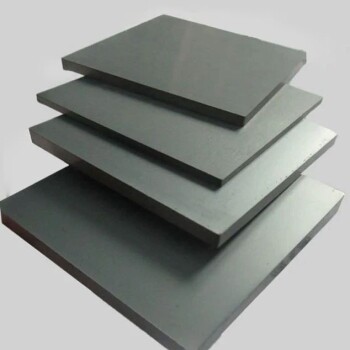
Advanced Chemical Vapor Deposition (CVD) and high-temperature sintering furnaces are strictly necessary because Silicon Carbide (SiC) possesses an exceptionally high melting point and substantial resistance to deformation that standard manufacturing equipment cannot handle. These specialized high-temperature environments are the only way to successfully fabricate SiC while preserving the material properties required for Accident Tolerant Fuel (ATF) applications.
The Core Reality: The very properties that make SiC a superior safety material—specifically its resistance to heat and irradiation—make it inherently difficult to process. You cannot achieve the necessary chemical stability or mechanical performance without the extreme thermal precision provided by advanced furnaces.
Overcoming Material Resistance
To understand why this equipment is non-negotiable, you must look at the intrinsic material characteristics of Silicon Carbide.
The Melting Point Barrier
SiC is defined by an extremely high melting point. Conventional furnaces simply cannot reach or sustain the thermal levels required to sinter (fuse) or deposit SiC particles effectively.
Without high-temperature sintering or CVD, the material cannot form a cohesive, durable structure.
Addressing Low Irradiation Creep
SiC is prized for having a very low irradiation creep rate, meaning it resists deforming under radiation. While excellent for reactor longevity, this rigidity makes the material stubborn during fabrication.
Advanced processing ensures the material is formed correctly initially, as it will not easily "settle" or deform into shape later under stress.
The Direct Link to Reactor Safety
The use of precision furnaces is not just about shaping the cladding; it is about locking in the performance characteristics that define Accident Tolerant Fuel.
Ensuring Chemical Stability
High-temperature processing is required to establish the chemical stability of the SiC cladding.
If the fabrication temperature is insufficient, the chemical bonds may not form correctly, leaving the cladding vulnerable to degradation when exposed to the extreme environment of a nuclear reactor.
Controlling Internal Pressure
Precision fabrication directly impacts the cladding's ability to contain reactor byproducts. Properly processed SiC helps reduce fission gas release.
By containing these gases, the cladding prevents the buildup of internal cladding pressure, which is a critical factor in maintaining the structural integrity of the fuel rod.
Understanding the Trade-offs
While these advanced furnaces are essential, they introduce specific constraints to the research and development process.
The Complexity of Precision
You cannot substitute these methods with lower-cost alternatives. The requirement for precision high-temperature environments dictates a higher baseline for manufacturing complexity.
Material Performance vs. Process Difficulty
There is a direct correlation between the difficulty of the process and the quality of the outcome. The rigorous requirement for advanced CVD or sintering is the "price" paid to achieve the enhanced reactor safety margins that standard materials cannot offer.
Making the Right Choice for Your Goal
When evaluating the infrastructure required for SiC ATF development, consider your specific technical objectives.
- If your primary focus is Fabrication Integrity: Prioritize equipment capable of reaching extreme sintering temperatures to overcome SiC’s high melting point and ensure structural cohesion.
- If your primary focus is Safety Margins: Ensure your CVD process is calibrated for high precision to guarantee the chemical stability needed to minimize fission gas release.
Ultimately, the use of advanced high-temperature furnaces is the only path to translating SiC's theoretical potential into a physically viable, safety-enhancing reactor component.
Summary Table:
| Feature | Requirement for SiC ATF | Role of Advanced Furnaces |
|---|---|---|
| Melting Point | Exceptionally High | Sustains extreme thermal levels for effective sintering and deposition. |
| Material Creep | Very Low Irradiation Creep | Overcomes material rigidity to ensure precise initial formation. |
| Chemical Stability | High Bond Integrity | Establishes stable bonds to resist degradation in reactor environments. |
| Safety Performance | Fission Gas Containment | Creates cohesive structures to reduce internal cladding pressure. |
| Process Method | CVD or High-Temp Sintering | Provides the thermal precision required for superior safety margins. |
Accelerate Your ATF Research with KINTEK Precision Engineering
Transitioning from theoretical potential to viable nuclear safety requires equipment that can withstand the most demanding thermal environments. KINTEK specializes in the advanced laboratory equipment necessary for high-stakes material science, offering a comprehensive range of CVD systems, high-temperature sintering furnaces (including vacuum and atmosphere models), and high-pressure reactors tailored for SiC development.
Whether you are focusing on fabrication integrity or maximizing reactor safety margins, our cutting-edge thermal solutions ensure your materials meet the rigorous standards of Accident Tolerant Fuel research.
Ready to elevate your lab's capabilities? Contact our technical experts today to find the perfect furnace or crushing system for your SiC cladding workflow.
References
- Wei Zhou, Wenzhong Zhou. Thermophysical and Mechanical Analyses of UO2-36.4vol % BeO Fuel Pellets with Zircaloy, SiC, and FeCrAl Claddings. DOI: 10.3390/met8010065
This article is also based on technical information from Kintek Solution Knowledge Base .
Related Products
- Vacuum Heat Treat and Pressure Sintering Furnace for High Temperature Applications
- High Temperature Muffle Oven Furnace for Laboratory Debinding and Pre Sintering
- Ultra-High Temperature Graphite Vacuum Graphitization Furnace
- 1700℃ Controlled Atmosphere Furnace Nitrogen Inert Atmosphere Furnace
- 1400℃ Controlled Atmosphere Furnace with Nitrogen and Inert Atmosphere
People Also Ask
- What is the purpose of the heat treatment (sintering) step? Engineering Robust Electroactive Membranes
- What is a vacuum sintering furnace? Unlock Purity and Performance in Advanced Materials
- How does the vacuum environment impact sintering of diamond-copper composites? Protect Against Thermal Damage
- Why must green bodies produced via binder jetting undergo treatment in a vacuum sintering furnace?
- What are some alternative atmospheres to pure hydrogen for powder metallurgy sintering processes? Top Sintering Solutions