The primary reason for implementing alternating cycles of grinding and air cooling is to strictly control the internal temperature of the milling jar, typically maintaining it below 375 K. This thermal regulation is essential to prevent overheating, which safeguards the material against structural defects and chemical instabilities during processing.
Mechanical milling generates significant kinetic energy that rapidly converts to heat, threatening the integrity of carbide powders. By interspersing grinding with cooling periods, you actively mitigate thermal buildup to prevent irreversible damage such as severe agglomeration or unintended phase changes.
The Mechanics of Thermal Control
Limiting Heat Accumulation
Continuous mechanical milling generates intense friction and impact energy. Without intervention, this energy creates a rapid temperature spike within the milling jar.
Maintaining Critical Thresholds
The cooling cycles act as a thermal brake, keeping the average temperature below the critical 375 K limit. Exceeding this limit often leads to deleterious effects on the powder's properties.
Preventing Phase Transformations
High temperatures can trigger premature or unwanted chemical changes in the material. Keeping the environment cool ensures the powder maintains the specific phase composition required for the final application.
Enhancing Powder Characteristics
Avoiding Severe Agglomeration
Overheating promotes the clustering of particles, known as agglomeration. By modulating the temperature, the powder remains finer and less prone to sticking together, ensuring a more uniform consistency.
Facilitating Stress Relaxation
The physical impact of grinding introduces significant stress fields into the material. The cooling interval (e.g., 30 minutes) provides a necessary window for these stress fields to relax, resetting the material state for the next grinding burst.
Ensuring Reaction Stability
Stabilizing Carbide Synthesis
Carbide synthesis often involves self-propagating reactions which can be sensitive to thermal conditions. Intermittent cooling prevents these reactions from becoming volatile, maintaining the stability required for successful synthesis.
Understanding the Trade-offs
Impact on Process Efficiency
The ratio of grinding to cooling is often skewed heavily toward downtime; the reference notes a cycle of 15 minutes of work followed by 30 minutes of rest. This means the machine is idle for two-thirds of the total processing time, significantly extending the overall production schedule.
Balancing Throughput vs. Quality
While continuous milling is faster, it sacrifices the thermal stability described above. The "cost" of high-quality carbide powder is the extended time required for these cooling intervals.
Making the Right Choice for Your Goal
To determine the optimal processing strategy for your carbide powders, consider your specific constraints:
- If your primary focus is Material Purity and Phase Stability: Adhere strictly to the alternating cycle method (e.g., 15 min grind / 30 min cool) to keep temperatures below 375 K.
- If your primary focus is Particle Size Uniformity: utilize the cooling periods to prevent agglomeration, which is critical for achieving a consistent fine powder.
Effective carbide synthesis requires prioritizing thermal control over processing speed to guarantee a stable, high-quality output.
Summary Table:
| Feature | Implementation | Key Benefits |
|---|---|---|
| Temperature Limit | Below 375 K | Prevents phase transformations & chemical instability |
| Cycle Ratio | 15 min grinding / 30 min cooling | Mitigates thermal buildup & heat accumulation |
| Particle Quality | Controlled cooling intervals | Reduces severe agglomeration & ensures uniformity |
| Mechanical Stress | 30-minute rest periods | Allows stress relaxation for optimized synthesis |
Precision Carbide Processing Starts with KINTEK
Don't let thermal accumulation compromise your material integrity. KINTEK specializes in advanced laboratory solutions, including high-performance crushing and milling systems, rotary furnaces, and planetary ball mills designed for the most demanding carbide synthesis and powder metallurgy workflows.
Whether you are refining battery materials, ceramic powders, or high-temperature alloys, our comprehensive range of laboratory equipment and consumables—including crucibles, ceramic jars, and PTFE products—ensures your research meets the highest standards of purity and stability.
Ready to optimize your milling efficiency and material quality? Contact KINTEK today to speak with our technical experts about the perfect equipment for your lab.
References
- O. Nakonechna, N.M. Belyavina. Effect of Carbon Nanotubes on Mechanochemical Synthesis of d-Metal Carbide Nanopowders and Nanocomposites. DOI: 10.15407/ufm.20.01.005
This article is also based on technical information from Kintek Solution Knowledge Base .
Related Products
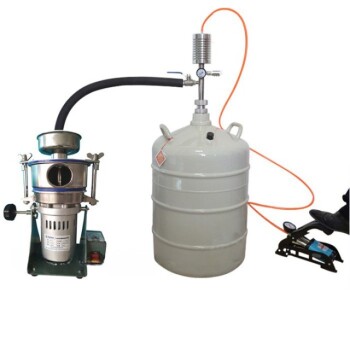
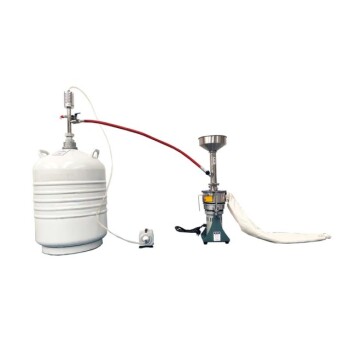
- lab cryogenic grinding use liquid-nitrogen for pulverizing plastic raw materials and heat sensitive materials
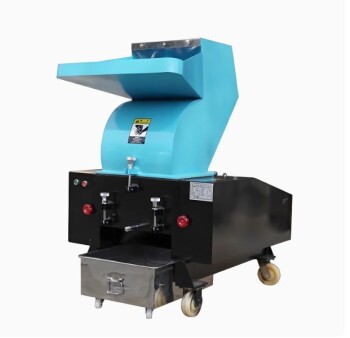
- Powerful Plastic Crusher Machine
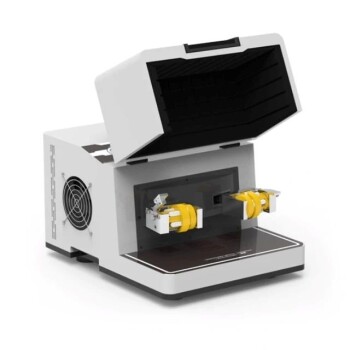
- Small Cryogenic Grinder Cryomill Cryogrinder with Liquid Nitrogen for Laboratory Use
- Laboratory Hybrid Tissue Grinding Mill
- Laboratory High Throughput Tissue Grinding Mill Grinder
People Also Ask
- What are the advantages of using a cryogenic grinder? Achieve Nanoscale Precision for All-Solid-State Battery Cathodes
- Why is a cryogenic grinder required for cured alkyd resin HRMAS NMR? Ensure Structural Integrity & Sample Precision
- What is the role of a cryogenic grinder in PET recycling? Transform Waste into High-Reactive Micron Powders
- What is cool grinding technology? Unlock Efficient Milling for Heat-Sensitive Materials
- What are cryogenic ground spices? Unlock Maximum Flavor with Advanced Grinding Technology