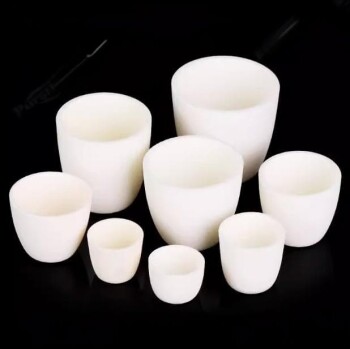
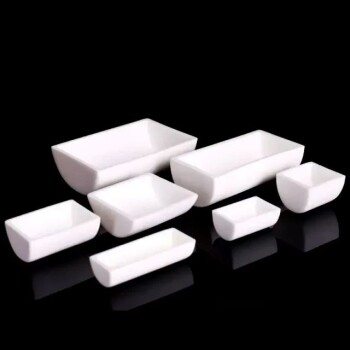
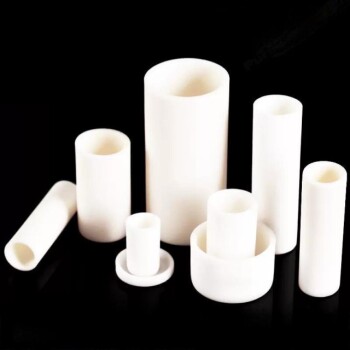
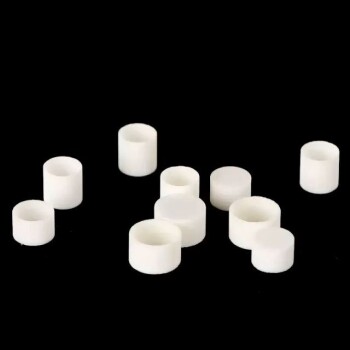
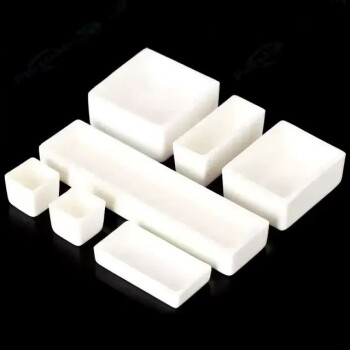
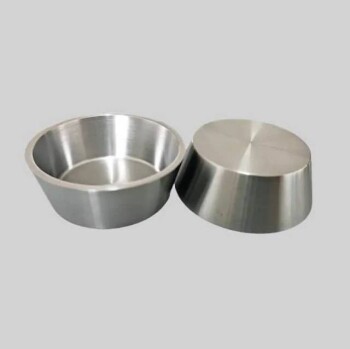
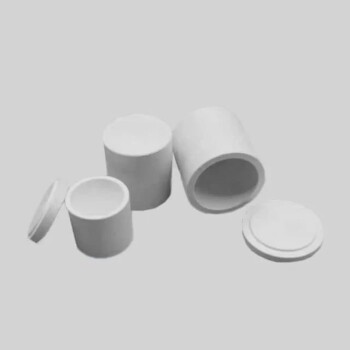
Alumina crucibles are the preferred containment vessel for tungsten diffusion coating because of their exceptional chemical inertness and thermal stability. When subjecting diamond and tungsten powders to vacuum annealing at 900°C, the crucible acts as a neutral barrier. It ensures the reaction occurs exclusively between the coating agents and the substrate, without introducing contaminants or structural failure from the container itself.
Success in diffusion coating relies on eliminating variables. Alumina crucibles provide a chemically inert environment that preserves the purity of the tungsten-diamond interaction, ensuring that the interfacial reactions remain predictable and controllable even at extreme temperatures.
The Critical Role of Container Material Selection
Achieving a high-quality tungsten coating on diamond surfaces is a delicate process driven by precise environmental control. The choice of alumina is not arbitrary; it is an engineering decision based on specific performance characteristics.
Withstanding High-Temperature Vacuum Annealing
The diffusion coating process requires subjecting materials to a vacuum annealing environment at 900°C.
At this specific temperature, many standard materials would soften, warp, or degrade. Alumina (aluminum oxide) possesses excellent thermal stability, allowing it to maintain its structural integrity and shape throughout the heating cycle.
Preventing Chemical Contamination
The primary goal of the process is to facilitate a reaction between tungsten powder and the diamond surface.
A reactive crucible would compete for the reactants or leach impurities into the mixture. Alumina is selected for its chemical inertness, meaning it remains passive and does not chemically interact with the tungsten or diamond mixture.
Ensuring Reaction Control
Control over interfacial reactions is essential for coating uniformity and adhesion.
By removing the container as a chemical variable, engineers can ensure that the thermodynamics of the process are driven solely by the interaction between the tungsten and the diamond. This leads to a consistent, high-purity coating composition.
Common Pitfalls and Considerations
While alumina is the ideal choice for this specific application, understanding its limitations is vital for process reliability.
The Risk of Thermal Shock
Although alumina is stable at high temperatures, it is a ceramic material and can be susceptible to thermal shock. Rapid heating or cooling cycles outside of the controlled vacuum annealing process can cause the crucible to crack.
Importance of Material Purity
Not all alumina crucibles are created equal. To fully benefit from the chemical inertness described, the crucible itself must be of high purity. Low-grade alumina containing binders or impurities could potentially off-gas under vacuum at 900°C, compromising the very purity the material is meant to protect.
Making the Right Choice for Your Goal
To maximize the effectiveness of your diffusion coating process, align your material handling with your specific technical objectives.
- If your primary focus is Coating Purity: Ensure you utilize high-grade alumina crucibles to prevent any chemical leaching or side reactions with the tungsten-diamond mixture.
- If your primary focus is Process Control: Rely on alumina's thermal stability to maintain a consistent reaction volume and geometry during the 900°C vacuum annealing phase.
By leveraging the inert properties of alumina, you transform the containment vessel from a potential liability into a guarantee of process integrity.
Summary Table:
| Feature | Benefit in Tungsten-Diamond Coating |
|---|---|
| Thermal Stability | Maintains structural integrity at 900°C vacuum annealing. |
| Chemical Inertness | Prevents contamination; ensures reaction occurs only between tungsten and diamond. |
| High Purity | Minimizes off-gassing and leaching of impurities into the substrate. |
| Reaction Control | Eliminates variables for consistent, high-purity coating adhesion. |
Elevate Your Advanced Material Processing with KINTEK
Precision in diffusion coating starts with the right environment. At KINTEK, we specialize in providing high-purity alumina crucibles, ceramics, and high-temperature vacuum furnaces designed to meet the rigorous demands of diamond coating and metallurgy.
Whether you are refining your vacuum annealing process or require specialized crushing, milling, and sieving equipment for powder preparation, our comprehensive portfolio—from hydraulic presses to induction melting systems—ensures your lab achieves repeatable, high-quality results.
Ready to eliminate variables and enhance your coating purity? Contact our laboratory specialists today to find the perfect equipment and consumables for your specific research goals.
Related Products
- Arc-Shaped Alumina Ceramic Crucible High Temperature Resistant for Engineering Advanced Fine Ceramics
- Alumina Al2O3 Ceramic Crucible Semicircle Boat with Lid for Engineering Advanced Fine Ceramics
- Engineering Advanced Fine Ceramics Alumina Al2O3 Crucible With Lid Cylindrical Laboratory Crucible
- Engineering Advanced Fine Ceramics Alumina Crucibles (Al2O3) for Thermal Analysis TGA DTA
- Engineering Advanced Fine Alumina Al2O3 Ceramic Crucible for Laboratory Muffle Furnace
People Also Ask
- Why Use Alumina Crucibles & Powder Burial for NaSICON? Ensure Phase Purity and Prevent Elemental Volatilization
- What is the primary purpose of using alumina crucibles for LLTO ceramics? Optimize Your High-Temperature Sintering
- Why are alumina crucibles and mother powder essential for LATP sintering? Optimize Your Solid Electrolyte Performance
- Why are high-purity alumina crucibles used for liquid lead corrosion experiments? Ensure Data Accuracy at 550°C
- Primary considerations for choosing alumina crucibles and quartz tubes in indium intercalation: Ensure Material Purity