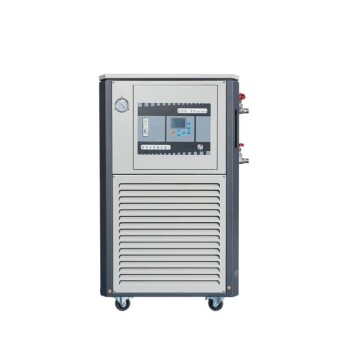
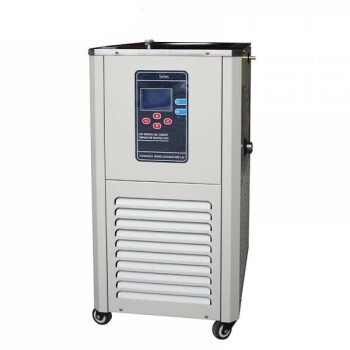
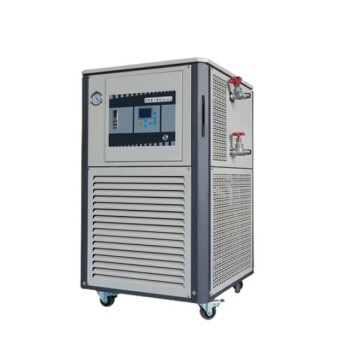
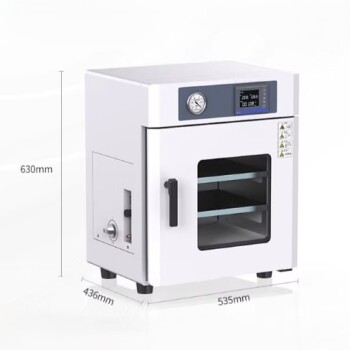
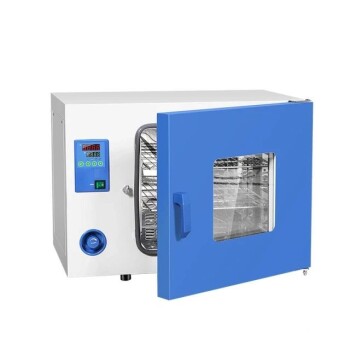
High-precision electric furnaces or constant temperature ovens are mandatory because PHBV (poly(3-hydroxybutyrate-co-3-hydroxyvalerate)) exhibits a notably narrow processing window and low thermal stability. Without the exact control provided by this equipment, it is nearly impossible to decouple useful structural changes—like annealing and crystallization—from material degradation.
Core Takeaway To make PHBV viable for industrial use, researchers must optimize its internal structure without destroying it. High-precision thermal control allows for specific adjustments to heating rates and isothermal times, which are critical for reducing brittleness and expanding the material's usable temperature range.
The Critical Constraints of PHBV
Navigating a Narrow Processing Window
PHBV is challenging to work with because the temperature range in which it can be processed is very small.
The gap between the temperature required to melt the polymer for shaping and the temperature at which it begins to degrade is narrow.
Managing Low Thermal Stability
Standard heating equipment often fluctuates, creating temperature spikes that exceed this delicate threshold.
High-precision furnaces eliminate these fluctuations, ensuring the material remains within the safe zone where modification—rather than destruction—occurs.
The Role of Precision in Thermal Treatment
Providing a Constant Thermal Environment
To understand how PHBV behaves, researchers need to isolate variables.
A constant thermal environment ensures that observed changes in the material are due to the specific experimental parameters, not erratic equipment behavior.
Controlling Heating Rate and Isothermal Time
The rate at which PHBV is heated and the duration it is held at a specific temperature directly dictate its final properties.
Precise control over these two variables allows researchers to "tune" the annealing process.
Optimizing Material Performance
Tuning Crystallization Behavior
The brittleness of PHBV is largely a result of how its crystal structure forms.
By accurately controlling the thermal history using high-precision ovens, researchers can manipulate crystallization behavior to produce a more desirable internal structure.
Reducing Material Brittleness
The ultimate goal of studying these kinetics is to improve the mechanical properties of the polymer.
Optimized annealing processes, achieved through precise thermal control, significantly reduce the inherent brittleness of PHBV.
Expanding the Industrial Processing Range
By understanding melting kinetics through controlled experiments, researchers can identify methods to widen the processing window.
This makes the material more robust and suitable for practical, large-scale industrial applications.
Understanding the Trade-offs
The Risk of Standard Equipment
Using standard, low-precision ovens introduces significant thermal gradients and fluctuations.
In the context of PHBV, this imprecision leads to inconsistent crystallization data and inadvertent thermal degradation, rendering research results unreliable.
Balancing Precision and Throughput
While high-precision furnaces provide the necessary control for characterization, they are often batch-process oriented and slower than industrial lines.
However, the insights gained here are the prerequisite for defining the parameters used in faster, less precise industrial machinery later.
Making the Right Choice for Your Goal
To leverage thermal treatment effectively in your PHBV research, match your specific objective to the equipment's capabilities:
- If your primary focus is fundamental characterization: Prioritize equipment that guarantees a constant thermal environment to accurately map melting kinetics and crystallization behavior.
- If your primary focus is material improvement: Use the precise control of heating rates and isothermal times to develop annealing protocols that specifically target and reduce material brittleness.
Precision in the lab is the only path to performance in the field.
Summary Table:
| Feature | Impact on PHBV Research | Benefit of High-Precision Equipment |
|---|---|---|
| Temperature Stability | Prevents degradation in narrow windows | Eliminates fluctuations and thermal spikes |
| Heating Rate Control | Dictates polymer crystallization behavior | Allows for precise "tuning" of material properties |
| Isothermal Accuracy | Critical for effective annealing processes | Ensures consistent and reliable structural changes |
| Variable Isolation | Identifies true material behavior kinetics | Provides a constant, repeatable thermal environment |
Elevate Your PHBV Research with KINTEK Precision
Don't let thermal instability compromise your material science breakthroughs. KINTEK specializes in high-performance laboratory equipment designed for the most demanding research environments. Whether you are mapping melting kinetics or optimizing crystallization, our range of high-temperature muffle and tube furnaces, along with precision constant temperature ovens, provides the exact thermal control necessary to master narrow processing windows.
From advanced CVD/PECVD systems to essential high-temperature reactors and consumables like ceramics and crucibles, KINTEK is your partner in industrializing biodegradable polymers.
Ready to reduce material brittleness and expand your processing range?
Contact KINTEK Today for a Specialized Consultation
References
- Rahul Dev Bairwan, H. P. S. Abdul Khalil. Recent Advances in Poly(3-Hydroxybutyrate-co-3-Hydroxyvalerate) Biocomposites in Sustainable Packaging Applications. DOI: 10.5185/amlett.2024.011739
This article is also based on technical information from Kintek Solution Knowledge Base .
Related Products
- High Temperature Constant Temperature Heating Circulator Water Bath Chiller Circulator for Reaction Bath
- 5L Heating Chilling Circulator Cooling Water Bath Circulator for High and Low Temperature Constant Temperature Reaction
- 10L Heating Chilling Circulator Cooling Water Bath Circulator for High and Low Temperature Constant Temperature Reaction
- 10L Chilling Circulator Cooling Water Bath Low Temperature Constant Temperature Reaction Bath
- 50L Heating Chilling Circulator Cooling Water Bath Circulator for High and Low Temperature Constant Temperature Reaction
People Also Ask
- What is the necessity of a circulating water bath in chlorate production? Optimize Yield & Purity with Precision
- How does a constant temperature circulator support the leaching reaction of gold scrap? Optimize Gold Recovery Results
- How do constant temperature circulators impact weight-loss immersion tests? Ensure Precision in Corrosion Analysis
- Why is a constant temperature water bath used for precursor storage in CVD? Achieve Stable Nanocrystalline SiC Deposition
- Why is a high-precision constant temperature water bath necessary for anaerobic digestion? Ensure Success at 37±0.02°C