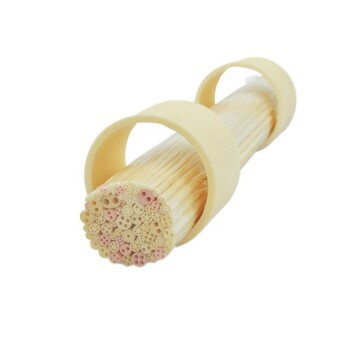
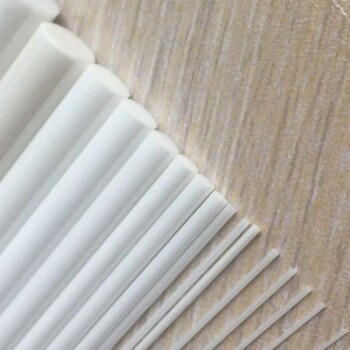
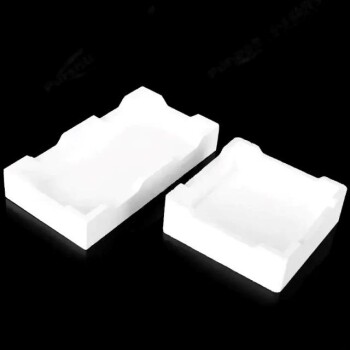
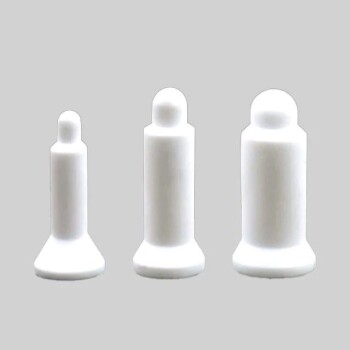
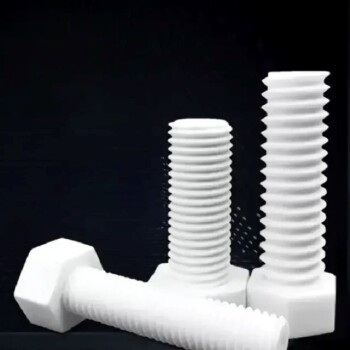
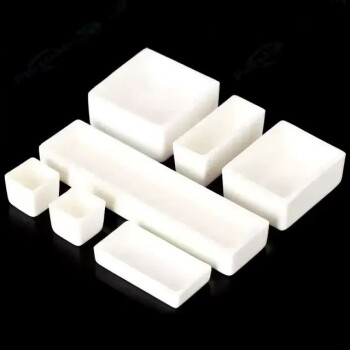
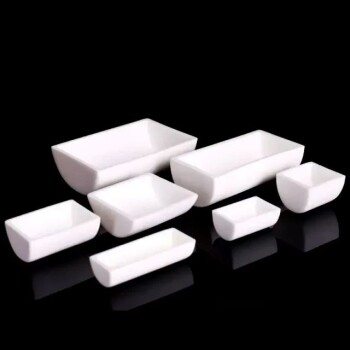
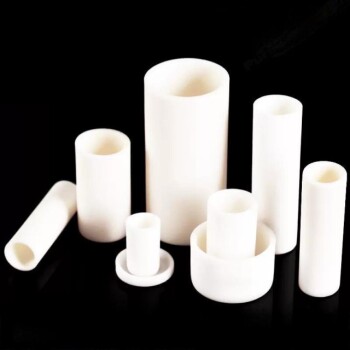
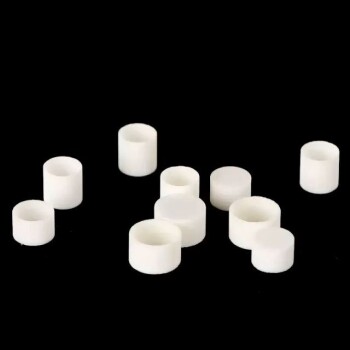
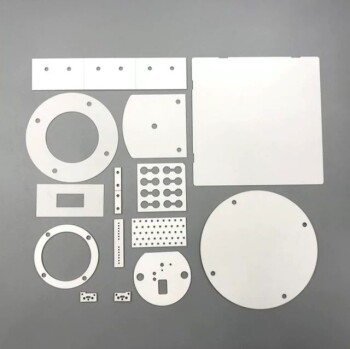
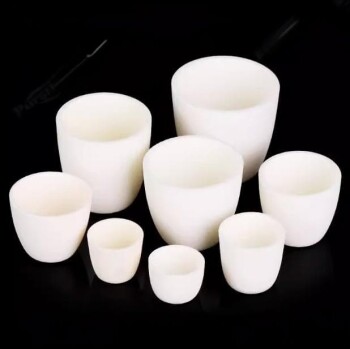
High-purity alumina ($Al_2O_3$) hangers are mandatory for these tests due to their exceptional chemical inertness and thermal stability at temperatures exceeding 1000°C. They serve as a stable suspension mechanism that neither physically reacts with the Fe-16Cr alloy nor introduces variables into the weight measurement process.
Core Takeaway: Accurate oxidation kinetics rely on isolating the sample's behavior. High-purity alumina ensures that any weight change recorded by the electronic balance is exclusively attributed to the alloy's oxidation, preserving data integrity.
Preserving Data Integrity at High Temperatures
To understand the necessity of alumina hangers, one must look at the specific demands of measuring oxidation kinetics. The goal is to track how the Fe-16Cr alloy reacts with oxygen over time, typically measured by weight gain.
The Criticality of Mass Constancy
In kinetic testing, an electronic balance monitors real-time weight changes.
High-purity alumina maintains a constant mass even under extreme heat.
Because the hanger itself does not gain or lose weight, researchers can be certain that any fluctuation recorded by the balance is derived solely from the oxidation reaction of the alloy sample.
Ensuring Chemical Inertness
At temperatures exceeding 1000°C, materials that are stable at room temperature often become reactive.
Alumina possesses superior chemical inertness.
This property allows the hanger to stably suspend the Fe-16Cr sample without reacting with the base material. Preventing this reaction is vital, as any interaction between the hanger and the alloy would alter the sample's chemistry and invalidate the test results.
Understanding the Trade-offs
While high-purity alumina is the standard, it is important to understand the risks associated with deviating from this material choice.
The Risk of Contamination
The requirement is specifically for high-purity alumina, not generic ceramics.
Impurities in lower-grade materials may degrade or react at 1000°C.
Using a hanger with insufficient purity compromises the thermal stability required to keep the sample safely suspended and chemically isolated.
Making the Right Choice for Your Experiment
Selecting the correct suspension system is not a minor detail; it is a prerequisite for valid data.
- If your primary focus is precise kinetic data: Prioritize high-purity alumina to ensure that the electronic balance records only the weight gain of the oxidizing alloy.
- If your primary focus is high-temperature durability: Rely on alumina’s thermal stability to prevent mechanical failure or reaction with the sample at temperatures above 1000°C.
Using high-purity alumina is the most effective way to eliminate environmental variables and focus entirely on the material performance of your alloy.
Summary Table:
| Feature | Requirement for Kinetic Testing | Advantage of High-Purity Alumina |
|---|---|---|
| Thermal Stability | Must withstand >1000°C without deformation | Exceptional stability and mechanical strength at high heat |
| Chemical Reactivity | Zero interaction with Fe-16Cr alloy | High inertness prevents sample contamination or bonding |
| Mass Constancy | No weight gain/loss during heating | Constant mass ensures balance readings reflect only sample oxidation |
| Purity Level | Absence of volatile impurities | Prevents secondary reactions that invalidate kinetic data |
Elevate Your Material Research with KINTEK Precision
Achieving accurate oxidation kinetics data requires more than just a balance; it requires the highest quality consumables that won't compromise your results. KINTEK specializes in providing premium laboratory equipment and high-purity consumables designed for the most demanding thermal environments.
From high-purity alumina crucibles and hangers to advanced high-temperature furnaces (muffle, vacuum, and CVD), our solutions are engineered for researchers who cannot afford variables in their data. Whether you are conducting Fe-16Cr alloy studies or complex battery research, KINTEK offers the crushing, milling, and high-pressure systems you need to succeed.
Ready to ensure the integrity of your next high-temperature experiment? Contact KINTEK Today to Consult with Our Specialists
References
- Zhiyuan Chen, Kuo‐Chih Chou. Thermodynamic Analysis of the Corrosion of Fe-16Cr Alloy Interconnect of Solid Oxide Fuel Cell under Various Atmospheres. DOI: 10.1515/htmp-2013-0104
This article is also based on technical information from Kintek Solution Knowledge Base .
Related Products
- High Temperature Aluminum Oxide (Al2O3) Protective Tube for Engineering Advanced Fine Ceramics
- High Temperature Alumina (Al2O3) Furnace Tube for Engineering Advanced Fine Ceramics
- High Temperature Wear-Resistant Alumina Al2O3 Plate for Engineering Advanced Fine Ceramics
- Engineering Advanced Fine Alumina Al2O3 Ceramic Rod Insulated for Industrial Applications
- Advanced Engineering Fine Ceramics Alumina Ceramic Saggar for Fine Corundum
People Also Ask
- What is the process of alumina tube manufacturing? From Powder to High-Performance Ceramic
- What is the heating rate for alumina tubes? A Variable Schedule to Prevent Thermal Shock
- How do alumina ceramic tubes address technical challenges in electrochemical devices? Ensure Peak Signal Integrity.
- What is the working temperature of alumina tube? Achieve Safe & Reliable High-Temp Processing
- What is the maximum temperature for alumina tube? Unlock Its Full Potential with High Purity