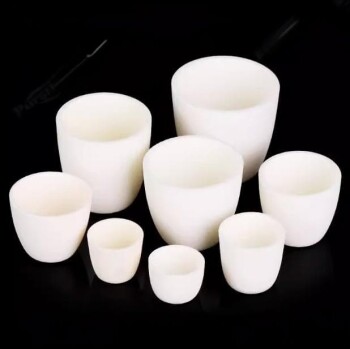
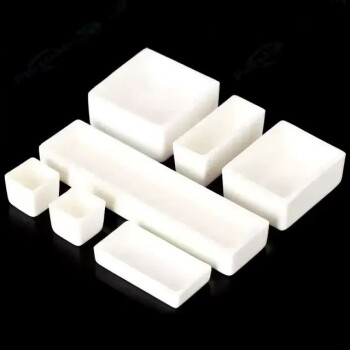
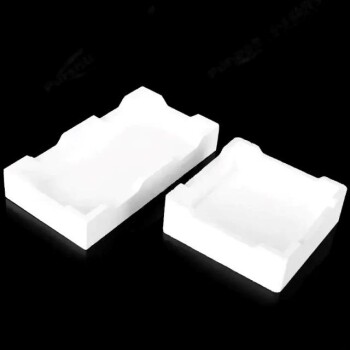
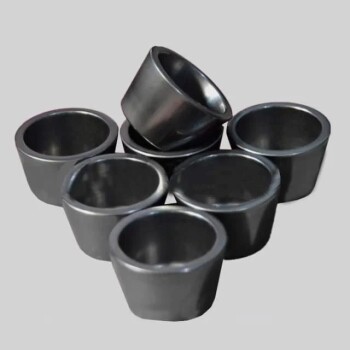
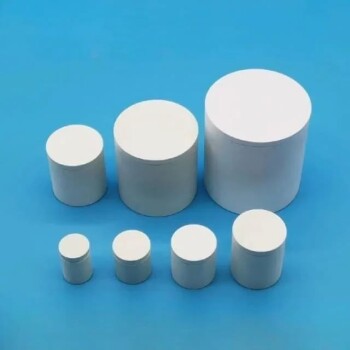
High-purity alumina ceramic crucibles are the industry standard for Cadmium Selenide (CdSe) synthesis because they provide a chemically inert environment capable of withstanding the extreme 1100°C temperatures required for melting. These crucibles resist chemical erosion from the molten glass matrix and prevent the migration of impurity elements into the melt. By maintaining this sterile environment, the alumina ensures that the resulting CdSe nanocrystals achieve the precise purity and controllable chemical composition necessary for successful nucleation.
High-purity alumina acts as a definitive barrier between the crucible material and the molten sample, ensuring that thermal stability and chemical inertness prevent contamination during high-temperature reactions. This technical isolation is critical for maintaining the phase purity and performance characteristics of advanced materials like CdSe nanocrystals.
Maintaining Structural Integrity at Extreme Temperatures
Resisting Thermal Degradation at 1100°C
The melting process for CdSe nanocrystals requires temperatures reaching 1100°C, a point where many containment materials lose structural integrity. High-purity alumina is selected for its exceptional high-temperature resistance, allowing it to remain stable without softening or deforming under intense heat.
Chemical Stability Against Molten Glass
During synthesis, the CdSe is often hosted within a molten glass matrix which can be highly corrosive to inferior materials. Alumina crucibles effectively resist chemical erosion, ensuring that the container does not break down or react with the glass during the melting phase.
Prevention of Elemental Diffusion
At high temperatures, atoms from a container can "migrate" or diffuse into the substance being heated. High-purity alumina prevents this elemental diffusion, protecting the melt from the infiltration of unwanted foreign particles that could alter the nanocrystals' properties.
Ensuring Precise Nanocrystal Nucleation
Protecting the Purity of the Nucleation Phase
The nucleation of CdSe nanocrystals is a delicate process that is highly sensitive to the chemical environment. By preventing the infiltration of impurity elements, alumina crucibles ensure that the nucleation phase occurs in a clean environment, leading to consistent crystal growth.
Controllable Chemical Composition
To achieve specific optical or electronic properties, the composition of CdSe must be strictly controlled. Alumina’s chemical inertness ensures that no outside reagents are introduced, allowing researchers to maintain the exact stoichiometric ratios required for the project.
Consistency Across High-Temperature Cycles
Because alumina does not react with the precursors—such as cadmium carbonate—it facilitates uniform heating and predictable reactions. This consistency is vital for scaling production and ensuring that every batch of nanocrystals meets the same performance standards.
Understanding the Trade-offs
Sensitivity to Thermal Shock
While alumina is highly resistant to heat, it is susceptible to thermal shock if the temperature changes too rapidly. Users must implement controlled heating and cooling ramps to prevent the ceramic from cracking during the 1100°C cycle.
Porosity and Residue Management
Even high-purity alumina can possess micro-porosity that may trap trace amounts of material from previous melts. For the highest precision work, crucibles often require stringent cleaning protocols or must be dedicated to a single material type to avoid cross-contamination.
Cost Versus Material Life
High-purity alumina is more expensive than lower-grade ceramics or glass alternatives. However, the investment is justified by the prevention of failed batches and the assurance that the dielectric loss or thermoelectric performance of the final material is not compromised by impurities.
How to Apply This to Your Project
When selecting a containment solution for high-temperature semiconductor or ceramic synthesis, your choice should be dictated by the sensitivity of your final product.
- If your primary focus is absolute phase purity: Utilize high-purity alumina (99%+) to eliminate the risk of elemental migration and ensure the accuracy of your chemical composition.
- If your primary focus is corrosive melt resistance: Opt for alumina over quartz or lower-grade ceramics to prevent the crucible from reacting with molten glass or chloride salts.
- If your primary focus is long-term thermal cycling: Ensure you utilize slow ramp rates to protect the alumina from thermal shock, thereby extending the life of the vessel.
By prioritizing chemical inertness and thermal stability, you guarantee that your experimental results are a reflection of your materials rather than a consequence of container contamination.
Summary Table:
| Feature | Advantage for CdSe Synthesis | Technical Impact |
|---|---|---|
| Thermal Resistance | Stable at 1100°C | No softening or deformation during melting |
| Chemical Inertness | Resists Molten Glass Erosion | Prevents container reaction with the host matrix |
| Diffusion Barrier | Prevents Elemental Migration | Protects nanocrystal nucleation from impurities |
| High-Purity (99%+) | Controllable Composition | Ensures precise stoichiometric ratios for optical properties |
Elevate Your Material Synthesis with KINTEK Precision
Achieving the perfect nucleation for CdSe nanocrystals requires more than just high temperatures—it demands an uncompromising sterile environment. KINTEK specializes in high-performance laboratory equipment designed for advanced material science. Whether you are scaling production or conducting delicate research, our high-purity alumina and ceramic crucibles provide the thermal stability and chemical inertness your project needs.
Our extensive portfolio supports your entire workflow, from high-temperature muffle and vacuum furnaces to crushing systems, hydraulic presses, and high-pressure reactors. We help researchers and industrial labs maintain precise chemical compositions and avoid costly batch failures.
Ready to optimize your high-temperature reactions?
Contact KINTEK today to discuss our range of consumables and equipment tailored for your specific application requirements.
References
- Ç. Allahverdi. Slow Growth of CdSe Nanocrystals in Glass and Their Refractive Index Change. DOI: 10.26577/ijmph.2023.v14.i1.010
This article is also based on technical information from Kintek Solution Knowledge Base .
Related Products
- Arc-Shaped Alumina Ceramic Crucible High Temperature Resistant for Engineering Advanced Fine Ceramics
- Engineering Advanced Fine Alumina Al2O3 Ceramic Crucible for Laboratory Muffle Furnace
- Alumina Al2O3 Ceramic Crucible Semicircle Boat with Lid for Engineering Advanced Fine Ceramics
- Engineering Advanced Fine Ceramics Alumina Al2O3 Crucible With Lid Cylindrical Laboratory Crucible
- Engineering Advanced Fine Ceramics Alumina Crucibles (Al2O3) for Thermal Analysis TGA DTA
People Also Ask
- Why Use Alumina Crucibles & Powder Burial for NaSICON? Ensure Phase Purity and Prevent Elemental Volatilization
- What is the primary purpose of using alumina crucibles for LLTO ceramics? Optimize Your High-Temperature Sintering
- Why are alumina crucibles and mother powder essential for LATP sintering? Optimize Your Solid Electrolyte Performance
- Why are high-purity alumina crucibles used for liquid lead corrosion experiments? Ensure Data Accuracy at 550°C
- Primary considerations for choosing alumina crucibles and quartz tubes in indium intercalation: Ensure Material Purity