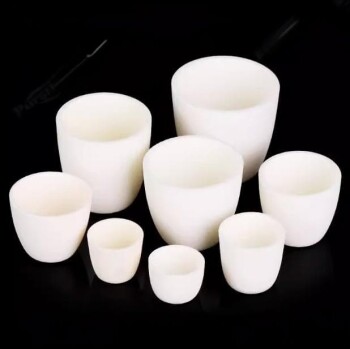
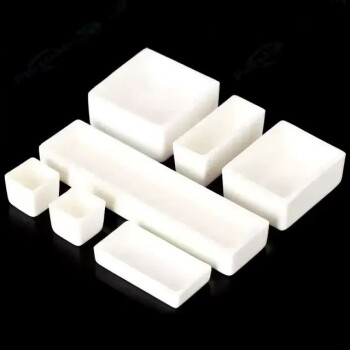
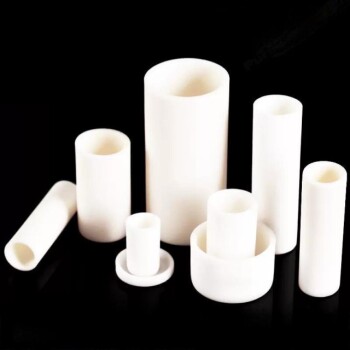
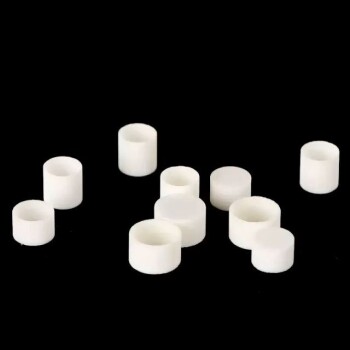
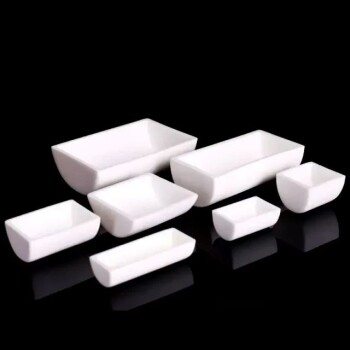
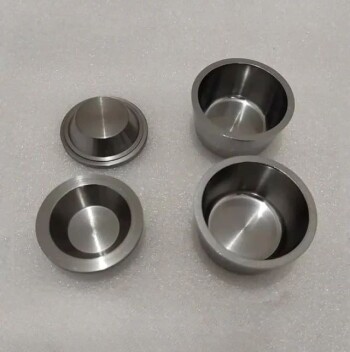
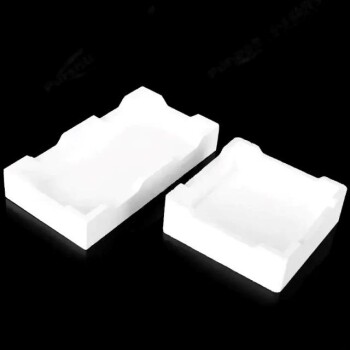
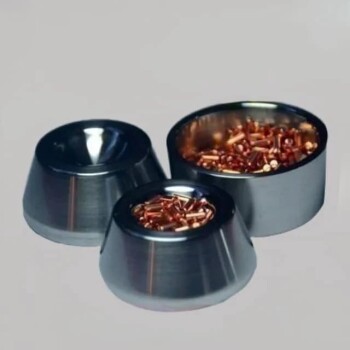
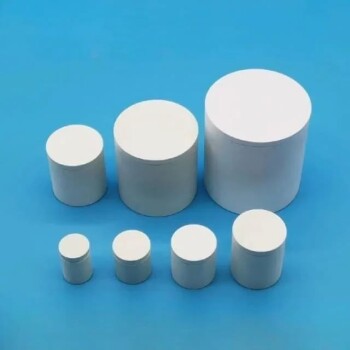
High-purity alumina crucibles are the preferred containment solution for molten FLiNaK environments due to their exceptional chemical inertness and thermal stability. Specifically, these crucibles withstand the aggressive corrosive nature of fluoride salts at temperatures reaching 650°C. By resisting erosion, they prevent container components from leaching into the melt, which is essential for ensuring the accuracy of electrochemical analyses and corrosion rate tests.
Core Insight: The value of high-purity alumina lies in its ability to act as a neutral variable in volatile experiments. It withstands extreme heat and corrosive fluoride attacks without degrading, ensuring that any impurities found in your results come from the experiment itself, not the vessel holding it.
The Critical Role of Chemical Inertness
Combating Salt Erosion
Molten fluoride salts like FLiNaK are highly corrosive agents that aggressively attack standard containment materials.
High-purity alumina is utilized because it exhibits superior resistance to this specific type of salt erosion. This resistance is vital for maintaining the physical shape and containment capabilities of the crucible during prolonged exposure to the melt.
Preventing Elemental Leaching
The primary risk in molten salt experiments is the contamination of the electrolyte by the container itself.
If a crucible degrades, it leaches material components into the FLiNaK salt, altering its chemical composition. Alumina’s inert nature prevents this interaction, ensuring high purity in the melt.
Ensuring Experimental Accuracy
For researchers conducting electrochemical analyses or corrosion rate tests, baseline purity is non-negotiable.
Because alumina prevents leaching, it guarantees that the data collected reflects the true behavior of the materials being tested, rather than artifacts caused by a dissolving container.
Thermal Stability and Structural Integrity
Performance at Operating Temperatures
FLiNaK experiments often require stable environments at temperatures around 650°C.
Alumina crucibles maintain their structural strength well beyond this point, ensuring safety and consistency during high-temperature operations. Supplementary data indicates that for other applications, alumina remains stable even up to 1000°C.
The Importance of High Density
High-purity alumina crucibles possess a high-density structure.
This physical property is critical because it prevents the molten salt from physically penetrating the crucible wall. Preventing penetration stops chemical erosion from occurring inside the vessel's microstructure, preserving its long-term integrity.
Resilience During Dehydration
Before a salt melt is established, the salt mixture must often be dehydrated to remove moisture contamination.
Alumina crucibles offer sufficient thermal shock resistance to withstand heating above 300°C for this dehydration process. This allows for the effective removal of water without introducing impurities, a common risk during the initial heating phases.
Operational Trade-offs
Refractoriness vs. Flexibility
While alumina offers high refractoriness (the ability to withstand heat without melting), it is a rigid ceramic material.
It is selected for its static stability and resistance to chemical attack rather than mechanical flexibility. The focus is on preventing the "penetration" of salts rather than withstanding mechanical deformation.
Making the Right Choice for Your Goal
When selecting containment for molten salts, align your choice with your specific experimental needs.
- If your primary focus is Electrochemical Accuracy: Choose high-purity alumina to prevent container ions from leaching into the FLiNaK and skewing your sensor data.
- If your primary focus is Salt Preparation: Rely on alumina’s thermal shock resistance to safely heat salts above 300°C for necessary dehydration steps.
- If your primary focus is Corrosion Testing: Utilize alumina to ensure that the only corrosion occurring is on your test sample, not the crucible walls.
High-purity alumina transforms the containment vessel from a potential liability into a reliable, invisible standard for high-temperature fluoride research.
Summary Table:
| Feature | High-Purity Alumina Benefit |
|---|---|
| Chemical Inertness | Prevents elemental leaching & ensures electrochemical accuracy |
| Corrosion Resistance | Withstands aggressive fluoride salt erosion at 650°C+ |
| Thermal Stability | Maintains structural integrity during salt dehydration & melting |
| High Density | Prevents salt penetration into the crucible microstructure |
| Refractoriness | High heat resistance for stable, long-term experimental use |
Elevate Your Molten Salt Research with KINTEK
Don't let container contamination compromise your electrochemical data or corrosion tests. KINTEK specializes in high-performance laboratory equipment and consumables, providing high-purity alumina crucibles and ceramics designed to withstand the most aggressive environments.
Our extensive portfolio supports every stage of your material science workflow, from high-temperature furnaces (muffle, vacuum, CVD) and crushing systems to high-pressure reactors and battery research tools.
Ready to ensure the accuracy of your next experiment? Contact KINTEK today for expert guidance and premium laboratory solutions!
References
- Kunjal Patel, Sundeep Mukherjee. Corrosion Behavior of Refractory High-Entropy Alloys in FLiNaK Molten Salts. DOI: 10.3390/met13030450
This article is also based on technical information from Kintek Solution Knowledge Base .
Related Products
- Arc-Shaped Alumina Ceramic Crucible High Temperature Resistant for Engineering Advanced Fine Ceramics
- High Purity Alumina Granulated Powder for Engineering Advanced Fine Ceramics
- High Purity Pure Graphite Crucible for Evaporation
- Engineering Advanced Fine Alumina Al2O3 Ceramic Crucible for Laboratory Muffle Furnace
- High Purity Pure Graphite Crucible for Electron Beam Evaporation
People Also Ask
- Why Use Alumina Crucibles & Powder Burial for NaSICON? Ensure Phase Purity and Prevent Elemental Volatilization
- What is the primary purpose of using alumina crucibles for LLTO ceramics? Optimize Your High-Temperature Sintering
- Why are alumina crucibles and mother powder essential for LATP sintering? Optimize Your Solid Electrolyte Performance
- Why are high-purity alumina crucibles used for liquid lead corrosion experiments? Ensure Data Accuracy at 550°C
- Primary considerations for choosing alumina crucibles and quartz tubes in indium intercalation: Ensure Material Purity