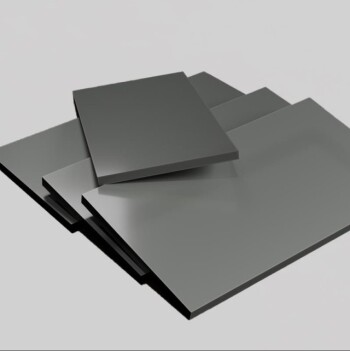
High-purity graphite disks are the industry standard for substrates in this process because they possess the unique ability to withstand the extreme environment of Low-Density Isotropic Pyrolytic Carbon (LDIP) deposition. Because the process involves temperatures exceeding 1550 °C, the substrate must offer exceptional thermal stability while physically matching the expansion behavior of the coating to ensure a permanent bond.
Core Takeaway The success of an LDIP coating depends heavily on minimizing mechanical stress between the coating and the substrate. Graphite is selected not just for its heat resistance, but because its thermal expansion coefficient matches the coating, preventing structural failure during the critical cooling phase.
The Critical Role of Thermal Stability
Withstanding Extreme Heat
The deposition environment for LDIP coatings is incredibly harsh. Substrates must maintain their structural integrity at temperatures that climb above 1550 °C.
High-purity graphite is one of the few materials capable of enduring this thermal load without degrading or deforming.
Chemical Compatibility
Adhesion is not solely a mechanical process; it is also chemical. Graphite substrates share similar chemical properties with the deposited pyrolytic carbon.
This similarity fosters a natural affinity between the base and the coating, creating a stronger fundamental interface than would be possible with chemically dissimilar materials.
Ensuring Structural Integrity
Matching Thermal Expansion Coefficients
The most significant challenge in high-temperature coatings is the cooling phase.
If the substrate and the coating contract at different rates, stress builds up at the bond line.
Graphite is chosen because it shares a similar thermal expansion coefficient with LDIP. This ensures that both the disk and the coating expand and contract in unison.
Enhancing Adhesion
Because the expansion behaviors are aligned, the mechanical bond remains undisturbed throughout the thermal cycle.
This synchronization significantly enhances the overall adhesion of the coating to the disk.
Preventing Common Failure Modes
Mitigating Delamination
The primary risk in coating dissimilar materials is delamination—where the coating peels away from the substrate.
By using graphite, you remove the thermal mismatch that drives this failure mechanism.
Avoiding Cracking
Internal stress caused by uneven cooling is a leading cause of coating fractures.
Graphite substrates minimize the risk of cracking during the cool-down period, ensuring the final product remains intact and uniform.
Making the Right Choice for Your Goal
Selecting a substrate is about ensuring the physical and thermal properties of your base material align with your coating process.
- If your primary focus is coating longevity: Prioritize a substrate with a thermal expansion coefficient that mirrors your coating to prevent stress fractures over time.
- If your primary focus is process safety: Ensure your substrate material is rated for stability at temperatures well above your maximum deposition point (in this case, >1550 °C).
By synchronizing the thermal and chemical characteristics of the graphite substrate with the LDIP coating, you ensure a durable, high-integrity bond that survives the manufacturing process.
Summary Table:
| Feature | High-Purity Graphite Benefit | Impact on LDIP Coating |
|---|---|---|
| Thermal Stability | Withstands temperatures >1550 °C | Maintains structural integrity during deposition |
| Expansion Coefficient | Matches LDIP thermal expansion | Prevents mechanical stress and coating delamination |
| Chemical Affinity | Similar to pyrolytic carbon | Enhances fundamental interface bonding and adhesion |
| Structural Safety | Resistance to thermal shock | Eliminates cracking during the critical cooling phase |
Elevate Your Material Research with KINTEK Precision
Achieving perfect deposition requires substrates and equipment that can withstand the most rigorous thermal environments. At KINTEK, we specialize in high-performance laboratory solutions, providing everything from high-purity graphite consumables and crucibles to advanced CVD and PECVD systems designed for precise carbon deposition.
Whether you are developing isotropic coatings or conducting high-temperature synthesis, our expert team is here to provide the reliable high-temperature furnaces, vacuum systems, and ceramics your lab needs to ensure structural integrity and coating longevity.
Ready to optimize your deposition process? Contact KINTEK today to discuss your project requirements and discover how our comprehensive portfolio of lab equipment and consumables can drive your research forward.
References
- Ruixuan Tan, Bo Liu. A new approach to fabricate superhydrophobic and antibacterial low density isotropic pyrocarbon by using catalyst free chemical vapor deposition. DOI: 10.1016/j.carbon.2019.01.041
This article is also based on technical information from Kintek Solution Knowledge Base .
Related Products
- High Purity Pure Graphite Crucible for Electron Beam Evaporation
- High Purity Pure Graphite Crucible for Evaporation
- Graphite Disc Rod and Sheet Electrode Electrochemical Graphite Electrode
- High Purity Alumina Granulated Powder for Engineering Advanced Fine Ceramics
- Carbon Graphite Plate Manufactured by Isostatic Pressing Method
People Also Ask
- What is the container that holds the metal source material called in e-beam evaporation? Ensure Purity and Quality in Your Thin-Film Deposition
- What role do high-purity graphite crucibles play in molten salt corrosion research? Ensure Reactor-Grade Precision
- Why is a high-purity graphite crucible ideal for nitrogen-doped graphene at 1500 °C? Maximize Purity and Stability
- What dual roles do high-purity graphite crucibles play? Expert Insights into Fluoride Salt Testing
- What role does a high-purity graphite crucible play in CaO-MgO-Al2O3-SiO2 system equilibrium experiments? Maximize Accuracy