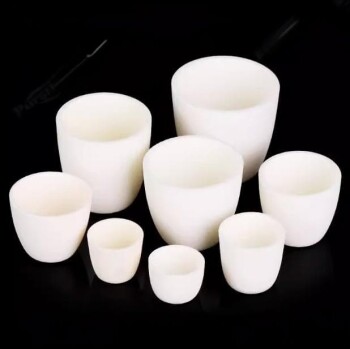
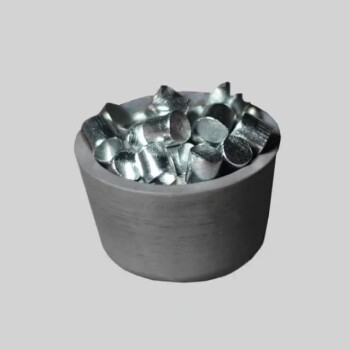
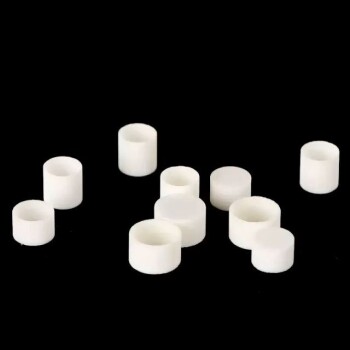
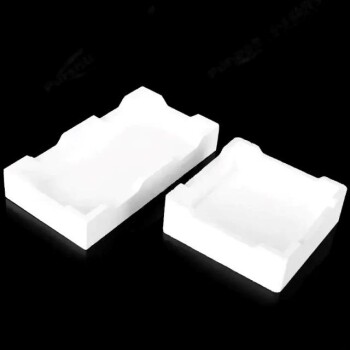
High-temperature crucibles, such as quartz or alumina, are essential protective barriers required to maintain chemical purity during the synthesis of $Li_xScCl_{3+x}$ solid-state electrolytes. Their primary function is to serve as chemically inert vessels that physically contain the molten LiCl and ScCl₃ precursors, preventing the aggressive chloride melt from reacting with the furnace chamber or absorbing contaminants that would ruin the material's conductivity.
Core Takeaway The selection of a proper crucible is not just about holding materials; it is a strict requirement for preserving the precise stoichiometric ratio of the reactants. Without this inert containment, side reactions would alter the chemical composition, preventing the formation of the specific cubic close-packed (ccp) structure required for high ionic conductivity.
The Engineering Behind the Requirement
To understand why these specific crucibles are necessary, we must look beyond the simple need for a container and examine the chemistry of the co-melting process.
Ensuring Chemical Inertness
The synthesis of halide electrolytes involves heating chloride precursors (LiCl and ScCl₃) to significant temperatures.
Chloride melts are chemically aggressive. If they come into contact with the furnace lining or improper containment materials, they will initiate side reactions.
Quartz and alumina crucibles are selected because they are chemically inert relative to these specific chloride precursors. They prevent the introduction of foreign elements that would act as impurities in the final electrolyte.
Facilitating the Co-Melting Strategy
The synthesis relies on a "co-melting" strategy, utilizing the specific eutectic characteristics of the precursors.
This process requires a precisely controlled thermal environment. The crucible must withstand the specific melting temperatures without softening, cracking, or degrading.
By maintaining structural integrity under heat, the crucible ensures the mixture remains homogenous and fully contained throughout the thermal cycle.
Impact on Electrochemical Performance
The choice of crucible directly dictates the quality of the final solid-state battery material.
Preserving Stoichiometry
Solid-state electrolytes rely on an exact ratio of Lithium (Li) to Scandium (Sc) to function correctly.
If the crucible allows the melt to leak or reacts with the precursors, the stoichiometric ratio shifts.
A deviation in this ratio leads to the formation of secondary phases, which act as insulators and block the movement of lithium ions.
Enabling Crystal Structure Formation
High ionic conductivity in $Li_xScCl_{3+x}$ is dependent on achieving a specific anion arrangement.
The process aims to form a cubic close-packed (ccp) anion sublattice structure.
This structure can only form if the purity and composition are maintained exactly as intended by the inert crucible environment.
Understanding the Trade-offs
While quartz and alumina are standard for chlorides and oxides, one must exercise caution when applying these principles to other solid-state electrolyte chemistries.
Reactivity with Different Chemistries
Crucibles are not universally interchangeable. A vessel suitable for chlorides may be disastrous for sulfides.
Sulfide electrolytes exhibit strong chemical activity at high temperatures and will react aggressively with oxide-based ceramics like alumina.
For sulfide materials, high-purity graphite crucibles are required due to their superior chemical inertia against sulfur compounds, illustrating the need to match the crucible material to the specific chemical aggression of the electrolyte.
Thermal Shock Risks
Ceramic crucibles (alumina/quartz) offer excellent chemical stability but can be brittle.
They possess specific thermal shock limits. Rapid heating or cooling outside of their tolerance range can cause the crucible to crack, resulting in the loss of the melt and damage to the furnace.
Making the Right Choice for Your Goal
Selecting the correct crucible is a critical variable in solid-state synthesis.
- If your primary focus is synthesizing Halide Electrolytes (like $Li_xScCl_{3+x}$): Prioritize quartz or alumina to ensure inertness against chloride melts and to preserve the stoichiometric ratio required for the ccp structure.
- If your primary focus is synthesizing Sulfide Electrolytes: avoid oxide-based ceramics entirely and use high-purity graphite to prevent severe interface reactions and contamination.
- If your primary focus is general High-Temperature Sintering: Ensure your chosen crucible has high thermal shock resistance to prevent containment failure during rapid temperature ramps.
Ultimately, the crucible is not passive hardware; it is an active component in defining the purity, phase stability, and ionic conductivity of your final material.
Summary Table:
| Feature | Quartz/Alumina Crucibles | Graphite Crucibles |
|---|---|---|
| Primary Use | Halide Electrolytes (Chlorides) | Sulfide Electrolytes |
| Chemical Role | Inert to chloride melts | Resistant to sulfur activity |
| Key Benefit | Preserves Li:Sc stoichiometric ratio | Prevents aggressive interface reactions |
| Structural Goal | Enables cubic close-packed (ccp) structure | Maintains purity of sulfide phases |
| Constraint | Brittle; sensitive to thermal shock | Not suitable for oxidizing atmospheres |
Elevate Your Materials Synthesis with KINTEK Precision
Don't let crucible contamination compromise your solid-state electrolyte performance. KINTEK specializes in high-performance laboratory equipment and consumables designed for the most demanding research environments.
Whether you are synthesizing halide electrolytes in our alumina or quartz crucibles, or developing sulfide-based batteries requiring high-purity graphite, we provide the tools necessary to maintain strict stoichiometry and high ionic conductivity. Our comprehensive range includes:
- High-Temperature Furnaces: Muffle, tube, vacuum, and CVD systems for precise thermal control.
- Specialized Crucibles & Ceramics: High-purity alumina, quartz, and PTFE products.
- Sample Preparation: Crushing, milling, and hydraulic pellet presses for consistent results.
- Battery Research Tools: Electrolytic cells, electrodes, and cooling solutions like ULT freezers.
Ready to achieve superior phase stability in your samples? Contact our technical experts today to find the perfect containment and heating solution for your lab.
Related Products
- Arc-Shaped Alumina Ceramic Crucible High Temperature Resistant for Engineering Advanced Fine Ceramics
- High Purity Pure Graphite Crucible for Evaporation
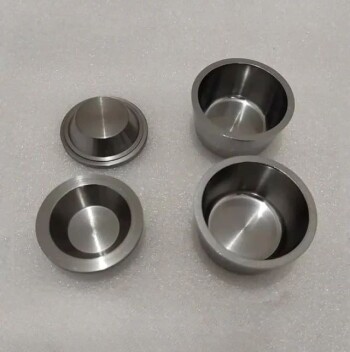
- Electron Beam Evaporation Coating Tungsten Crucible and Molybdenum Crucible for High Temperature Applications
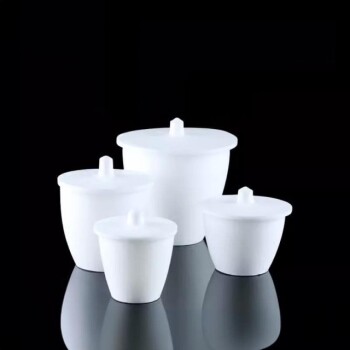
- Custom Machined and Molded PTFE Teflon Parts Manufacturer with PTFE Crucible and Lid
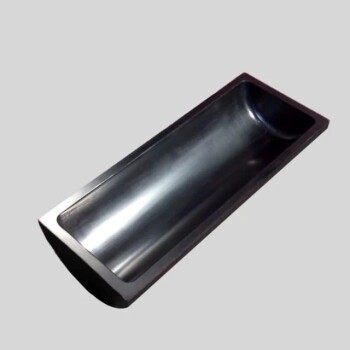
- Carbon Graphite Boat -Laboratory Tube Furnace with Cover
People Also Ask
- Why Use Alumina Crucibles & Powder Burial for NaSICON? Ensure Phase Purity and Prevent Elemental Volatilization
- What is the primary purpose of using alumina crucibles for LLTO ceramics? Optimize Your High-Temperature Sintering
- Why are alumina crucibles and mother powder essential for LATP sintering? Optimize Your Solid Electrolyte Performance
- Why are high-purity alumina crucibles used for liquid lead corrosion experiments? Ensure Data Accuracy at 550°C
- Primary considerations for choosing alumina crucibles and quartz tubes in indium intercalation: Ensure Material Purity