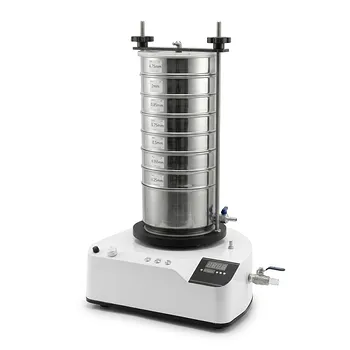
Industrial crushing and sieving systems are fundamental to establishing the structural integrity and chemical efficiency of activated carbon-based catalysts. These systems are required to process raw biomass materials into fine particles with uniform grain sizes, a necessary step to maximize the total surface area available for reaction. This physical uniformity ensures that subsequent heat transfer and chemical reagent penetration occur evenly, directly dictating the porosity and quality of the final activated carbon.
Core Takeaway: The precision of particle size control governs the chemical potential of the catalyst. By maximizing specific surface area and ensuring particle uniformity, these systems eliminate heat transfer inconsistencies and diffusion limitations, allowing the catalyst to achieve its full porosity and kinetic performance.
Optimizing the Precursor Material
To create a high-performance activated carbon catalyst, you must start with a structurally optimized precursor. This stage relies heavily on the mechanical processing of raw biomass.
Creating Uniform Surface Area
Raw biomass materials, such as coconut shells or wood, possess irregular geometries that are unsuitable for precise chemical processing.
Crushing and sieving convert these raw inputs into fine particles with uniform grain sizes. This mechanical reduction significantly increases the total surface area of the material, which is the foundational requirement for high-reactivity catalysis.
Ensuring Consistent Heat Transfer
The uniformity of the particle size plays a critical role during the carbonization and activation stages.
Uniform particles allow heat to penetrate the material rapidly and evenly. This consistency prevents "hot spots" or incomplete reactions, ensuring that the entire batch of material undergoes the same thermal history.
Facilitating Reagent Penetration
For chemical activation to be effective, activating agents must reach the core of the carbon structure.
Precise sieving ensures that particles are small enough to allow thorough penetration of chemical reagents. This deep penetration is what ultimately enhances the porosity of the final activated carbon, creating the mesoporous structures necessary for catalysis.
Enhancing Catalytic Kinetics
Once the activated carbon is formed (or when processing calcined catalysts), size control shifts from establishing structure to optimizing performance.
Eliminating Diffusion Limitations
In heterogeneous catalysis, reaction speed is often limited by how fast reactants can travel into the catalyst particle.
Processing catalysts to a precise range, such as 0.15 to 0.25 mm, is critical to eliminate these diffusion limitations. This ensures that reactants can efficiently navigate the mesoporous structure to reach active sites.
Accurately Assessing Kinetic Performance
To understand how a catalyst truly performs, you must remove physical barriers to the reaction.
By ensuring reactants can reach internal active sites without obstruction, engineers can obtain an accurate assessment of the catalyst's intrinsic kinetic performance. This data is vital for simulating industrial-scale reactions reliably.
Maximizing Active Site Density
Reducing materials to the micrometer range (e.g., 50 nm to 5 micrometers) further exposes the material's internal structure.
This drastic increase in specific surface area provides a significantly higher number of active sites for the catalytic reaction. This is particularly important for high-purity powder particles used in advanced chemical synthesis.
Understanding the Trade-offs
While size reduction is essential, it introduces specific risks that must be managed to maintain catalyst integrity.
Risk of Impurity Contamination
The mechanical force required to crush hard materials can degrade the crushing equipment itself.
High-quality, professional systems are required to ensure the resulting powder remains free from impurity contamination. Introducing metal shards or foreign dust during crushing can alter the stoichiometric ratio of the compound and poison the catalyst.
Balancing Size and Handling
There is a practical limit to how fine a material should be crushed.
While finer particles offer better kinetics, excessive pulverization can create handling difficulties or pressure drop issues in packed bed reactors. The goal is to hit the precise "Goldilocks" zone—small enough for efficiency, but large enough for stable processing.
Making the Right Choice for Your Goal
The configuration of your crushing and sieving system depends heavily on which stage of the catalyst lifecycle you are addressing.
- If your primary focus is Activated Carbon Production: Prioritize systems that guarantee uniform grain size to maximize reagent penetration and porosity during the activation phase.
- If your primary focus is Kinetic Testing: Target systems capable of achieving precise particle ranges (0.15–0.25 mm) to eliminate diffusion limitations and isolate intrinsic reaction data.
- If your primary focus is High-Purity Synthesis: Ensure your equipment uses wear-resistant components to prevent impurity contamination while reducing particles to the micrometer range.
Precise physical pretreatment is not merely a handling step; it is the control variable that unlocks the chemical potential of your catalyst.
Summary Table:
| Feature | Impact on Catalyst Quality | Key Benefit |
|---|---|---|
| Particle Uniformity | Ensures even heat transfer & reagent penetration | Consistent porosity and structure |
| Size Reduction | Increases total specific surface area | Maximizes density of active sites |
| Sieving Precision | Eliminates diffusion limitations (0.15–0.25 mm) | Accurate kinetic performance data |
| Contamination Control | Prevents equipment wear from entering sample | Maintains chemical purity & stoichiometry |
Elevate Your Catalyst Research with KINTEK Precision Solutions
Maximize your material's chemical potential with industrial-grade pretreatment. KINTEK specializes in high-performance crushing and milling systems and sieving equipment designed to provide the physical uniformity required for superior activated carbon and catalyst production.
Beyond sample preparation, we support your entire workflow with:
- High-Temperature Furnaces: Muffle, tube, and vacuum furnaces for precise carbonization and activation.
- Reaction Vessels: High-temperature high-pressure reactors, autoclaves, and electrolytic cells.
- Post-Processing & Storage: Cooling solutions, ULT freezers, and essential consumables like crucibles and PTFE products.
Don't let diffusion limitations or impurities compromise your kinetic data. Contact KINTEK today to find the perfect equipment for your laboratory or industrial scale-up.
References
- Dhiraj Kumar, Gaurav Kumar. Advancement in the Utilization of Nanocatalyst for Transesterification of Triglycerides. DOI: 10.30799/jnst.111.18040302
This article is also based on technical information from Kintek Solution Knowledge Base .
Related Products
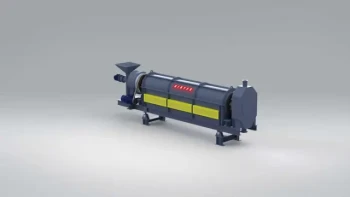
- Electric Rotary Kiln Small Rotary Furnace for Activated Carbon Regeneration
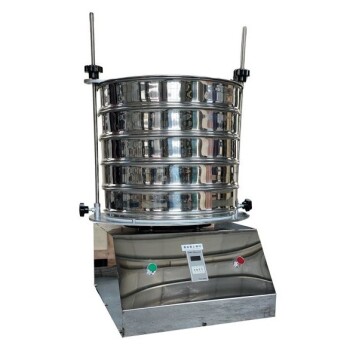
- Laboratory Test Sieves and Sieving Machines
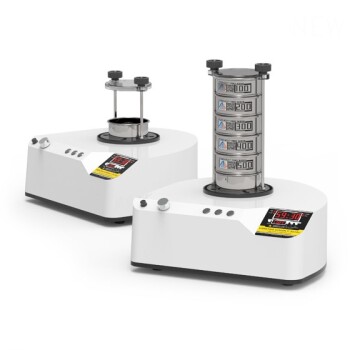
- Three-dimensional electromagnetic sieving instrument
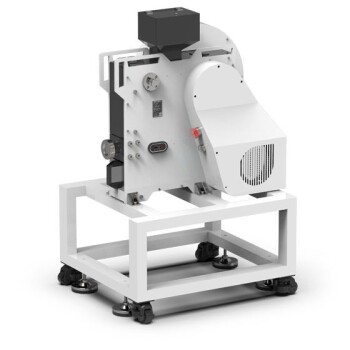
- lab cryogenic grinding use liquid-nitrogen for pulverizing plastic raw materials and heat sensitive materials
- Laboratory Jaw Crusher
People Also Ask
- What is a rotary kiln electric furnace? Achieve Superior Uniform Heating for Your Materials
- What is the temperature of activated carbon regeneration? Unlock the 1000°F Process for Reuse
- What is the regeneration temperature of activated carbon? Optimize Your Process with the Right Method
- What are the characteristics of the slipping, slumping, and rolling modes of bed motion? Optimize Your Rotary Process
- What are the parts of a carbon regeneration kiln? A Guide to Its Core Components and Function