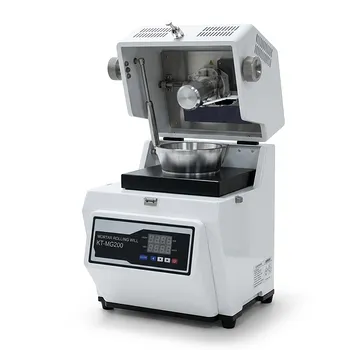
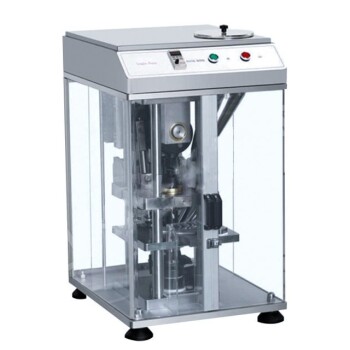
Laboratory pelletizers are essential because they transform fine chromium waste into uniform, high-density "green pellets" that prevent hazardous dust emissions and optimize chemical stabilization. By converting powders into specific sizes (typically 6 to 10 mm), these machines ensure that raw materials are not lost during smelting and that the resulting waste product is chemically inert.
Pelletization serves as a critical bridge in chromium waste management, simultaneously solving the mechanical problem of material loss and the chemical challenge of toxic leaching through precise density control and structural formation.
Enhancing Operational Efficiency and Material Recovery
Preventing Material Loss via Flue Gas
Finely dispersed chromium concentrate and powders are highly susceptible to being carried away by flue gas during electric furnace smelting.
Laboratory pelletizers mitigate this by binding these powders into 6 to 10 mm pellets, ensuring the raw material remains within the reaction zone.
This significantly reduces dust emissions, protecting both the environment and the total yield of the smelting process.
Improving Furnace Permeability
Effective smelting requires the consistent flow of gases through the furnace charge.
The uniform size of the pellets created by the pelletizer improves the permeability of the material bed.
This optimization leads to better technical and economic indicators during ferrochrome reduction smelting, as it allows for more efficient heat and mass transfer.
Controlling Chemical Stability and Environmental Safety
Optimizing Density for Thermal Treatment
Precise pressure control within the laboratory pelletizer ensures that raw material powders and additives reach an ideal density.
By eliminating internal voids, the pelletizer creates a solid structure that facilitates uniform phase transformation during subsequent heat cycles.
This structural integrity is necessary for the consistent crystallization of the material, which is the foundation of waste stabilization.
Stabilizing Chromium in Crystal Lattices
One of the most critical functions of pelletizing is the reduction of leaching toxicity.
High-density pellets ensure that chromium ions are stably incorporated into the crystal lattice structure, such as the spinel phase, of the resulting glass-ceramic.
This fundamental change in the material's micro-structure prevents hazardous chromium from leaching into the environment, rendering the waste chemically stable.
Understanding the Trade-offs and Limitations
The Challenge of Binder Composition
While pelletizers create the physical form, the strength of the green pellet depends heavily on the binder and flux ratio.
An incorrect mixture can lead to pellets that crumble under their own weight or during transport, negating the benefits of dust reduction.
Finding the balance between pellet durability and the chemical purity required for the final product is a common operational hurdle.
Precision vs. Throughput
Laboratory-scale pelletizers prioritize precise pressure control and uniform sizing over high-volume output.
While this is ideal for research and optimizing stabilization formulas, there is often a "scaling gap" when moving to industrial production.
Maintaining the same level of internal density and void elimination at a larger scale requires significant capital investment and rigorous quality control.
Implementation Strategies for Chromium Waste Forming
Making the Right Choice for Your Goal
- If your primary focus is environmental compliance: Prioritize pelletizers with high-pressure capabilities to ensure maximum chromium stabilization within the crystal lattice.
- If your primary focus is maximizing smelting yield: Focus on achieving a consistent 6 to 10 mm pellet size to minimize material loss through flue gas systems.
- If your primary focus is energy efficiency: Optimize the permeability of the pellet bed to reduce the time and energy required for ferrochrome reduction.
By mastering the pelletization stage, you transform a hazardous industrial byproduct into a stable, manageable material suitable for recovery or safe disposal.
Summary Table:
| Key Function | Operational Advantage | Environmental & Economic Impact |
|---|---|---|
| Dust Suppression | Binds fine powders into 6-10mm pellets | Prevents material loss and reduces hazardous emissions |
| Density Control | Eliminates internal voids via high pressure | Facilitates uniform phase transformation and crystallization |
| Permeability | Creates a uniform pellet bed structure | Enhances heat transfer and efficiency during smelting |
| Chemical Fixation | Stabilizes ions in the crystal lattice | Renders waste chemically inert and prevents toxic leaching |
Optimize Your Chromium Waste Processing with KINTEK
Transform hazardous powders into stable, high-yield materials with precision laboratory solutions from KINTEK. We specialize in high-performance hydraulic pellet presses, crushing and milling systems, and high-temperature furnaces (muffle, vacuum, and atmosphere) designed to meet the rigorous demands of waste stabilization and material research.
Whether you are focusing on environmental compliance or maximizing recovery in ferrochrome smelting, KINTEK provides the reliable equipment and consumables—including ceramics and crucibles—needed to ensure consistent density and structural integrity.
Ready to enhance your lab's efficiency and safety?
Contact KINTEK Experts Today to find the perfect equipment for your specific application!
References
- Almagul Ultarakova, Zhadyra Yerzhanova. Physical and Chemical Studies of Smelting Products of Calcinated Composite Pellets Produced from Chromium Production Waste. DOI: 10.3390/jcs7090386
This article is also based on technical information from Kintek Solution Knowledge Base .
Related Products
- Automatic Laboratory Hydraulic Pellet Press Machine for Lab Use
- Laboratory Manual Hydraulic Pellet Press for Lab Use
- Laboratory Hydraulic Pellet Press for XRF KBR FTIR Lab Applications
- Laboratory Manual Hydraulic Pellet Press for Lab Use
- XRF & KBR plastic ring lab Powder Pellet Pressing Mold for FTIR
People Also Ask
- What is the role of a laboratory hydraulic pellet press and stainless steel molds in the fabrication of RuO2/NbC anodes?
- What role does a laboratory pellet press play in the enhancement of biomass energy products? Optimize Fuel Efficiency
- What is the purpose of using a laboratory pellet press when evaluating the electronic conductivity of carbon powders? Guide
- How does a laboratory hydraulic pellet press contribute to SiCw/2024 aluminum composite preforms? Optimize Densification
- What is the significance of applying 200 MPa of pressure with a laboratory hydraulic pellet press for composite ceramics?