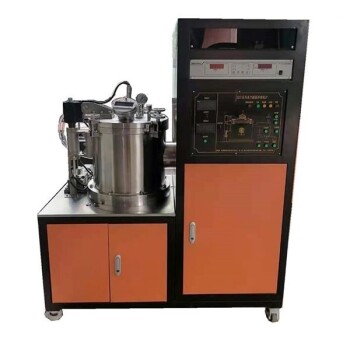
Non-gold metallic nanofoams differ significantly from gold because they are chemically reactive and highly susceptible to rapid surface oxidation when exposed to heat. A laboratory vacuum or controlled atmosphere furnace is strictly necessary to create an oxygen-free environment, preventing the formation of oxide layers that would otherwise compromise the material's structural integrity.
While gold is naturally resistant to oxidation, other metals react aggressively at high temperatures, especially when formed into high-surface-area nanofoams. Controlled environments are essential to ensure that measured mechanical properties reflect the true metallic matrix rather than a brittle, unwanted oxide shell.
The Challenge of Reactivity in Nanomaterials
The Stability of Gold vs. Other Metals
Gold is unique in its chemical stability. It naturally resists oxidation, allowing it to be heat-treated without rigorous atmospheric controls.
However, most other metals used in nanofoam applications do not share this inert characteristic. These materials are highly reactive and prone to chemical changes when temperatures rise.
The Vulnerability of High Surface Areas
Nanofoams are defined by their intricate structure of nano-ligaments. This architecture creates an immense surface-area-to-volume ratio.
This high surface exposure makes the material significantly more sensitive to its environment than a solid block of the same metal. In the presence of oxygen and heat, this large surface area accelerates the oxidation process dramatically.
Ensuring Data Integrity
Preserving the Metallic Matrix
The scientific value of studying metallic nanofoams lies in understanding the properties of the metal structure itself. To achieve valid results, the nano-ligaments must remain purely metallic throughout the thermal process.
Using a vacuum or inert atmosphere furnace eliminates oxygen from the equation. This protection preserves the chemical purity of the metal matrix during heat treatment.
Preventing Skewed Measurements
If a nanofoam oxidizes, a ceramic-like oxide layer forms on the surface of the ligaments. This layer is typically much harder and more brittle than the underlying metal.
When measuring mechanical properties such as hardness or modulus, an oxidized sample will yield distorted data. The results will reflect the properties of the oxide shell rather than the metallic nanofoam, rendering the experiment invalid.
Understanding the Risks
The Cost of Improper Environmental Control
Attempting to heat treat reactive nanofoams in standard atmospheric conditions is a fundamental error. Even a standard furnace without vacuum capabilities allows oxygen to interact with the heated metal.
This results in the immediate "poisoning" of the sample surface. The data collected from such samples will be scientifically inaccurate, as the physical properties have been fundamentally altered by the oxide layer.
Optimizing Your Heat Treatment Process
To ensure the accuracy of your material characterization, you must align your equipment with the chemistry of your sample.
- If your primary focus is working with Gold: You can typically utilize standard heat treatment processes, as the material's natural stability prevents oxidation.
- If your primary focus is working with Reactive Metals: You must utilize a vacuum or inert atmosphere furnace to prevent oxide formation and ensure the mechanical data represents the true metal matrix.
By strictly controlling the furnace atmosphere, you protect the integrity of your ligaments and guarantee the validity of your mechanical measurements.
Summary Table:
| Feature | Gold Nanofoams | Non-Gold Metallic Nanofoams |
|---|---|---|
| Oxidation Resistance | Naturally High | Low (Highly Reactive) |
| Surface Area Impact | Low Risk | High Risk (Rapid Oxidation) |
| Atmosphere Required | Air/Standard | Vacuum or Inert Gas |
| Structural Goal | Thermal Stability | Preventing Brittle Oxide Shells |
| Data Accuracy | Stable in Air | Requires Oxygen-Free Environment |
Elevate Your Nanomaterial Research with KINTEK
Don't let oxidation compromise your data integrity. KINTEK specializes in advanced laboratory solutions designed for the most demanding thermal processes. Whether you are characterizing reactive nanofoams or developing next-generation alloys, our comprehensive range of vacuum furnaces, atmosphere furnaces, and CVD systems provides the precise environmental control you need.
From high-temperature tube and muffle furnaces to specialized high-pressure reactors and crushing systems, we empower researchers with tools that guarantee pure metallic results.
Ready to optimize your heat treatment workflow? Contact KINTEK today to find the perfect equipment for your laboratory.
References
- Carlos J. Ruestes, Eduardo M. Bringa. Mechanical properties of Au foams under nanoindentation. DOI: 10.1016/j.commatsci.2018.02.019
This article is also based on technical information from Kintek Solution Knowledge Base .
Related Products
- 1200℃ Controlled Atmosphere Furnace Nitrogen Inert Atmosphere Furnace
- 1700℃ Controlled Atmosphere Furnace Nitrogen Inert Atmosphere Furnace
- Controlled Nitrogen Inert Hydrogen Atmosphere Furnace
- Vacuum Hot Press Furnace Heated Vacuum Press Machine Tube Furnace
- Molybdenum Vacuum Heat Treat Furnace
People Also Ask
- Can you braze copper to brass without flux? Yes, but only under these specific conditions.
- Why is a high-temperature furnace with a controlled atmosphere required for S@MMPC? Master Precision Synthesis
- What is the role of the furnace atmosphere? Master Precise Metallurgical Control for Your Heat Treatment
- What are the two primary purposes of using a controlled atmosphere? Master Protection vs. Material Modification
- What is the function of a high-precision controlled atmosphere furnace for Alloy 617? Simulate Extreme VHTR Conditions