Knowledge Why are nickel crucibles preferred for Li2OHBr preparation? Ensuring High Purity in Molten Electrolytes
Author avatar

Tech Team · Kintek Solution

Updated 2 days ago

Why are nickel crucibles preferred for Li2OHBr preparation? Ensuring High Purity in Molten Electrolytes


Nickel crucibles are preferred due to their superior chemical stability and corrosion resistance when exposed to aggressive molten salts. During the preparation of Li2OHBr, which involves heating mixtures of LiOH and LiBr, nickel vessels prevent the chemical reactions that typically occur between container walls and high-temperature electrolytes.

Core Takeaway The defining advantage of using a nickel crucible is the preservation of material purity. By remaining chemically inert in the presence of molten lithium salts, nickel prevents metal impurities from leaching into the mixture, ensuring the integrity of the final Li2OHBr protective layer.

Achieving Chemical Inertness

Withstanding Aggressive Melts

The synthesis of Li2OHBr requires processing mixtures of LiOH and LiBr at high temperatures to reach a molten state.

Nickel is specifically selected because it demonstrates exceptional resistance to these molten lithium salts. Unlike other standard laboratory materials, nickel remains stable even when subjected to the aggressive chemical environment of the melt.

The Barrier Against Reaction

During the heating phase, the crucible must act as a completely non-reactive vessel.

Nickel effectively prevents chemical interactions between the container material and the high-temperature electrolyte. This stability is critical, as any reactivity at this stage would compromise the chemical composition of the synthesis.

Safeguarding Electrolyte Purity

Eliminating Metal Impurities

The primary technical goal during this preparation is avoiding contamination.

If a crucible reacts with the molten salts, it introduces metal impurities into the electrolyte. Nickel’s resistance ensures that the container itself does not become a source of contamination.

Resulting Material Quality

By neutralizing the risk of leaching, the process yields a high-purity Li2OHBr coating material.

This purity is essential for the performance of the protective layer, as even trace impurities can alter the electrochemical properties of the final product.

Common Pitfalls to Avoid

The Risk of Material Incompatibility

While nickel is the standard for this specific application, a common error is assuming all metal crucibles offer similar resistance.

Many metals that are stable under standard conditions will corrode rapidly when exposed to molten LiOH and LiBr. Substituting nickel with a less stable alternative will almost certainly result in a contaminated, unusable electrolyte sample.

Making the Right Choice for Your Synthesis

To ensure the success of your Li2OHBr preparation, align your equipment choice with your specific quality goals:

  • If your primary focus is high purity: Use nickel crucibles to strictly prevent the introduction of foreign metal impurities into the coating material.
  • If your primary focus is process stability: Rely on nickel’s chemical inertness to withstand the corrosive nature of molten LiOH/LiBr mixtures without degradation.

Select the right vessel to ensure your protective layer remains chemically pure and effective.

Summary Table:

Feature Advantage for Li2OHBr Synthesis
Material Compatibility Highly resistant to aggressive molten LiOH and LiBr salts
Chemical Inertness Prevents reactions between container walls and electrolyte
Purity Control Eliminates metal impurity leaching into the coating material
Durability Maintains structural integrity at high temperatures
Process Success Ensures electrochemical performance of the final protective layer

Elevate Your Material Research with KINTEK Precision

Don't compromise the integrity of your Li2OHBr protective layers with substandard vessels. KINTEK specializes in providing high-performance laboratory equipment tailored for advanced energy research. From corrosion-resistant nickel and ceramic crucibles to precision high-temperature furnaces and battery research tools, we provide the purity and stability your synthesis requires.

Whether you are processing aggressive electrolytes or developing next-generation solid-state batteries, our comprehensive portfolio—including PTFE products, muffle furnaces, and high-pressure reactors—is designed to meet the most rigorous scientific standards.

Ready to ensure the highest purity for your experiments? Contact our technical experts today to find the perfect solution for your laboratory needs.

Related Products

People Also Ask

Related Products

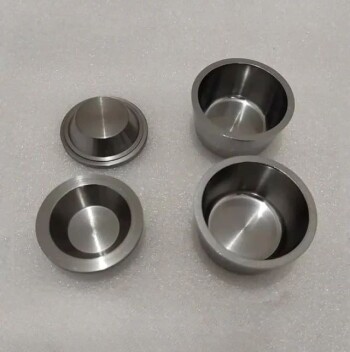
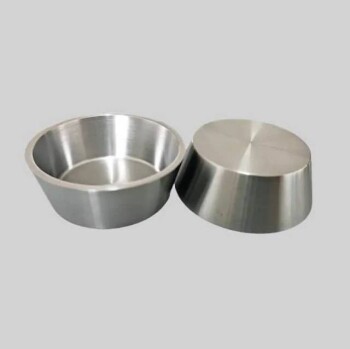
Electron Beam Evaporation Coating Tungsten Crucible and Molybdenum Crucible for High Temperature Applications

Electron Beam Evaporation Coating Tungsten Crucible and Molybdenum Crucible for High Temperature Applications

Tungsten and molybdenum crucibles are commonly used in electron beam evaporation processes due to their excellent thermal and mechanical properties.

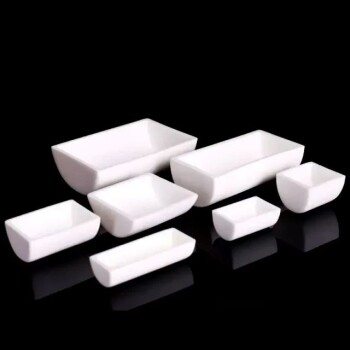
Alumina Al2O3 Ceramic Crucible Semicircle Boat with Lid for Engineering Advanced Fine Ceramics

Alumina Al2O3 Ceramic Crucible Semicircle Boat with Lid for Engineering Advanced Fine Ceramics

Crucibles are containers widely used for melting and processing various materials, and semicircular boat-shaped crucibles are suitable for special smelting and processing requirements. Their types and uses vary by material and shape.

Electron Beam Evaporation Coating Gold Plating Tungsten Molybdenum Crucible for Evaporation

Electron Beam Evaporation Coating Gold Plating Tungsten Molybdenum Crucible for Evaporation

These crucibles act as containers for the gold material evaporated by the electron evaporation beam while precisely directing the electron beam for precise deposition.

Arc-Shaped Alumina Ceramic Crucible High Temperature Resistant for Engineering Advanced Fine Ceramics

Arc-Shaped Alumina Ceramic Crucible High Temperature Resistant for Engineering Advanced Fine Ceramics

In the journey of scientific exploration and industrial production, every detail is crucial. Our arc-shaped alumina ceramic crucibles, with their excellent high temperature resistance and stable chemical properties, have become a powerful assistant in laboratories and industrial fields. They are made of high-purity alumina materials and manufactured through precision processes to ensure excellent performance in extreme environments.

Custom Machined and Molded PTFE Teflon Parts Manufacturer with PTFE Crucible and Lid

Custom Machined and Molded PTFE Teflon Parts Manufacturer with PTFE Crucible and Lid

PTFE crucibles, made from pure Teflon, offer chemical inertness and resistance from -196°C to 280°C, ensuring compatibility with a wide range of temperatures and chemicals. These crucibles feature machine-finished surfaces for easy cleaning and prevention of contamination, making them ideal for precise laboratory applications.

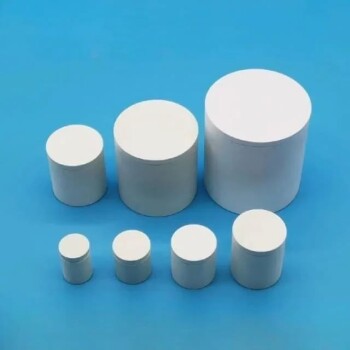
Engineering Advanced Fine Ceramics Alumina Crucibles (Al2O3) for Thermal Analysis TGA DTA

Engineering Advanced Fine Ceramics Alumina Crucibles (Al2O3) for Thermal Analysis TGA DTA

TGA/DTA thermal analysis vessels are made of aluminum oxide (corundum or aluminum oxide). It can withstand high temperature and is suitable for analyzing materials that require high temperature testing.

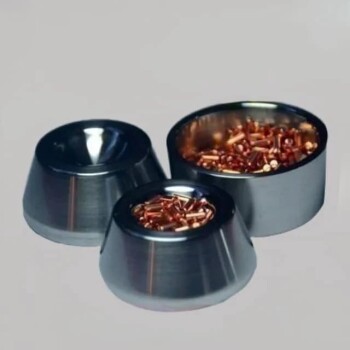
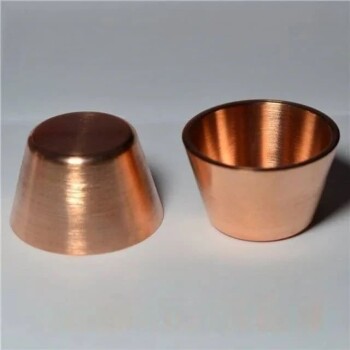
Electron Beam Evaporation Coating Oxygen-Free Copper Crucible and Evaporation Boat

Electron Beam Evaporation Coating Oxygen-Free Copper Crucible and Evaporation Boat

Electron Beam Evaporation Coating Oxygen-Free Copper Crucible enables precise co-deposition of various materials. Its controlled temperature and water-cooled design ensure pure and efficient thin film deposition.

Engineering Advanced Fine Alumina Al2O3 Ceramic Crucible for Laboratory Muffle Furnace

Engineering Advanced Fine Alumina Al2O3 Ceramic Crucible for Laboratory Muffle Furnace

Alumina ceramic crucibles are used in some materials and metal melting tools, and flat-bottomed crucibles are suitable for melting and processing larger batches of materials with better stability and uniformity.

Evaporation Crucible for Organic Matter

Evaporation Crucible for Organic Matter

An evaporation crucible for organic matter, referred to as an evaporation crucible, is a container for evaporating organic solvents in a laboratory environment.

Electron Beam Evaporation Coating Conductive Boron Nitride Crucible BN Crucible

Electron Beam Evaporation Coating Conductive Boron Nitride Crucible BN Crucible

High-purity and smooth conductive boron nitride crucible for electron beam evaporation coating, with high temperature and thermal cycling performance.

Boron Nitride (BN) Crucible for Phosphorous Powder Sintered

Boron Nitride (BN) Crucible for Phosphorous Powder Sintered

Phosphorus powder sintered boron nitride (BN) crucible has a smooth surface, dense, pollution-free and long service life.

Molybdenum Disilicide (MoSi2) Thermal Elements Electric Furnace Heating Element

Molybdenum Disilicide (MoSi2) Thermal Elements Electric Furnace Heating Element

Discover the power of Molybdenum Disilicide (MoSi2) Heating Element for high-temperature resistance. Unique oxidation resistance with stable resistance value. Learn more about its benefits now!

Metal Disc Electrode Electrochemical Electrode

Metal Disc Electrode Electrochemical Electrode

Elevate your experiments with our Metal Disk Electrode. High-quality, acid and alkali resistant, and customizable to fit your specific needs. Discover our complete models today.

Square Lab Press Mold for Laboratory Applications

Square Lab Press Mold for Laboratory Applications

Create uniform samples easily with Square Lab Press Mold - available in various sizes. Ideal for battery, cement, ceramics, and more. Custom sizes available.

Glassy Carbon Electrochemical Electrode

Glassy Carbon Electrochemical Electrode

Upgrade your experiments with our Glassy Carbon Electrode. Safe, durable, and customizable to fit your specific needs. Discover our complete models today.

Laboratory High Pressure Horizontal Autoclave Steam Sterilizer for Lab Use

Laboratory High Pressure Horizontal Autoclave Steam Sterilizer for Lab Use

The horizontal autoclave steam sterilizer adopts the gravity displacement method to remove the cold air in the inner chamber, so that the inner steam and cold air content is less, and the sterilization is more reliable.

Graphite Disc Rod and Sheet Electrode Electrochemical Graphite Electrode

Graphite Disc Rod and Sheet Electrode Electrochemical Graphite Electrode

High-quality graphite electrodes for electrochemical experiments. Complete models with acid and alkali resistance, safety, durability, and customization options.

Multifunctional Electrolytic Electrochemical Cell Water Bath Single Layer Double Layer

Multifunctional Electrolytic Electrochemical Cell Water Bath Single Layer Double Layer

Discover our high-quality Multifunctional Electrolytic Cell Water Baths. Choose from single or double-layer options with superior corrosion resistance. Available in 30ml to 1000ml sizes.

Desktop Fast High Pressure Laboratory Autoclave Sterilizer 16L 24L for Lab Use

Desktop Fast High Pressure Laboratory Autoclave Sterilizer 16L 24L for Lab Use

The desktop fast steam sterilizer is a compact and reliable device used for rapid sterilization of medical, pharmaceutical, and research items.

Bomb Type Probe for Steelmaking Production Process

Bomb Type Probe for Steelmaking Production Process

Bomb-type probe for precise steelmaking control: measures carbon content (±0.02%) and temperature (20℃ accuracy) in 4-8s. Boost efficiency now!


Leave Your Message