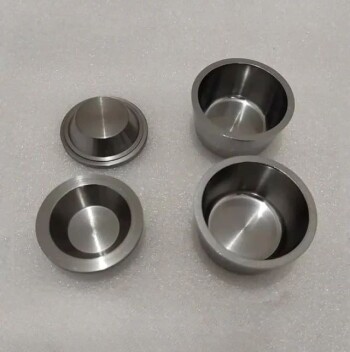
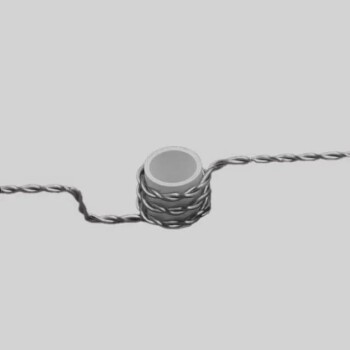
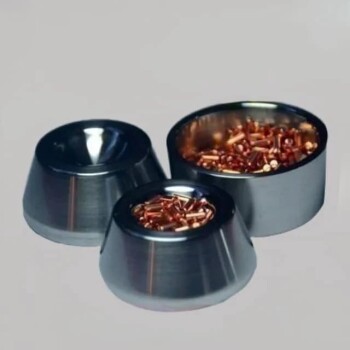
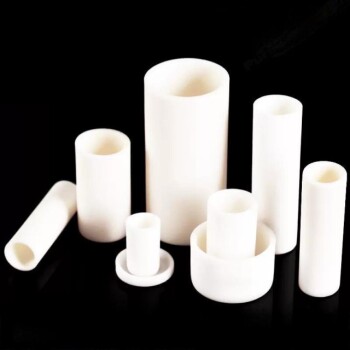
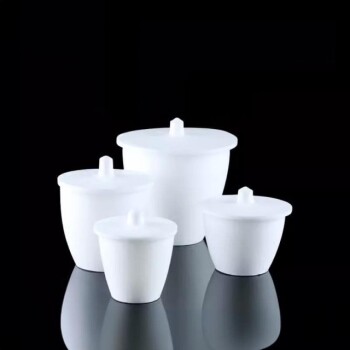
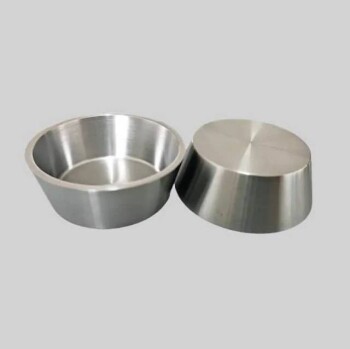
Niobium (Nb) crucibles are the preferred choice for the thermal analysis of $Na_{2-x}Li_xGa_7$ compounds because they offer a unique combination of chemical inertness against alkali melts and high thermal sensitivity.
Unlike standard ceramic or quartz containers, niobium does not react with corrosive sodium, lithium, or gallium at high temperatures. This ensures that the resulting differential thermal analysis (DTA) data reflects the true phase transitions of the sample rather than interference from chemical contamination or container failure.
Core Takeaway: Niobium crucibles provide the essential chemical compatibility required to contain aggressive alkali-gallium melts while offering the high thermal conductivity necessary for precise phase transition measurements.
Resisting Corrosive Alkali and Gallium Melts
Preventing Chemical Contamination
Sodium and gallium alloys are extremely corrosive to quartz and standard ceramic materials at elevated temperatures. Niobium acts as a stable barrier, preventing the sample from leaching elements from the crucible or reacting to form unwanted byproducts.
Replacing Inadequate Alternatives
Standard materials like quartz often fail or introduce impurities when they come into contact with active alkali metals. Using niobium ensures that the measured thermodynamic parameters are intrinsic to the $Na_{2-x}Li_xGa_7$ compound alone.
Optimizing Heat Flow Sensitivity
Capturing Subtle Phase Transitions
Differential Thermal Analysis (DTA) relies on the rapid transfer of heat between the sample and the sensors. Niobium’s superior thermal conductivity ensures that heat flow signals are captured with high sensitivity, allowing researchers to pinpoint exact peritectic formation temperatures.
Ensuring Data Accuracy
High sensitivity is critical for identifying the narrow temperature windows where phase changes occur in complex alloys. Because niobium facilitates efficient heat transfer, the resulting thermal analysis curves are sharp and provide a high level of detail for phase diagram construction.
Structural and Thermal Durability
Withstanding Thermal Shock
The process of melting and decomposing compounds like $Na_2Ga_7$ involves significant temperature fluctuations. Niobium crucibles possess the mechanical strength to withstand thermal shocks without cracking or deforming during the heating and cooling cycles.
Maintaining Integrity at High Temperatures
Niobium maintains its structural properties even as the sample reaches its liquidus point. This stability prevents sample leakage and ensures the safety of the DTA equipment throughout the experiment.
Understanding the Trade-offs
Susceptibility to Oxidation
Niobium is highly sensitive to oxygen and will oxidize rapidly at high temperatures if exposed to air. To prevent the crucible itself from degrading, experiments must be conducted in a strictly controlled vacuum or inert gas atmosphere (such as argon).
Cost and Fabrication Requirements
Niobium is a refractory metal, making it more expensive and difficult to machine than ceramic alternatives. However, the requirement for uncontaminated data in alkali metal research typically outweighs these initial material and preparation costs.
Applying This to Your Research
Selecting the right crucible material is a balance between sample compatibility and the required sensitivity of your thermal data.
- If your primary focus is high-precision phase mapping: Niobium is the definitive choice for alkali-gallium systems because its thermal conductivity maximizes DTA signal clarity.
- If your primary focus is preventing sample contamination: Use niobium to ensure that aggressive lithium or sodium melts do not react with the container walls during long-duration thermal cycles.
- If your primary focus is equipment longevity: Always ensure your DTA system is properly purged with inert gas, as any oxygen ingress will cause the niobium crucible to fail and potentially damage your sensors.
Choosing niobium ensures that your thermal analysis remains a study of the sample's properties rather than a study of the crucible's failure.
Summary Table:
| Feature | Niobium (Nb) Crucibles | Standard Ceramic/Quartz | Benefit for DTA |
|---|---|---|---|
| Chemical Stability | Resistant to alkali/gallium melts | Highly reactive/corrosive | Prevents sample contamination |
| Thermal Conductivity | High (superior heat flow) | Low (insulating properties) | Accurate phase transition detection |
| Thermal Shock Resistance | Excellent durability | Prone to cracking | Safe high-temperature cycling |
| Atmosphere Requirement | Strict vacuum or inert gas | Flexible (Air/Inert) | Protects crucible from oxidation |
Optimize Your Material Analysis with KINTEK
Precision in thermal analysis starts with the right materials. KINTEK specializes in providing high-performance laboratory equipment and specialized consumables tailored for advanced materials research. Whether you need high-temperature furnaces (vacuum, tube, or atmosphere) to maintain controlled environments or high-purity niobium, ceramic, and graphite crucibles to handle corrosive alkali melts, we have the expertise to support your lab.
Why choose KINTEK?
- Comprehensive Range: From hydraulic presses and milling systems to cooling solutions and high-pressure reactors.
- Material Expertise: Specialized consumables designed to withstand extreme chemical and thermal conditions.
- Reliable Support: Expert guidance to ensure your equipment matches your specific research parameters.
Ensure the integrity of your thermodynamic data today. Contact our technical team for a custom solution!
References
- Chia‐Chi Yu, Michael Baitinger. Ordering by cation replacement in the system Na<sub>2−<i>x</i></sub>Li<sub><i>x</i></sub>Ga<sub>7</sub>. DOI: 10.1039/d3dt03628f
This article is also based on technical information from Kintek Solution Knowledge Base .
Related Products
- Electron Beam Evaporation Coating Conductive Boron Nitride Crucible BN Crucible
- Arc-Shaped Alumina Ceramic Crucible High Temperature Resistant for Engineering Advanced Fine Ceramics
- Alumina Al2O3 Ceramic Crucible Semicircle Boat with Lid for Engineering Advanced Fine Ceramics
- Boron Nitride (BN) Crucible for Phosphorous Powder Sintered
- Electron Beam Evaporation Coating Tungsten Crucible and Molybdenum Crucible for High Temperature Applications
People Also Ask
- Why use Boron Nitride (BN) crucibles in metal infiltration? Ensure sample purity and non-wetting performance.
- Why are Boron Nitride (BN) or Alumina crucibles preferred for Na-flux GaN growth? Optimize Your Crystal Yield
- What is the container that holds the metal source material called in e-beam evaporation? Ensure Purity and Quality in Your Thin-Film Deposition
- What is the process of e-beam coating? Achieve High-Purity, Precise Thin Films for Your Lab
- What materials are used in electron beam evaporation? Master High-Purity Thin Film Deposition