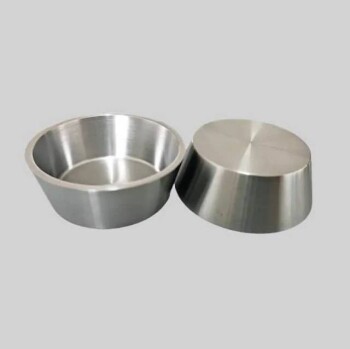
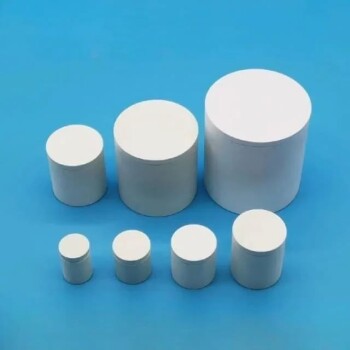
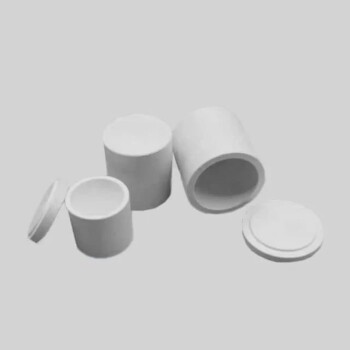
Zirconia crucibles are the critical standard for processing LSTH solid electrolytes due to their exceptional chemical stability at extreme sintering temperatures. They are specifically chosen to withstand heat up to 1450 °C while preventing the vessel from reacting with reactive lithium-rich perovskite materials.
Core Takeaway Synthesizing LSTH electrolytes involves a delicate balance of extreme heat and highly reactive materials. Zirconia is utilized because it remains chemically inert under these harsh conditions, ensuring that the final product retains pure-phase characteristics without contamination from the container.
The Challenge of High-Temperature Synthesis
Withstanding Extreme Sintering Temperatures
The synthesis of LSTH (Lithium-rich perovskite) solid electrolytes requires processing temperatures that far exceed standard ceramic applications.
Crucibles must maintain structural integrity at temperatures reaching 1450 °C. At this threshold, many standard crucible materials would soften, deform, or fail physically.
Resisting Chemical Aggression
High heat acts as a catalyst for unwanted chemical reactions. LSTH materials are lithium-rich, making them highly reactive during the sintering phase.
If an incompatible container is used, the lithium in the electrolyte will attack the crucible walls. Zirconia provides the necessary chemical inertness to block this interaction completely.
Ensuring Material Purity
Preventing Impurity Phases
The primary goal of solid electrolyte synthesis is achieving a "pure-phase" material, as impurities degrade ionic conductivity.
When a crucible reacts with the precursor powder, it leaches foreign elements into the melt or sinter. Zirconia effectively prevents these reactions, ensuring no impurity phases are introduced into the LSTH structure.
Enabling the Mother Powder Bed (MPB) Method
Obtaining pure-phase LSTH electrolytes often requires a specific technique known as the Mother Powder Bed (MPB) protection method.
This method relies on creating a protective environment around the sample. Zirconia crucibles are the key consumable in this process because they provide a stable, non-reactive boundary that supports the MPB technique without interfering with the delicate chemical balance inside.
Understanding the Trade-offs
Why Alumina is Often Insufficient for LSTH
While alumina crucibles are excellent for many solid electrolytes, they are generally suited for lower temperature ranges.
References indicate alumina is ideal for calcining materials like LTPO or LLZO at temperatures between 650°C and 1000°C. However, LSTH processing (1450°C) pushes beyond the optimal stability range of standard alumina usage in this context, making the robust thermal resistance of zirconia necessary.
Material Specificity
Crucible selection is never "one size fits all"; it is dictated by the chemistry of the electrolyte.
For example, sulfide solid electrolytes require graphite crucibles because they are too reactive for ceramics. Zirconia is the specific solution for high-temperature oxides/perovskites where maintaining stoichiometry at 1450 °C is the priority.
Making the Right Choice for Your Goal
Selecting the correct crucible is a function of your specific temperature requirements and material chemistry.
- If your primary focus is LSTH synthesis (1450°C): You must use zirconia crucibles to prevent lithium loss and container reactions at extreme temperatures.
- If your primary focus is LLZO or LTPO synthesis (<1000°C): Alumina crucibles are a cost-effective and chemically stable choice for these lower-temperature oxide processes.
- If your primary focus is Sulfide electrolytes: Use high-purity graphite crucibles, as ceramic containers (zirconia or alumina) will react with sulfides and contaminate the sample.
Success in solid electrolyte fabrication begins with selecting a container that is invisible to the chemistry of your reaction.
Summary Table:
| Feature | Zirconia Crucibles | Alumina Crucibles | Graphite Crucibles |
|---|---|---|---|
| Max Temp (LSTH) | Up to 1450°C | Generally <1000°C | N/A (Oxidation risk) |
| Chemical Stability | High (Inert to Li-rich) | Moderate (Reacts at 1450°C) | High (For Sulfides) |
| Primary Application | LSTH, High-Temp Perovskites | LLZO, LTPO Calcination | Sulfide Solid Electrolytes |
| Key Benefit | Prevents impurity phases | Cost-effective for low temp | Non-reactive with sulfides |
Elevate Your Battery Research with KINTEK
Precision in solid electrolyte synthesis starts with the right materials. KINTEK specializes in high-performance laboratory equipment and consumables, including zirconia, alumina, and graphite crucibles tailored for advanced battery research. Whether you are performing high-temperature sintering in our muffle and vacuum furnaces or processing materials with our crushing and milling systems, we provide the chemical purity your lab demands.
From PTFE products and ceramics to high-pressure reactors and battery research tools, KINTEK ensures your LSTH, LLZO, or sulfide electrolyte synthesis remains contamination-free.
Ready to optimize your sintering process? Contact KINTEK today for expert guidance and premium consumables!
Related Products
- Arc-Shaped Alumina Ceramic Crucible High Temperature Resistant for Engineering Advanced Fine Ceramics
- High Purity Pure Graphite Crucible for Electron Beam Evaporation
- High Purity Pure Graphite Crucible for Evaporation
- Engineering Advanced Fine Alumina Al2O3 Ceramic Crucible for Laboratory Muffle Furnace
- Engineering Advanced Fine Ceramics Alumina Crucibles (Al2O3) for Thermal Analysis TGA DTA
People Also Ask
- Why Use Alumina Crucibles & Powder Burial for NaSICON? Ensure Phase Purity and Prevent Elemental Volatilization
- What is the primary purpose of using alumina crucibles for LLTO ceramics? Optimize Your High-Temperature Sintering
- Why are alumina crucibles and mother powder essential for LATP sintering? Optimize Your Solid Electrolyte Performance
- Why are high-purity alumina crucibles used for liquid lead corrosion experiments? Ensure Data Accuracy at 550°C
- Primary considerations for choosing alumina crucibles and quartz tubes in indium intercalation: Ensure Material Purity