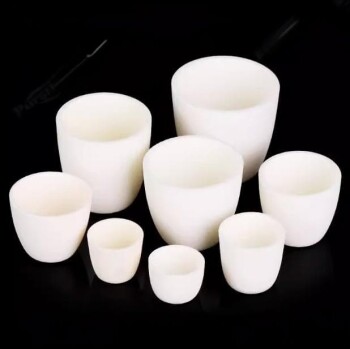
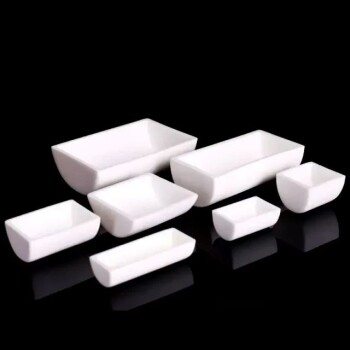
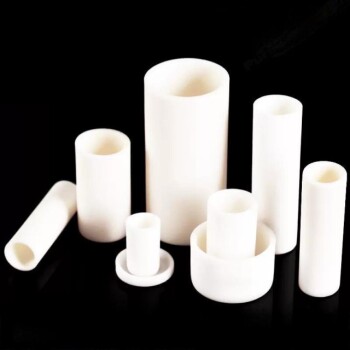
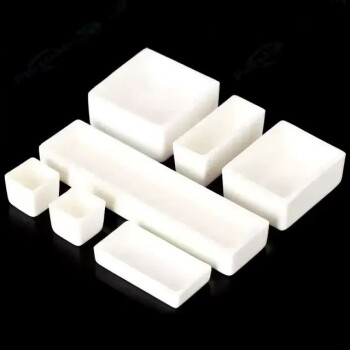
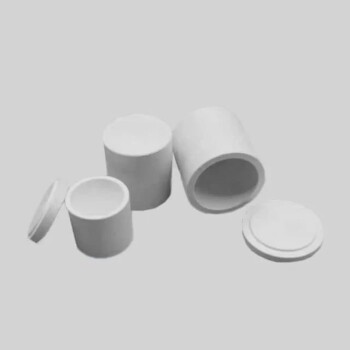
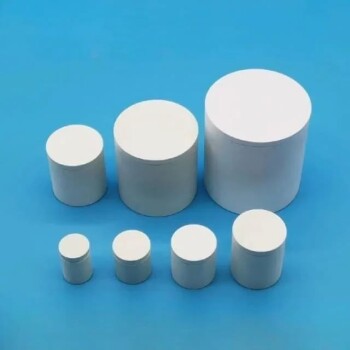
The installation of an alumina crucible acts as an essential chemical isolation barrier.
Its primary function is to prevent direct contact between the liquid heavy metal (lead or LBE) and the stainless steel walls of the autoclave. By serving as an inert liner, the crucible ensures that elements from the autoclave do not leach into the liquid metal, thereby guaranteeing that the experimental data reflects only the interaction between the liquid metal and your specific test specimens (such as T91 steel).
Core Takeaway To obtain valid corrosion data, the environment surrounding your specimen must remain chemically pure. The alumina crucible separates the structural containment (the autoclave) from the chemical environment (the liquid lead), preventing cross-contamination that would otherwise skew your research results.
Preserving Experimental Integrity
Preventing Chemical Interference
The validity of static exposure experiments relies on a controlled chemical environment. Stainless steel autoclaves contain elements like iron, chromium, and nickel.
If liquid lead or LBE comes into direct contact with the autoclave walls, it can dissolve these elements. This leaching alters the chemical composition of the liquid metal bath.
Ensuring Accurate Specimen Data
Your research likely focuses on how a specific material, such as T91 steel, behaves in molten metal.
If the liquid metal is already contaminated by the autoclave walls, the corrosion rate and cracking behavior of your T91 specimen will change. The alumina crucible is chemically stable, ensuring the "corrosive potential" of the liquid metal is not artificially buffered or accelerated by the vessel itself.
Protecting the Infrastructure
Mitigating Liquid Metal Corrosion
Liquid lead and LBE are highly corrosive to stainless steel, especially at the elevated temperatures required for these experiments (often 698K to 898K).
Without a liner, the liquid metal would aggressively attack the internal walls of the autoclave. This leads to pitting, wall thinning, and potential structural degradation of the pressure vessel.
Extending Equipment Lifespan
Autoclaves are expensive, high-pressure assets.
By using an alumina crucible as a consumable liner, you convert the damage mechanism. The crucible bears the chemical burden and can be easily replaced, while the autoclave remains protected, significantly extending its operational life.
The Role of the Stainless Steel Outer Shell
Structural Containment
While the alumina provides chemical resistance, it lacks the mechanical toughness to serve as a pressure vessel.
The stainless steel autoclave provides the necessary mechanical strength and thermal resistance. It safely contains the high temperature and pressure, effectively acting as a structural "exoskeleton" for the brittle ceramic liner.
Understanding the Trade-offs
Thermal Conductivity Differences
It is important to acknowledge that alumina has lower thermal conductivity than stainless steel.
Heat transfer from the external heaters to the liquid metal will be slightly less efficient than in a direct-contact setup. This requires careful calibration of your temperature controllers to ensure the liquid metal reaches the target temperature accurately.
Mechanical Fragility
Alumina is a ceramic and is susceptible to thermal shock.
Unlike the stainless steel autoclave, the crucible cannot withstand rapid temperature changes. Heating and cooling ramps must be managed slowly to prevent the crucible from cracking during the experiment.
Making the Right Choice for Your Goal
To ensure your experimental setup yields publishable, valid data, consider the following:
- If your primary focus is corrosion chemistry: You must use the alumina crucible to prevent the autoclave walls from contaminating the liquid metal and invalidating your material analysis.
- If your primary focus is structural safety: You must rely on the stainless steel autoclave to handle the pressure and thermal loads, never relying on the crucible for mechanical containment.
Ultimately, the alumina crucible sacrifices itself to ensure your data remains pure and your autoclave remains safe.
Summary Table:
| Feature | Stainless Steel Autoclave | Alumina (Ceramic) Crucible |
|---|---|---|
| Primary Function | Structural & Pressure Containment | Chemical Isolation & Inert Lining |
| Chemical Stability | Subject to leaching/corrosion | Highly inert to liquid metals (Pb/LBE) |
| Thermal Sensitivity | High resistance to thermal shock | Brittle; requires slow heating/cooling |
| Durability | Long-term asset (if protected) | Consumable; easily replaced |
| Thermal Conductivity | Higher heat transfer efficiency | Lower conductivity; requires calibration |
Precision Equipment for Specialized Research
Protect your investment and ensure the integrity of your experimental data with high-quality laboratory solutions from KINTEK.
Whether you are conducting static exposure experiments in liquid metals or high-pressure material synthesis, KINTEK specializes in the equipment you need to succeed. We offer a comprehensive range of high-temperature high-pressure reactors and autoclaves, perfectly complemented by our durable ceramics and crucibles (including Alumina and PTFE products) to serve as essential protective liners.
Our portfolio for researchers also includes:
- High-Temperature Furnaces: Muffle, tube, vacuum, and atmosphere models.
- Sample Preparation: Crushing, milling, and hydraulic pellet presses.
- Advanced Metallurgy: Induction melting and rotary furnaces.
- Laboratory Support: ULT freezers, cold traps, and homogenizers.
Don't let cross-contamination compromise your results. Contact KINTEK today to find the perfect combination of structural strength and chemical purity for your laboratory.
References
- Anna Hojná, Lucia Rozumová. Environmentally assisted cracking of T91 ferritic-martensitic steel in heavy liquid metals. DOI: 10.1515/corrrev-2019-0035
This article is also based on technical information from Kintek Solution Knowledge Base .
Related Products
- Arc-Shaped Alumina Ceramic Crucible High Temperature Resistant for Engineering Advanced Fine Ceramics
- Alumina Al2O3 Ceramic Crucible Semicircle Boat with Lid for Engineering Advanced Fine Ceramics
- Engineering Advanced Fine Ceramics Alumina Al2O3 Crucible With Lid Cylindrical Laboratory Crucible
- Engineering Advanced Fine Alumina Al2O3 Ceramic Crucible for Laboratory Muffle Furnace
- Engineering Advanced Fine Ceramics Alumina Crucibles (Al2O3) for Thermal Analysis TGA DTA
People Also Ask
- Why Use Alumina Crucibles & Powder Burial for NaSICON? Ensure Phase Purity and Prevent Elemental Volatilization
- What is the primary purpose of using alumina crucibles for LLTO ceramics? Optimize Your High-Temperature Sintering
- Why are alumina crucibles and mother powder essential for LATP sintering? Optimize Your Solid Electrolyte Performance
- Why are high-purity alumina crucibles used for liquid lead corrosion experiments? Ensure Data Accuracy at 550°C
- Primary considerations for choosing alumina crucibles and quartz tubes in indium intercalation: Ensure Material Purity