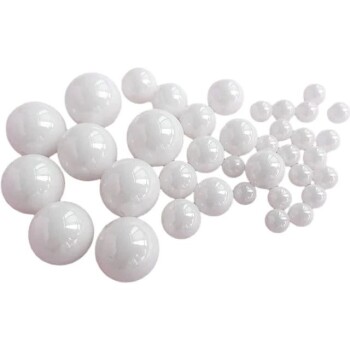
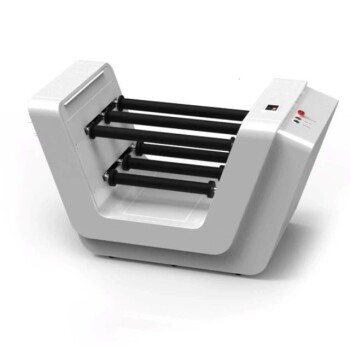
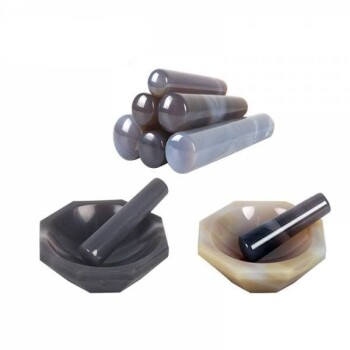
Zirconia grinding media is strictly required for synthesizing sulfide solid electrolytes to guarantee chemical purity and electrochemical stability. Its superior hardness prevents the introduction of conductive metal debris—specifically iron—while its chemical inertness ensures the highly reactive sulfide precursors do not degrade or react with the jar walls during high-energy milling.
Core Takeaway: The choice of zirconia is fundamentally about preventing contamination that kills battery performance. Its wear resistance eliminates metallic impurities that narrow the electrochemical window, while its density provides the necessary impact energy to drive the mechanochemical reaction without compromising the electrolyte's purity.
The Criticality of Material Purity
Eliminating Metallic Contamination
The primary danger in synthesizing sulfide electrolytes is the introduction of foreign materials. Zirconia (ZrO2) is selected for its extreme hardness and wear resistance.
Unlike stainless steel, zirconia withstands intense mechanical impacts without shedding significant debris. This is crucial because metallic impurities, such as iron fragments, act as conductive pathways that can short-circuit the electrolyte or degrade its performance.
Preserving Electrochemical Stability
The presence of even trace metallic impurities can have catastrophic effects on the final product. Contamination leads to a decrease in ionic conductivity and a narrowing of the electrochemical window.
By using zirconia, you ensure the electrolyte remains an electrical insulator while conducting ions, maintaining the wide voltage window necessary for high-performance solid-state batteries.
Mechanics of the Reaction
Driving Efficient Amorphization
Sulfide electrolytes are often synthesized via mechanochemical reactions that require significant energy to pulverize hard precursors. Zirconia balls possess high density, which translates to higher impact energy during the milling process.
This kinetic energy is essential for breaking down the crystalline structure of precursors and promoting amorphization. This structural change is a prerequisite for achieving high ionic conductivity in the final glass-ceramic material.
Preventing Chemical Side Reactions
Sulfide precursors are highly reactive. Zirconia is chosen for its chemical inertness, meaning it will not participate in the reaction it is facilitating.
This ensures that the chemical energy is directed solely toward forming the desired electrolyte phase, rather than reacting with the grinding media. This stability is maintained even during prolonged, high-energy milling sessions.
Process and Handling Benefits
Maintaining an Inert Environment
Sulfide electrolytes are extremely sensitive to moisture and oxygen; exposure causes hydrolysis and oxidation. High-quality zirconia jars are designed to be hermetically sealed to maintain an inert argon gas environment.
This sealing capability is just as critical as the material hardness, as it prevents the atmosphere from degrading the sulfur compounds during the synthesis.
Improving Yield and Recovery
A practical benefit of zirconia-lined jars is the nature of their surface interaction with sulfides. The zirconia coating reduces the adhesion of the sticky sulfide materials to the jar walls.
This "non-stick" property improves the recovery yield of the expensive electrolyte powder and facilitates the cleaning of corrosive sulfide residues after the process is complete.
Common Pitfalls to Avoid
The "Sealing" Blindspot
While zirconia material is chemically inert, the assembly must be perfect. A common failure point is not the jar material itself, but the seal.
As noted in the reference data, maintaining an argon atmosphere is essential. Using a zirconia jar with a compromised seal will result in hydrolysis, rendering the high-quality grinding media irrelevant as moisture destroys the electrolyte.
Thermal Management
High-energy ball milling generates significant heat. While zirconia is excellent for wear resistance, it is a thermal insulator.
This means heat generated during impact may not dissipate as quickly as it would in metal jars. You must monitor milling parameters to ensure the temperature inside the jar does not exceed the stability limit of your specific sulfide compound.
Making the Right Choice for Your Goal
To maximize the success of your sulfide solid electrolyte synthesis, align your equipment choices with your specific research targets:
- If your primary focus is High Ionic Conductivity: Prioritize high-density zirconia balls to maximize impact energy and ensure complete amorphization of the precursor materials.
- If your primary focus is Electrochemical Stability: Ensure you are using high-grade, wear-resistant zirconia to absolutely minimize metallic contamination that would narrow your voltage window.
- If your primary focus is Process Efficiency: Utilize zirconia-lined jars to minimize material adhesion, ensuring higher powder recovery and easier decontamination between batches.
In summary, zirconia is not just a container; it is an active enabler of the synthesis process, providing the necessary kinetic energy while acting as a barrier against the chemical and metallic contamination that destroys solid-state battery performance.
Summary Table:
| Feature | Benefit for Sulfide Synthesis |
|---|---|
| Extreme Hardness | Prevents metallic contamination (e.g., iron) and short circuits. |
| Chemical Inertness | Ensures no reactions between media and sensitive sulfide precursors. |
| High Density | Provides the kinetic energy required for effective amorphization. |
| Non-stick Surface | Enhances material recovery and simplifies the cleaning of residues. |
| Hermetic Sealing | Maintains an inert argon environment to prevent hydrolysis. |
Elevate Your Battery Research with KINTEK
Don't let contamination compromise your solid-state battery breakthroughs. KINTEK specializes in premium laboratory equipment designed for the most sensitive synthesis processes. From high-density zirconia grinding jars and balls to our advanced crushing and milling systems, we provide the tools necessary to achieve maximum ionic conductivity and electrochemical stability.
Whether you need specialized high-temperature furnaces, vacuum systems, or precision hydraulic presses, our team is ready to support your laboratory's specific requirements.
Contact KINTEK today to optimize your synthesis workflow and ensure the highest purity for your sulfide solid electrolytes.
Related Products
- Laboratory Jar Ball Mill with Alumina Zirconia Grinding Jar and Balls
- Precision Machined Zirconia Ceramic Ball for Engineering Advanced Fine Ceramics
- Laboratory Jar Mill with Agate Grinding Jar and Balls
- Laboratory Ball Mill Jar Mill with Metal Alloy Grinding Jar and Balls
- Engineering Advanced Fine Ceramics Head Tweezers with Pointed Elbow Zirconia Ceramic Tip
People Also Ask
- What are the primary functions of using a ball mill for BZCY72 powder? Achieve High Purity and Enhanced Sintering
- In what way does a laboratory ball mill affect material properties when modifying PHBV/pulp fiber composites?
- Why is a laboratory ball mill required for ultra-fine fly ash? Unlock Nano-Scale Adsorption Power
- What is the function of a laboratory ball mill in the preparation of AMMCs? Optimize Dispersion & Grain Refinement
- What is the function of a laboratory ball mill in the pretreatment of waste tire char (WTC)? Optimize Material Reactivity