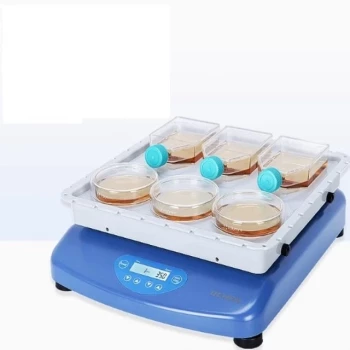
A benchtop shaker acts as the fundamental driver for reaction efficiency in biosorption experiments. It is essential because it provides continuous orbital rotation, ensuring that the microbial cells (the solid phase) and the palladium-containing solutions (the liquid phase) remain thoroughly mixed throughout the process. Without this consistent mechanical agitation, the interaction between the metal ions and the biosorbent becomes stagnant and ineffective.
Core Takeaway The benchtop shaker is not just about mixing; it is about energy transfer. By maintaining continuous motion, the shaker overcomes physical barriers at the liquid-solid interface, directly enabling the system to achieve its maximum adsorption capacity of 139.48 mg g-1.
The Mechanics of Optimized Biosorption
To understand why the shaker is non-negotiable, you must look at what is happening at the microscopic interface between the cell and the solution.
Reducing Diffusion Resistance
In a static environment, a stagnant layer of liquid surrounds the solid microbial cells. This layer creates a physical barrier known as diffusion resistance.
The benchtop shaker disrupts this layer through continuous orbital rotation. By agitating the liquid-solid interface, it drastically reduces resistance, allowing fresh solution to constantly contact the cell surface.
Facilitating Ion Migration
Palladium ions (Pd2+) must physically travel from the bulk solution to the specific functional groups located on the surface of the microbial cells.
Mechanical agitation acts as a transport vehicle. It actively facilitates the migration of these ions, ensuring they reach the binding sites necessary for the chemical reaction to occur.
Achieving Maximum Capacity
The ultimate goal of the experiment is to maximize the amount of palladium recovered.
The optimized mixing provided by the shaker is the direct cause of high performance. According to the data, this specific mechanical setup allows the system to reach a peak adsorption capacity of 139.48 mg g-1.
Understanding the Risks of Inadequate Agitation
While the benefits are clear, it is important to understand the pitfalls of failing to optimize this variable.
The Pitfall of Static Zones
Without continuous orbital rotation, the reaction system suffers from heterogeneity.
Zones of the solution may become depleted of ions while others remain saturated, leading to inconsistent data. The shaker ensures the solution remains homogenous, preventing these local variances.
The Cost of Diffusion Barriers
If the mixing is insufficient, the diffusion resistance at the liquid-solid interface remains high.
This prevents the palladium ions from accessing the functional groups effectively. The result is a reaction that plateaus prematurely, failing to reach the potential 139.48 mg g-1 capacity solely due to physical—not chemical—limitations.
Making the Right Choice for Your Goal
When setting up your biosorption parameters, view the shaker as a critical variable rather than a passive tool.
- If your primary focus is Maximizing Yield: Ensure continuous rotation is maintained to hit the 139.48 mg g-1 target capacity.
- If your primary focus is Kinetic Accuracy: Use the shaker to eliminate diffusion resistance so that your data reflects chemical reaction rates, not transport limitations.
Proper mechanical agitation effectively bridges the gap between potential chemistry and actual recovery.
Summary Table:
| Key Mechanism | Function in Biosorption | Impact on Performance |
|---|---|---|
| Orbital Rotation | Disrupts the stagnant liquid layer | Reduces physical diffusion resistance |
| Mechanical Agitation | Facilitates Pd2+ transport to cell surface | Ensures access to functional binding sites |
| Homogenization | Prevents localized ion depletion | Enables peak capacity of 139.48 mg g-1 |
| Kinetic Optimization | Eliminates transport limitations | Reflects true chemical reaction rates |
Elevate Your Research Precision with KINTEK
Unlock the full potential of your biosorption and chemical reaction experiments. KINTEK specializes in high-performance laboratory shakers, homogenizers, and cooling solutions designed to eliminate diffusion barriers and ensure consistent results.
Whether you are performing complex metal recovery or routine sample preparation, our comprehensive range of equipment—from high-temperature reactors to crushing systems and hydraulic presses—provides the reliability your lab demands.
Ready to optimize your yield? Contact KINTEK today to discover how our premium laboratory consumables and equipment can streamline your workflow and deliver superior data accuracy.
References
- Peipei He, Pengfei Zhang. Enhanced reductive removal of ciprofloxacin in pharmaceutical wastewater using biogenic palladium nanoparticles by bubbling H<sub>2</sub>. DOI: 10.1039/d0ra03783d
This article is also based on technical information from Kintek Solution Knowledge Base .
Related Products
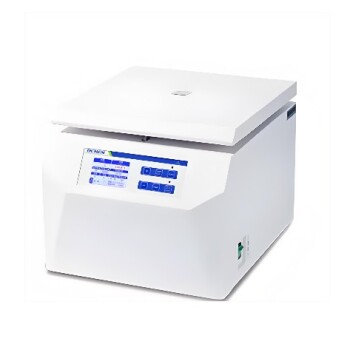
- Benchtop High Speed Small Lab Centrifuge for Serum Separation and Low Temperature Dehydration
- Laboratory Single Horizontal Jar Mill
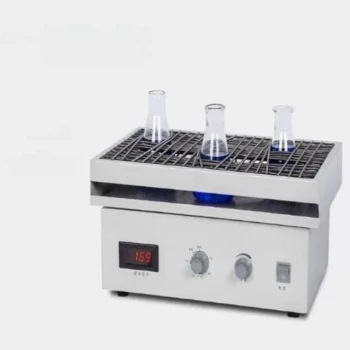
- Laboratory Multifunctional Small Speed-Adjustable Horizontal Mechanical Shaker for Lab
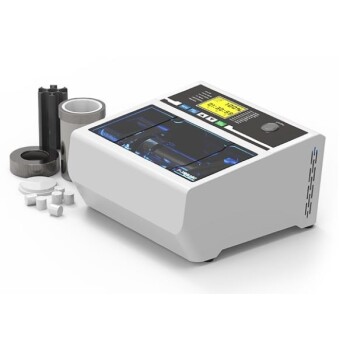
- Laboratory Micro Horizontal Jar Mill for Precision Sample Preparation in Research and Analysis
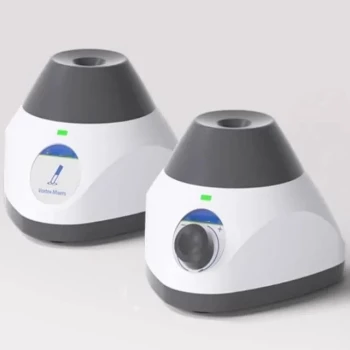
- Laboratory Vortex Mixer Orbital Shaker Multifunctional Rotation Oscillation Mixer
People Also Ask
- How is a benchtop laboratory centrifuge used in the desorption and regeneration of composite adsorbent beads?
- What is the primary function of a laboratory centrifuge? Master PAAMP-b-PVK Block Copolymer Purification
- What role does a Laboratory Centrifuge play in the production of succinic acid? Critical Solid-Liquid Separation Guide
- What are the advantages and disadvantages of a centrifuge? Weighing Speed Against Cost and Risk
- How does a centrifuge work and for what purpose? Unlock the Power of Rapid Sample Separation